
Acquisition and Analysis of Johnson & Johnson and Shockwave Medical Case Study
Acquisition of Johnson & Johnson and Shockwave Medical Case Study evaluates the merger via strategic fit, technological synergy, market growth, and financial valuation.
- Introduction: Acquisition of Johnson & Johnson and Shockwave Medical
- Discussion: Strategic, Financial, and Operational Aspects of the Acquisition
- 2.1. Background information of the prior year of the "Johnson & Johnson and Shockwave Medical Inc"
- 2.2 Discussion of the potential reasons for the acquisition of "Johnson & Johnson" with "Shockwave Medical"
- Supportive argument
- 2.3 Estimate of the market reaction of "Johnson & Johnson" from the acquisition date
- Shareholder Perspective for Johnson & Johnson
- Discussion on the success of the deal
- 2.4 Recommended Acquisition Price for Shockwave Medical Inc.
- 2.5 Comparison of Estimated Value with Market Value
- Type Case Study
- Downloads4074
- Pages19
- Words4850
Introduction: Acquisition of Johnson & Johnson and Shockwave Medical
The two distinct companies of “Shockwave Medical Inc.” and “Johnson & Johnson” jointly announced to enter into a definitive agreement on 5th April 2024 from which “Johnson & Johnson” can acquire the outstanding shares from Shockwave and the value per cash share will be $335.00 including acquired cash which is discussed in detail in the following sections.
Reference materials and sample papers are provided to help students understand assignment structure and improve academic skills. We, as an assignment helper in UK, offer guidance while maintaining original work. The Acquisition and Analysis of Johnson & Johnson and Shockwave Medical Case Study highlights structured evaluation, clear comparison of business strategies, and critical analysis of corporate decisions. These resources are intended solely for study and reference purposes.
Discussion: Strategic, Financial, and Operational Aspects of the Acquisition
The Acquisition and Analysis of Johnson & Johnson and Shockwave Medical Case Study examines the growth trajectories and strategic positioning of both companies prior to the merger. It highlights Johnson & Johnson’s diversified healthcare operations and Shockwave Medical’s innovative IVL technology, providing a clear context for understanding why the acquisition was strategically important in the cardiovascular sector.
2.1. Background information of the prior year of the “Johnson & Johnson and Shockwave Medical Inc”
Before the situation of the acquisition announcement, the background information of both the two companies is discussed as follows.
“Johnson & Johnson” was founded by the Johnson brothers of “James Wood, Robert Wood Johnson, and Mead Johnson” in 1886 and emphasized on selling and manufacturing of surgical dressings. Initially, the company emphasized the selling of the surgical dressing absorbent cotton, sutures and gauzes (Caiazza et al. 2021). “Johnson & Johnson” abbreviated as JNJ is one of the global leading medical devices, pharmaceuticals, and other healthcare related consumer goods manufacturing and marketing company (Jnj.com, 2025). The company is among the world’s largest and more diversified health and Wellness Company. By the year 2024, the company is active in 60 countries and sells an extensive range of products and services across multiple sectors that include “MedTech, Innovative Medicine”, and “Consumer Health”. The Acquisition and Analysis of Johnson & Johnson and Shockwave Medical Case Study highlights how J&J’s diversified healthcare operations align with Shockwave Medical’s innovative IVL technology, providing a basis for understanding the strategic rationale behind the acquisition.
Confused by balance sheets and ledgers? Choose Accounting Assignment Help for expert solutions, accurate calculations, and perfectly structured assignments
Financial information of JNJ
At the same time, “Shockwave Medical Inc.” came in 2009 by a cardiologist marketer who wanted to envision lithotripsy technologies for treatment of the cardiovascular disease.
Financial information of the two firms
The sum of revenue in 2023 was $85.1590 billion, with “net income” of $17.1 billion, in its multiple segments that year. J&J has had a good performance over the years with the company executing its role of providing value for shareholders by paying dividends (Feldman and Hernandez, 2022). The market capitalization in the year 2024 makes it to be at approximately $ 500 billion thus ranking the company among the largest health care firms. Its “MedTech’s segment” is one of the key segments and it is said to have earned approximately $27 billion in 2023 only.

 10 Years | MSc in Accounting
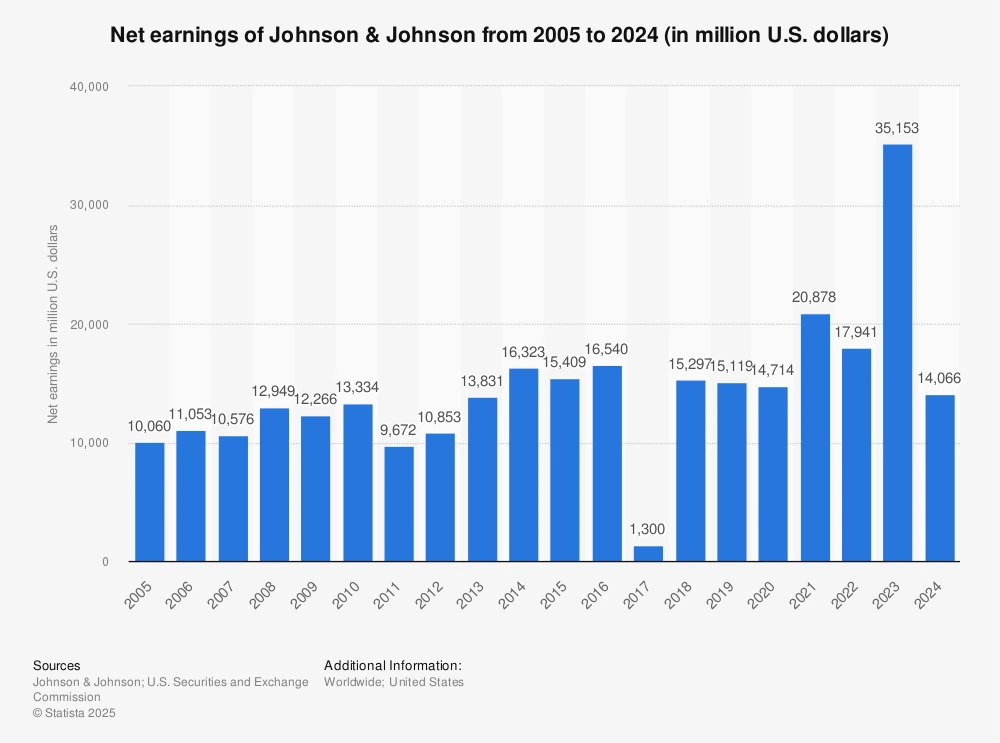
Figure 1: Net earnings of “Johnson & Johnson” in 2024
This acquisition strategy fits the company’s long-term strategic planning since the objective of acquiring new companies is due to the fact that the company seeks to increase its portfolio in several evolving and innovation driven segments of the healthcare sector.
“Shockwave Medical, Inc” is a quite young but innovative company within the medical devices sector. Shockwave primarily focuses on creating and marketing “IVL Systems” for the treatment of calcific “CAD and PAD”. IVL is a “non-pharmacological interventional procedure” that employs catheter and sound pressure to fragment and wash away calcium in the “arteries” (Lu, 2021). Technology has remained a rising star for “Shockwave Medical” since it entered the market and made significant improvements in its growth as its technology was adopted by many medical practitioners as a standard procedure for addressing “calcified arterial disease” prior to the announcement of the acquisition.
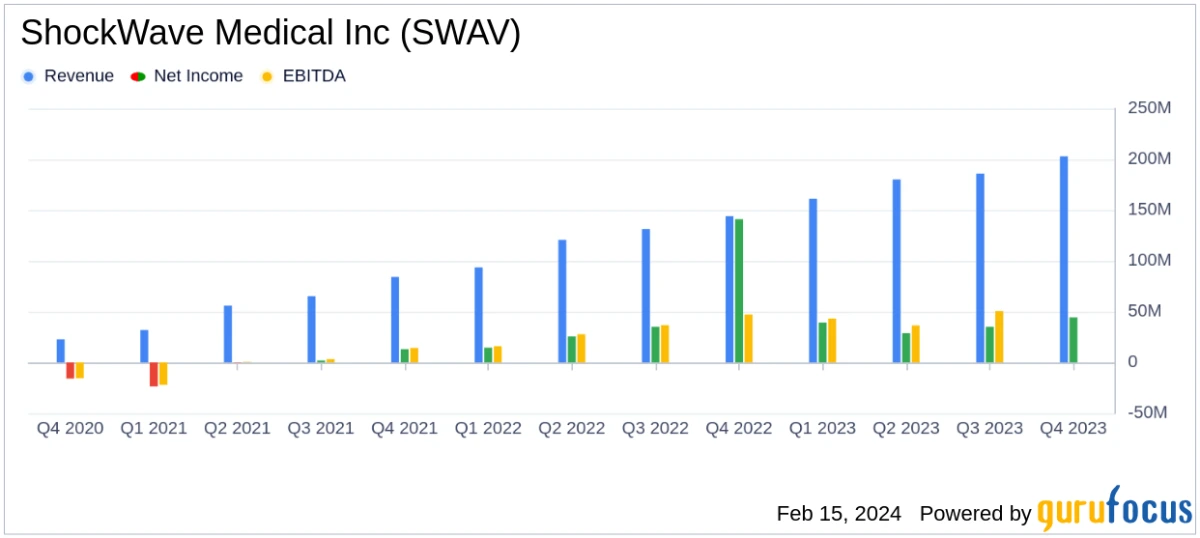
Figure 2: Financial performance of “Shockwave medical”
“Shockwave medical” is still young as it has started making significant sales only in the last 5 years (Kannan et al. 2023). However, its revenue in 2023 was approximately $730.2 million, with a CAGR of over 50% in recent years. There exists information about it as a public company which floated in “the Nasdaq”. The market capitalization of the company was approximately $ 12 billion before it was acquired by “Johnson & Johnson”. The financials of Shockwave were quite healthy, owing to the increasing approval of its “IVL technology”, as its treatment patient touches 400 000 across the world by 2024. It had also got involved in a pipeline through the acquisition of “Norvasc Inc”. a company that focuses on a technology used to manage refractory angina.
Still, Shockwave was a rapidly growing firm that in the future had potential to become a market leader and face important issues in maintaining its leadership as well as expansion of its operations on the international level, which could be the reasons for its merger with another large and financially strong company “Johnson & Johnson”.
2.2 Discussion of the potential reasons for the acquisition of “Johnson & Johnson” with “Shockwave Medical”
There are a number of factors that may have influenced “Johnson & Johnson” in deciding to acquire “Shockwave Medical”. The rationale can be viewed from tactical, efficiency, and operation-oriented point of view. Different factors like strategic fit, Innovation and “Technological Synergy”, expansion in the “High-Growth Markets”, Cost efficiency management, financial synergy market consolidation and competitive advantages are some key factors for the acquisition of “Johnson & Johnson” with “Shockwave Medical”. Now the detailed potential reasons
Supportive argument
-
Strategic Fit in the Cardiovascular Sector: First of all, it should be noted that “cardiovascular diseases” are among the main reasons for people’s deaths at the present stage. The WHO has reported rising “cardiovascular interventions” and this has enhanced by aging population as well as high incidence of diseases of the heart and “blood vessels” across the world (Jnj.com, (2025). The “Shockwave” acquisition ties into “J&J” overreaching goals of establishing the company as a leader in “cardiovascular acre”, with focus on sectors that are rapidly developing and oriented on innovations (Lee and Yeh, 2024). The “IVL technology” would support J&J’s capabilities in the “cardiovascular segment”, including the “Abiomed heart pump” and the “Biosense Webster electrophysiology products”. This development strategy helps “J&J” to increase the number of the provided solutions for heart disease which in its turn contributes to the further strengthening of the company position in the global “cardiovascular intervention market”.
- Innovation and Development from Technological Synergy: LI, (2023) describes the performance growth of the “J&J” due to technological synergy. There is no other technology currently sold on the market that offers such capabilities as the IVL in treating intimal and medial calcification in the arteries. The use of the technology has yielded very promising clinical results, proving to boost the blood flow in patients with calcified “arterial blockage” (Jia et al. 2023). With the development of this new innovation Shockwave is placed amongst the leading companies in the field of cardiovascular intervention. This is because the Shockwave acquisition not only supplements the “J&J’s” current “MedTech’s portfolio” but also opens up possibilities for further advancement in the cardiovascular field. Furthermore, there is great pipeline in future products such as “carotid arteries diseases” and structural heart diseases that Shockwave has making the acquisition even more valuable.
- Expansion High-Growth Markets: According to Headley et al. (2023) describes the condition of “J&J” for acquisition. The purchase of “Shockwave Medical” may be an excellent chance for the company to increase its penetration in the high pace market. The essence of the integration of “Shockwave’s solutions” with its own products puts “J&J” on the right track to assume the role of a market giant within the “cardiovascular intervention industry”. Furthermore, Shockwave has untapped markets in international operations to take advantage of, which is in with “Johnson’s & Johnsons” corporate strategy of going global and increasing its rate of sales.
- Advantage from cost efficiency management and financial growth: From a financial perspective, acquiring Shockwave is believed to have some benefits as listed below. Shockwave’s high revenue growth and profitable “business model” are demonstrated that the acquisition is beneficial to “J & J’s Med Tech Segment” (Investor.jnj.com, 2025). This will increase “J&J MedTech’s” sales and facilitate the enhancement of its operating margins with the support of Shockwave’s successful business model (Richardson, 2023). Shockwave also has cutting edge technological input and has a strong commercial base, that gives “J&J” a great chance Utilizing J&J’s existing global structure to expand Shockwave at a much faster pace and a higher efficiency. J&J said that it is expected to be accretive to the company’s operating margin right from the closed time (Maney, 2023). These strategic and financial risks should also post high shareholder value in the long run and are likely to be achieved by the following: Thirdly, with new stocks of products to Shockwave and the existing products in J&J, the acquisition is financially feasible.
- Competitive Advantage along with market consolidations: Thomas and Grubenmann, (2024) describe the key advantages in post-acquisition period. The consolidation of Shockwave will help “J&J” to strengthen its presence in the “cardiovascular division” since it will eliminate a competitor. Through the acquisition of “Shockwave, J&J” has ensured it achieves a competitive edge in the expanding market of cardiovascular interventions, which has high tendencies of evolving and expansion to meet the increasing demands. It would also promote consolidating of resources to perhaps enable “J&J” achieve a certain technological superiority, increased market share, and better regulatory approval.
2.3 Estimate of the market reaction of “Johnson & Johnson” from the acquisition date
The news regarding the “Johnson & Johnson regarding “Shockwave Medical” announced on April 5, 2024, created interest in the financial markets mainly through its effects on the stock returns of the acquirer and target firms (Magistretti et al. 2021). The deal which was announced at $13. 1 billion, “Johnson & Johnson” decided to pay $335 per share in cash for Shockwave contrary to its closest rival with a 60% premium to the shockwave’s closing price before the announcement. Such a large premium usually means the acquiring firm believes that the target firm has long-term value that can affect market responses.
Get assistance from our PROFESSIONAL ASSIGNMENT WRITERS to receive 100% assured AI-free and high-quality documents on time, ensuring an A+ grade in all subjects.
Discussion on the share price reaction of “Shockwave Medical”
On the 5th of April, 2024, when “Johnson & Johnson (J&J)” made an announcement for acquiring “Shockwave Medical” this led to a 2% dip in its stock price (Huang, 2022). This decline is normal in large acquisitions especially when the acquirer funds the acquisition through cash and a bit of debt (Jnj.com, 2025). This financing method can be concerned by investors due to the fact that it can worsen the acquirer’s financial leverage and influence the temporal, tangible profit. Astute stated in this regard that acquirers’ stocks tend to decline more often after the announcements due to such concerns.
However, J&J’s share price may regain its value over time as there are signs of struggle as well as strategic advantages (Borges, 2023). It enhances J&J’s “cardiovascular business” and places it in the significant growth areas such as”coronary artery disease (CAD)” and “peripheral artery disease (PAD)” categorizes. When synergies expected to begin manifesting themselves, investors’ confidence is expected to improve, making the decline in stock price a short term phenomenon with sound long term prospects.
Shareholder Perspective for Johnson & Johnson
For the shareholders of “J&J” effectiveness of this deal can be determined with the help of strategic fitting approach. The acquisition ensures that “J&J” gets a ready foothold in the promising “cardiovascular sector” and technologies such as IVL for treating calcified arterial lesions (Jnj.com, 2025). Although there are some short-term issues with financing and debt levels, this new deal is well-applied to “Johnson & Johnson’s strategic plan” of acquisitions. Past trends reveal that it is quite profitable to invest in high growth industries over long time horizons (Bounds, 2023). Thus, after integration and optimization of operations, the development of “J&J’s operations” may be conducive to generating and enhancing long-term value for its shareholders.
“J&J and Shockwave Medical’s” stock price surges with the acquisition news which has led to an increase in its prices by about 60%. To the shareholders of Shockwave it was therefore one of the most rewarding acquisitions that came its way (van Paassen, 2023). The 60% premium given to the shareholders in the deal means that there is an instant improvement on shareholder value, while the fact that it is an all-cash deal means that there is no credit risk after the completion of the transaction. It may help in market acceptance of products, and hence the company’s market growth is likely to be enhanced in the long-run.
Discussion on the success of the deal
Thus, it seems that both sets of shareholders are indexed in the deal. This added value would mean that Shockwave’s shareholders would receive an immediate 60% premium for their shares, enforcement of the fact that the deal would be lucrative (Tibbs, 2024). Despite the short-term decline in the stock price for “J&J”, the long-term benefits like superior positioning and cost savings of the intended merger are likely to provide value added to the “J&J shareholders” in future. On the other hand, naturally, this acquisition appears to be a long-term strategy to benefit both companies’ shareholders.
2.4 Recommended Acquisition Price for Shockwave Medical Inc.
In recommending to Johnson & Johnson how much it should offer to Shockwave Medical Inc., the following valuation techniques must be applied. Two approaches that are of special importance in this assessment include the Discounted Cash Flow (DCF) and the Comparable Company Analysis. The Acquisition and Analysis of Johnson & Johnson and Shockwave Medical Case Study provides insights into valuation approaches such as DCF and Comparable Company Analysis, helping to justify the recommended acquisition price range and evaluate the deal’s financial feasibility.
2.4.1 “Discounted Cash Flow (DCF) Valuation”

Figure 3: DCF Valuation
The DCF method mostly seeks to evaluate the value of a company through an estimation of adjusted cash flows that are then discounted at a certain rate. Here, looked at the five-year forecast of Shockwave Medical Inc.’s expansion finance ratios and computed the terminal value for it. The discount rate applied was 10%. With reference to the above analysis, the EV of Shockwave Medical was calculated to be $18,726.63 million.
It is one of the approaches that is used in business valuation in ascertaining the worth of a firm in present time through projecting on its future earnings. Based on this method, one is able to determine whether to invest or not to invest on a particular project (Janssen-Cilag et al. 2023). The core concept of DCF is that value of money received in the future is lesser than the value of money today. To provide for this, the future cash flows are then discounted at a specific rate of discount.
After that, the future revenue, operating income, and net income are predicted for several years ahead. In this case, the company was required to forecast the possible financial position to the tune of five consequent years. Therefore, it is determined for each financial year from the estimates of growth in revenue, operating costs, and net profit margins.
This is a discount rate that helps provide a solution for the probability of future cash flow. The discount rate is the cost of capital and this is what the investors expects in return (Sohag et al. 2022). In this case the Fl rate was taken as 10%. This implies stretching the future cash flows down to the present and making them considerably less valuable.
Each future cash flow is then divided by one plus the discount rate to the power of the time in years from now in the future. This process translate the future cash flows into the present value. The sum of all the cash flows which are expected to be generated and subsequently discounted is the total present value of foreseen earnings.
The terminal value is the implied value of the company after the forecasted period has been reached. This is important bearing in mind that companies make more sales within the time period not covered by the forecast. The terminal value is based on the perpetuity growth model or any exit multiple model.
Enterprise value can be defined as the value of cash that the firm is expected to generate in the future and terminal value. This yields the overall worth of the firm as valued by the market in today’s value at the growth rates considered for the firm.
2.4.2 Comparable analysis of the company

Figure 4: Comparable Analysis of the companies
Industry analysis benchmarks a company on some Parameters of like firms within the industry. Assessment is also done regarding the similar companies such as Penumbra Inc. and Inari Medical Inc. by using the two valuation multiples namely EV/Revenue and EV/EBITDA (Investor.jnj.com, 2025). The average of the comparable companies operating EV/Revenue multiple was 6.6. Multiplying this multiple to the Shockwave Medical’s revenue gave an estimate of close to $18,000 – $19,000 million.
2.4.3 “Precedent Transactions Analysis”

Figure 5: “Precedent Transactions Analysis”
Another approach that can be used to set a reasonable price to offer for acquisition is the method that examines the previous deals that have occurred within the industry. The company’s actual acquisitions including that of Neovasc Inc. earlier supported the valuation of multiples in the market. The EBITDA multiple for the transaction of Shockwave Medical was less than the industry had an average at 1.26.
This analysis involves comparing present companies in terms of their similarities with that of mergers and acquisitions that were made in the same industry in the past. This assists in evaluating the amount of money that buyers have paid for similar firms (Prnewswire.com, 2025). From the prior stock acquisitions, the analysts are able to deduce a rational price to pay for a new security.
The first strategy is to search for prior acquisition of firm which is akin to the Shockwave Medical. This relates to the same industry business commonly with similar performance and standing in the market.
Here at deal details the most important financial factors that are incorporated include; value of the transaction, total revenue, EBITDA and net income. These figures assist in assessing evaluation multiples that have a greater influence on company’s pricing.
These multiples are mainly EV/Revenue and EV/EBITDA. These ratios enable one to gauge how companies have been valued in relation with their earnings.
In the present analysis, calculated multiples from past transactions are used on Shockwave Medical’s numbers. This assists in determining the possibility of a buyer’s willingness to buy the company because of the past indicators.
Generally speaking, based on prior M&A transactions in the medical technology industry, that multiple stands at 6.6 of Enterprise Value to Revenues. However, the multiple of revenues for the Shockwave Medical’s transaction was 1.26, which is still below average. This suggests that Johnson & Johnson has possibly locked the deal at a lesser price as compared to past M&A agreements.
2.4.4 Final Recommendation
Based on the DCF analysis, competitors and precedent transactions, it is logical for Johnson & Johnson to bid at a value between USD 18 to 19 billion for acquiring Shockwave Medical Inc. This price range is reasonable and corresponding to the industry values, thus Johnson & Johnson will not overpay for the acquisition.
2.5 Comparison of Estimated Value with Market Value
After the value of the Shockwave Medical Inc. has been estimated using the DCF and other value models it should be important to compare the values with the actual market value at the time of the acquisition.
2.5.1 Estimated Value vs. Market Value
The value is estimated of Shockwave Medical Inc. between $18 billion and $19 billion analyzing the stock based on the DCF method and CCA. However, the extent of the deal that Johnson & Johnson placed was 13.1 billion dollars (S203.q4cdn.com, 2025). This clearly indicates that there is disparity between the value given through the appraisal and the actual value of the market.
About $18.7 billion as was calculated by employing the DCF method on Shockwave Medical. This was done through Expected future cash flows method by discounting them to arrive at the present value. Nonetheless, the actual value deal was said to be $13.1 billion as announced by Johnson & Johnson. This implies that the company was bought at a cheaper price than the appraised valuation by the firm that bought it.
There are present possible reasons for the lower purchase price. The reasons could be market related such as stocks fluctuating in the stock exchange market, debtors paying lower prices than the recommended retail prices and so on. Had the stock market was declining, investors might have been apprehensive hence contributing to lower valuation of the company (Prnewswire.com, 2025). The third factor might be risks particular to the company that increases its risk ranking according to the proposed model. Shockwave Medical could have been affected by some of the risks, for example, risks relating to regulations, competition, or even unpredictability of the revenue generation. Also, the negotiation strategy is part of the final pricing model. Perhaps Johnson & Johnson was basically forceful to negotiate with Aim Despite a comprehensive research, Johnson & Johnson could have forced the acquisition on the company at an unfavorable valuation.
Market value with DCF Valuation is the ultimate comparison that provides with a clear understanding of how the former correlates with the valuation models used in the latter section.
The DCF method also has the assumption that all the projected future cash flows are expected to occur in a prescribed manner. Consequently, economics, legislation, or changes from the consumer side of the health industry can come and affect the predicted revenues (Jnj.com, 2025). Many times, investors compensate the risk through using a discount, and this is possibly the rationale why the actual value of the deal was less than the figure estimated.
Johnson & Johnson made a deal with Shockwave Medical in which they bought it for $13.1 billion below the calculated DCF value of $18.7 billion (Jnj.com, 2025). There could be reasons that are associated with the current status in the market, risks involved with each company, and bargaining powers. Since the deal values differ from the estimated values, the investors should consider multiple valuation approaches so that they can be able to understand why such differences exist.
2.5.2 Reasons for the Difference
There are quite a number of reasons why Johnson & Johnson took less than the expected amount:
- Market Conditions: During the period of the announcement, the stock market might have had some pressure such that investors became less inclined to invest in securities, therefore lowering the share prices.
- Price Negotiation: Some factors that Johnson & Johnson may have used to negotiate the price include; Johnson & Johnson may have negotiated the prices based on some strategic positioning, cost saving aspects or the risks associated with Shockwave Medical Inc (Jnj.com, 2025).
- Future Growth Expectations: It can be considered that Johnson & Johnson and investors who used the DCF method for valuation might be less optimistic with regards to government revenues for the next period.
- Industry Specific Issue: Other changes in the medical device industry such as in policies, competition, and technology may have affected the recognition by Shockwave Medical Inc.
- Possible Efficiency: Gains and Cost-Savings: Johnson & Johnson may have established operating synergies which would make the price of the acquisition to be relatively low.
- Regulatory Concerns: Major thinking of that is somewhat of a good careful planning, execution and setting of a great agenda likely helped to keep regulatory concerns from creating potential hurdles that could have raised the price to acquire very high. It will be also important to notice that getting the necessary regulatory approvals may take a lot of time and energy. By identifying these issues, had Johnson & Johnson considered such challenges from government agencies they probably would have revised their valuation downwards. Any delay in approval may lead to a situation the deal will not be closed as planned and thus the willingness to pay decreases.
- Interest rate: Other macro variables that might have influenced the price include the interest rates and inflation rate prevailing then. When the cost of funds is high, the way that it is procured can affect the cost of acquisition as a whole which when calculated may result to a higher valuation of the acquisition (Investor.jnj.com, 2025). Secondly, rising with inflation, it becomes costly to run an acquired organization, thus making the acquisition a wrong decision. Economic risk can also affect investors and make them more cautious this, decrease the valuation of the firm even further.
- Competitive Bidding: It might have been the case that if there were little competition in the bidding for Shockwave Medical Johnson & Johnson did not have to as well offer a high price.
- Current Position: If there were short-term problems in Shockwave Medical’s financial performance or the overall revenue decreased recently, then it would affect the final price.
- Reputation and Brand: Johnson & Johnson has a good reputation in the market, and they have revealed that even they are heavily invested in the market hence leading to acquisition of Shockwave Medical at an affordable price (Prnewswire.com, 2025).
Despite this, the estimated value of the Shockwave Medical Inc was higher than the actual deal price through which Johnson & Johnson acquired the company, the company may have got the company at a reasonable price depending on its strategic value in the market. This is an important contrast between appraisal methodologies and real-life deals, in which the price is discussed, conditioned by the general market conditions and defined by such factors as negotiations and future strategic plans.
Conclusion
Johnson & Johnson bought Shockwave Medical for $13.1 billion, which appears to be lower than the determined DCF value of Shockwave Medical as $18.7 billion. Potential reasons for the difference in price may range from marketing forces, bargaining power, risk factor, among others. The paper also could be influenced by factors such as market movements, business trends or the state of the economy in the final decision regarding the value of the deal. Moreover, it actually could have some strategic rationale, cost savings, operating synergies and risks to the regulatory approval that the Johnson & Johnson might have considered before setting the purchase price. It might also be a long term win-win situation for Johnson & Johnson to include Veran Medical Technologies, Inc. in its list of medical technologies. Generally, different approaches provide investors and firms with valuable information regarding the process of determining value of deals. The acquisition price is also an amalgamation of financial rationalization and business strategy of Johnson & Johnson in acquiring Shockwave Medical.
References
- Borges, J., Acquirers ‘Abnormal Returns and their Determinants in the Global Pharmaceutical Industry.
- Bounds, W., 2023. A Comprehensive Analysis of Financial Accounting Through Case Studies.
- Caiazza, S., Galloppo, G. and Paimanova, V., 2021. The role of sustainability performance after merger and acquisition deals in short and long-term. Journal of Cleaner Production, 314, p.127982.
- Feldman, E.R. and Hernandez, E., 2022. Synergy in mergers and acquisitions: Typology, life cycles, and value. Academy of Management Review, 47(4), pp.549-578.
- Headley, H., Peterkin, L., Nyffeler, R., Wiemers, J. and Birkholtz, B., 2023. Johnson & Johnson Strategic Audit.
- Huang, C., 2022. China's practical wisdom: Assumption of liability for endangering public health in bankruptcy proceedings—A case study of the Changchun Changsheng Biotechnology vaccine incident and the Johnson & Johnson baby powder incident. Frontiers in Public Health, 10, p.1003330.
- Janssen-Cilag and Johnson & Johnson v. the President of the Competition Authority and Others Treaty on the Functioning of the European Union, Art. 102; Commercial Code, Art. L. 420-2, 2023. “Janssen-Cilag and Johnson & Johnson” Decision of the Court of Cassation of France (Cour de cassation) 1 June 2022–Case No. 360 FS-B; ECLI: FR: CCASS: 2022: CO00360.
- Jia, H., Jin, J.Y. and Lindsay, B., 2023. Case analysis: Johnson & Johnson and the COVID-19 vaccine. The CASE Journal, 19(4), pp.520-540.
- Kannan, S., Bruch, J.D. and Song, Z., 2023. Changes in hospital adverse events and patient outcomes associated with private equity acquisition. Jama, 330(24), pp.2365-2375.
- Lee, C.F. and Yeh, W.C., 2024. Financial Statement Analyses and Firm Valuation: Johnson & Johnson as a Case Study. In Handbook of Investment Analysis, Portfolio Management, and Financial Derivatives: In 4 Volumes (pp. 1853-1892).
- LI, Y.Z., 2023. THE IMPACT OF SOCIAL RESPONSIBILITY ON THE PERFORMANCE OF ORGANIZATIONS IN THE MANUFACTURING SECTOR: A CASE OF JOHNSON & JOHNSON (Doctoral dissertation, SIAM UNIVERSITY).
- Liang, Y., 2024. The Effects of Culture-Embedded Advertisements on Consumers’ Brand Recognition and Brand Preference: A Case Study of Johnson & Johnson.
- Lu, J., 2021. Can the green merger and acquisition strategy improve the environmental protection investment of listed company?. Environmental Impact Assessment Review, 86, p.106470.
- Magistretti, S., Allo, L., Verganti, R., Dell’Era, C. and Reutter, F., 2021. The microfoundations of design sprint: how Johnson & Johnson cultivates innovation in a highly regulated market. Journal of Knowledge Management, 25(11), pp.88-104.
- Maney, P., 2023. Divide," Two-Step," and Conquer: How Johnson & Johnson Spurred the Bankruptcy System. U. Cin. L. Rev., 92, p.269.
- Richardson, C., 2023. Case Study Summary: Johnson & Johnson and Macy's Inc.
- Sohag, K., Gainetdinova, A., Hammoudeh, S. and Shams, R., 2022. Dynamic Connectedness among Vaccine Companies’ Stock Prices: Before and after Vaccines Released. Mathematics, 10(15), p.2812.
- Thomas, M. and Grubenmann, F., 2024. What is the “right” speed for post-acquisition integration within the pharmaceutical and biotechnology industries?. In Mergers and Acquisitions (pp. 184-199). Routledge.
- Tibbs, C., 2024. Case Study Analysis: Exploring Johnson & Johnson's 1982 Tylenol Contamination Crisis and Ongoing Talcum Powder Crisis Through The Six Principles of Crisis and Emergency Risk Communication.
- van Paassen, J., 2023. Collective action within the pharmaceutical sector and lessons on taking effective climate action to reduce emissions: A case study on Johnson & Johnson.
Online
- Investor.jnj.com, (2025) [Available at: https://www.investor.jnj.com/news/news-details/2025/Johnson--Johnson-Reports-Q4-and-Full-Year-2024-Results/default.aspx [Accessed on: 14.03.2025]
- Jnj.com, (2025) [Available at: https://www.jnj.com/media-center/press-releases/johnson-johnson-to-acquire-shockwave-medical [Accessed on: 14.03.2025]
- Prnewswire.com, (2025) [Available at: https://www.prnewswire.com/news-releases/johnson--johnson-to-acquire-actelion-for-30-billion-with-spin-out-of-new-rd-company-300397162.html [Accessed on: 14.03.2025]
- S203.q4cdn.com, (2025) [Available at: https://s203.q4cdn.com/636242992/files/doc_downloads/Annual_meeting/2024/Johnson-Johnson-2023-Annual-Report.pdf [Accessed on: 14.03.2025]
Recently Downloaded Answers by Customers
Introduction Technological innovations are very important in today’s health care because they help in diagnosing...View and Download
Question. 1: Research paper analysis Rapid Assignment Help delivers excellence in education with tailored Assignment Help,...View and Download
Introduction - Optimisation and Decision Modelling Assignment Answers The Optimisation and Decision Modelling Assignment deals...View and Download
Question 1: Discussion about Sepsis Definition Sepsis is known as an infection that is bacterial in nature and enters into the...View and Download
Introduction This report is intended to offer financial strategy in terms of conducting financial projections, investment...View and Download
Introduction The Principles of Infection Prevention and Control assignment focuses on understanding how infections spread and...View and Download