
Brand Loyalty On Smartphone Market Apple Case Study
Discover how Apple has built remarkable brand loyalty in the smartphone market through innovation, quality, and emotional connection. This comprehensive Apple Case Study offers valuable insights for marketing students.

- Type Case Study
- Downloads2385
- Pages4
- Words959
Literature Review
Brand loyalty is the consumer’s preference for one brand or service over its rivals despite the availability of substitute brands (Kato, 2021). Apple has therefore recorded a striking level of brand loyalty within the Smartphone market because of product quality, innovation, emotional appeal, marketing strategies, and expert guidance provided through Assignment Help resources.

 5 Years | MSc in Digital Marketing
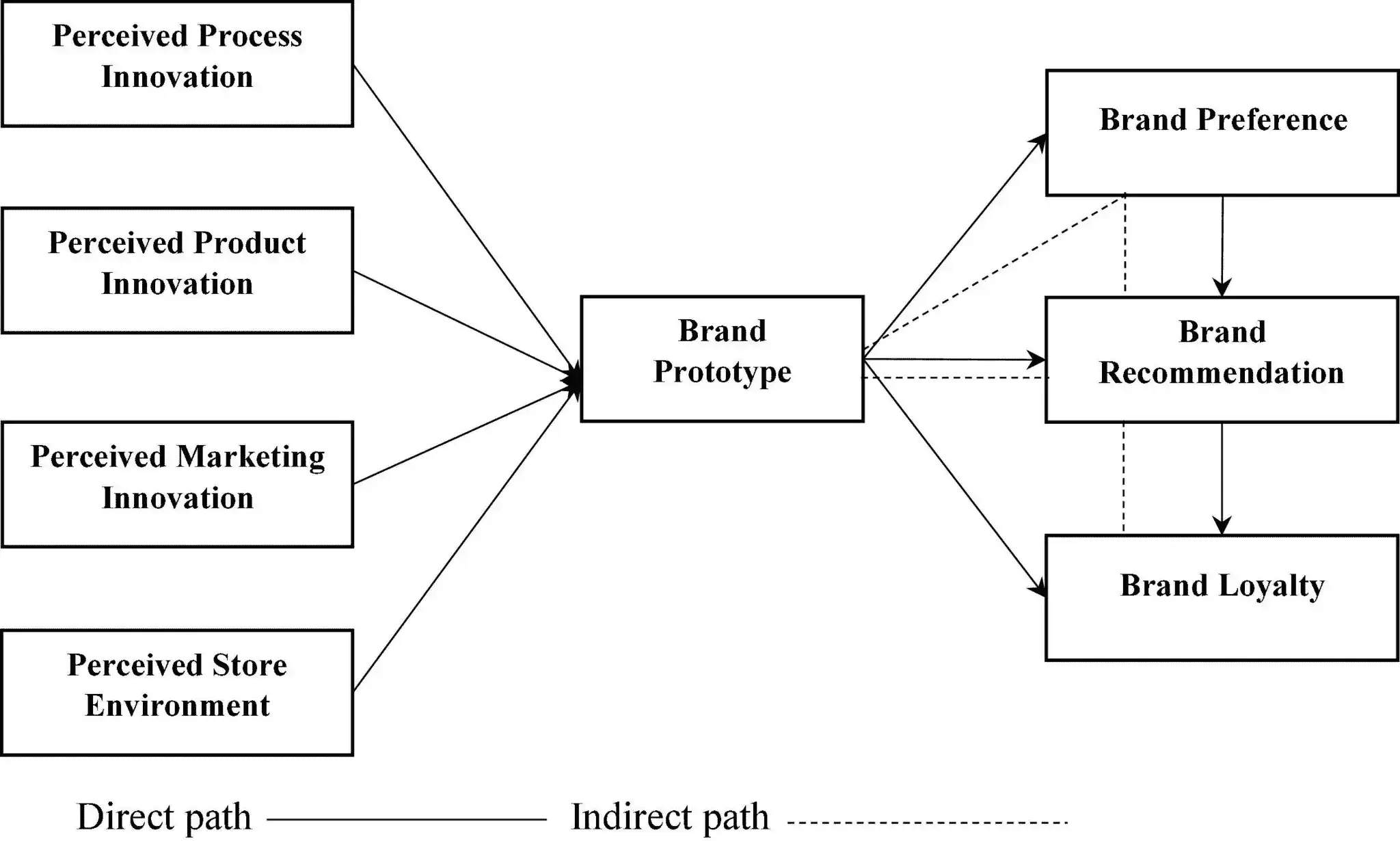
Figure 1: Firm innovation activities and consumer brand loyalty
(Source: Yi, Khan and Safeer, 2022)
Another factor that contributes to the brand equity of Apple is the perceived quality and reliability of the products (Kato, 2021). The brand Apple is associated with quality and excellent design, making products easy to use and highly durable and thus consumers are bound to stick to the brand (Mao et al., 2020). Apple’s constant upgrades in both the software and the hardware ensure that they satisfy their customers and thus they are not likely to switch to other brands (Mao et al., 2020). The second important aspect and a cornerstone of Apple’s success is the ability to build an emotional connection with the consumers. Apple has done an excellent job developing the repertoire by coming up with the company’s sleek design and user interface. This is so because of the integration of its ecosystem, the various Apple-branded devices such as iPhones, iPads, and Macs and various services such as iCloud and Apple Music all serve to reinforce this link (Roggeveen et al., 2021). The ecosystem effect makes sure that the users remain loyal to Apple as switching will interfere with several devices.
Get assistance from our PROFESSIONAL ASSIGNMENT WRITERS to receive 100% assured AI-free and high-quality documents on time, ensuring an A+ grade in all subjects.
Innovation is another factor of Apple’s brand identity that helps to foster brand loyalty (Qian, 2024). This is because consumers regard Apple as a company that is at the forefront of delivering technology innovations and experiences through features such as Face ID and synergy from the ecosystem (Qian, 2024). This innovation keeps the customers hooked and ensures that they have confidence in Apple to produce more industry-leading products hence the continuous support (Qian, 2024). Another important factor is the customer satisfaction and the perceived value that is attached to the product. The ability that Apple has to provide outstanding customer service support ranging from the physical retail Apple stores to the technical support and AppleCare options improves the perception of the buying processes and post-purchasing experiences (Confente and Kucharska, 2020). All the mentioned positive interactions help to consolidate the trust and the loyalty of the customer.
That is also true, but the price is peculiar to Apple only. Apple products are also slightly pricier than products from other companies and yet, consumers are willing to plump more per unit since it is associated with quality and class (Confente and Kucharska, 2020). This means that Apple products, a brand per se, is preferred even at a higher rate due to brand image and the company’s policy of charging premium prices. Another critical factor is that the brand oozes luxury which further cements the customer relationship (Confente and Kucharska, 2020). Marketing and branding strategies on the other hand build the foundation of brand loyalty as Apple resets its values, and assists in getting through to the emotional level of its consumers (Sohaib, Mlynarski and Wu, 2022). Limited adverts have been made by Apple where their adverts major in design and user experience which has also given Apple the personality of a brand. That passion for the consumers builds long-term relationships with them.
Conclusion
Apple’s brand loyalty is driven by a combination of factors: including product quality, brand effect, novelty, customer loyalty, perceived value and brand image, and lastly premium pricing strategy. The ecosystem is synchronised across devices; this means that customers tend to stick to this company given that it becomes slightly difficult to change to other rivals. Apple can guarantee that any of its customers who use its products are retained as customers regardless of the tough competition around since they get a lot of emotional and functional utilities.
Recommendations
According to the case, to sustain more than 90% brand loyalty, Apple should keep on researching its hardware as well as services. Adding new useful services to have a wide ecosystem will help to strengthen the perception of the brand’s worth. Customer service should remain fluid and adapt to consumers’ increasing reliance on digital platforms (Saarikko, Westergren and Blomquist, 2020). Last, whereas Apple has successfully employed premium pricing, the consideration of °exible” prices within emergent markets might increase customer loyalty to the price-sensitive region.
References
- Confente, I. and Kucharska, W. (2020). Company versus consumer performance: does brand community identification foster brand loyalty and the consumer’s personal brand? Journal of Brand Management, 28(1). doi:https://doi.org/10.1057/s41262-020-00208-4.
- Kato, T. (2021). Brand Loyalty Explained by Concept recall: Recognizing the Significance of the Brand Concept Compared to Features. Journal of Marketing Analytics, [online] 9(3). doi:https://doi.org/10.1057/s41270-021-00115-w.
- Mao, Y., Lai, Y., Luo, Y., Liu, S., Du, Y., Zhou, J., Ma, J., Bonaiuto, F. and Bonaiuto, M. (2020). Apple or Huawei: Understanding Flow, Brand Image, Brand Identity, Brand Personality and Purchase Intention of Smartphone. Sustainability, [online] 12(8), p.3391. doi:https://doi.org/10.3390/su12083391.
- Qian, R. (2024). Decoding the Apple Inc: The Detailed Analysis of Innovation, Marketing, and Brand Image. Journal of Education, Humanities and Social Sciences, [online] 30, pp.117–122. doi:https://doi.org/10.54097/cxytrv06.
- Roggeveen, A.L., Grewal, D., Karsberg, J., Noble, S.M., Nordfält, J., Patrick, V.M., Schweiger, E., Soysal, G., Dillard, A., Cooper, N. and Olson, R. (2021). Forging meaningful consumer-brand relationships through creative merchandise offerings and innovative merchandising strategies. Journal of Retailing, [online] 97(1), pp.81–98. doi:https://doi.org/10.1016/j.jretai.2020.11.006.
- Saarikko, T., Westergren, U.H. and Blomquist, T. (2020). Digital transformation: Five Recommendations for the Digitally Conscious Firm. Business Horizons, [online] 63(6), pp.825–839. doi:https://doi.org/10.1016/j.bushor.2020.07.005.
- Sohaib, M., Mlynarski, J. and Wu, R. (2022). Building Brand Equity: The Impact of Brand Experience, Brand Love, and Brand Engagement—A Case Study of Customers’ Perception of the Apple Brand in China. Sustainability, [online] 15(1), p.746. doi:https://doi.org/10.3390/su15010746.
- Yi, L., Khan, M.S. and Safeer, A.A. (2022). Firm innovation activities and consumer brand loyalty: A path to business sustainability in Asia. Frontiers in Psychology, 13(4). doi:https://doi.org/10.3389/fpsyg.2022.942048.
Recently Downloaded Case Studies by Customers
Bronchiolitis in Infants: A Nursing Care Analysis The investigation will focus on pharmacological administration, taking into...View and Download
Tesco’s Big Data Strategy and Forecast of 2024 In the dynamic landscape of the retail industry, data analytics has become...View and Download
Chapter One: Introduction and Background 1.1 Introduction The concept of health system resilience is gaining prominence across...View and Download
The Boy with the Top Knot The Boy with the Topknot is the memoir of the secrets, love as well as lies in Wolverhampton and is...View and Download
1. Contextual Introduction to Comprehensive Youth Offending Case Study UK Youth offending assignment help is defined as...View and Download
Introduction: Reflective Practice in Teaching Reflective practice plays an important role in my teaching; it helps me understand...View and Download