
K/615/3825 Promoting Health in Population Assignment Answers
Analyse public health policy development, population health determinants, health promotion models, and the planning and evaluation of a small-scale health promotion campaign.

- Introduction: K/615/3825 Promoting Health in Population
- Task 1: Understand how public health policy is developed to improve the health of the population
- 1.1 Discuss the process for developing a public health policy.
- 1.2 Describe the potential groups who can influence public health policy.
- 1.3 Explain how the government monitors the health of the nation.
- Task 2: Understand the factors that can affect health in the population
- 2.1 Assess the factors affecting health across the nation.
- 2.2 Discuss the potential benefits of improving health across the nation.
- Task 3: Understand how Health promotion can influence individuals to adopt healthy lifestyles
- 3.1 Evaluate two models commonly used in health promotion.
- 3.2 Assess approaches commonly used to increase public awareness.
- Task 4: Develop and analyse the effectiveness of a health promotion campaign
- 4.1 Produce health promotion material for a target audience.
- 4.2 Deliver a small health promotion campaign.
- 4.3 Analyse any effects of the campaign.
- 4.4 Explain the potential barriers to participation in health promotion campaigns.
- Type Assignment
- Downloads3024
- Pages15
- Words3690
Introduction: K/615/3825 Promoting Health in Population
In this paper, attention is paid to the discussions concerning the advancement of national and international policies in public health, population health determinants, and possibilities of health promotion for the active lifestyle. It includes evaluating the policy-making process, the players involved in decision-making, and the ability of governments to assess the health of the country. Moreover, it reviews different aspects of outlining determinants of health and the impacts of enhancing it within the context of K/615/3825 Promoting Health in Population. It also examines the models of health promotion and campaign awareness as well as the impact of the campaigns regarding changing behaviour. It also includes the planning, execution as well as evaluation of a small-scale campaign on health promotion and dealing with the challenges in participation.

 7 Years | MSc in Public Health
Reference materials and sample papers are shared to support understanding of academic expectations, assessment criteria, and written work standards. As part of assignments writing help service, the K/615/3825 Promoting Health in Population assignment answers demonstrate clear application of public health concepts, well-organised analysis, and evidence-based reasoning aligned with learning outcomes. These materials are intended strictly for study, guidance, and reference purposes only.
Task 1: Understand how public health policy is developed to improve the health of the population
This task examines how public health policies are developed to address population health needs. It outlines the stages involved in policy formulation, the range of stakeholders who influence decision-making, and the role of government in monitoring and evaluating the health of the nation to inform effective public health strategies.
1.1 Discuss the process for developing a public health policy.
The creation of policy in the United Kingdom regarding public health as explored in K/615/3825 Promoting Health in Population is a formal process that aims at solving health issues and enhancing health among the population. It starts with interpersonal care needs that arise from health research done by Public Health England (PHE) and the National Health Service (NHS) on prevalent sickness concerns, including obesity, air contamination, and smoking. For a priority issue, an issue formulation process is then implemented, which involves the development of policies by the government and its affiliate organizations, health practitioners, and scholars within related universities and institutions. Stakeholder involvement is critical as it involves all the players in the health sector and the general population, thus increasing the chances of their support. When adopted, the policy is effected through the local authorities, the National Health Service and relevant community programs. Goals and targets are set for each policy intervention and through regular evaluation, there is always an identification of gaps which allows for a re-strategizing using health indicators and feedback mechanisms. These include the Childhood Obesity Plan which focuses on healthy eating and the reduction of sugar intake and The Clean Air Strategy which looks at air pollution issues and their impact on the overall health of the nation. Also, shifting public health tasks to the Local Authorities fosters community-based approaches (Williams & Fullagar, 2019). All these policies show that the UK government cares for research-based interventions for enhancement of health in the general population.
1.2 Describe the potential groups who can influence public health policy.
Some concerned stakeholders play a role in the formulation of public health policy in the UK which includes; The civil servants belonging to central policy departments including the Department of Health and Social Care and Public Health England are responsible for formulating policies. Also, about policy-making, doctors, nurses, and other public health workers participate in research, they can make recommendations, and advocate policy changes. Since it is an authoritative paper, governmental and non-governmental organizations and charities like Cancer Research UK and the British Heart Foundation offer their contribution by giving their constant input and lobbying for the legislative changes that would be beneficial to the population. Businesses and industries including the food and food manufacturing industries can shape policies mainly in policy areas such as advertising policies (Razavi, Adams, & White, 2019). The media also plays a very important role in raising awareness and changing the perception of the public on actual health issues since this may pressure policy makers. Lastly, there are those of the community groups, and the general public who make their contributions through public consultations, and petitions among other forms of grassroots activism. The Health Belief Model and the Reasoned Action Approach depict ways in which perceptions, attitudes, and societal norms can influence public health (Lecture Notes, 2023). Thus, these groups work in unison to ensure that sound policies are developed, popular, and enforced in the health sector.
Get assistance from our PROFESSIONAL ASSIGNMENT WRITERS to receive 100% assured AI-free and high-quality documents on time, ensuring an A+ grade in all subjects.
1.3 Explain how the government monitors the health of the nation.
In this paper, the paper identifies various mechanisms that the UK government uses to monitor public health to improve policy implementation and thus, enhance the health of the population. PHE has a significant responsibility to gather and analyse health data through the use of surveillance systems such as the health survey for England and the National Child Measurement Programme. These measures help in gaining knowledge on obesity trends, behaviours, and incidences of diseases in various populations. Also, the government works together with organizations such as the NHS and universities in conducting surveys and assessing trends in epidemics. Advanced forms of surveillance include the use of digital health records as well as real-time monitoring of infectious diseases through the UK Health Security Agency (Bandy et al., 2019). I also explain that health supervision results from urban planning policies that involve measures such as the evaluation of air quality and housing standards, which affect public health (Carmichael et al., 2019). Due to this, the Health Belief Model and the Reasoned Action Approach models are essential in explaining the public response to health interventions and how they can be planned strategically with ease (Lecture Notes, 2023). Through the adoption of these approaches of monitoring, the government of the UK guarantees that the implemented public health policies are founded on relevant research evidence and changes in public health.
Task 2: Understand the factors that can affect health in the population
This task explores the key factors that influence health across the population, including social, economic, environmental, and lifestyle determinants. It also considers the wider benefits of improving public health outcomes for individuals, communities, and national systems such as healthcare and the economy.
2.1 Assess the factors affecting health across the nation.
The state of health of the people of the UK depends on numerous factors that include but are not limited to; socioeconomic status, lifestyle, environment, as well as health facilities. Social class has important implications for health development. Low-income people have poor access to health services, an unhygienic environment, and higher levels of stress causing the likelihood of chronic diseases (Anderson & Zimmerman, 2024). There are other factors which include the type and amount of food consumed by the individual, levels of physical activity, smoking, and alcohol habits. Unhealthy diets and lack of physical activity led to obesity, diabetes, cardiovascular diseases, and poor dietary habits and sedentary activities also contribute to the development of chronic diseases of the organs such as respiratory and liver diseases are made worse by smoking and excessive use of alcohol respectively (Lecture Notes, 2023). Other factors including air pollution, quality of houses, and availability of drinking water also influence the health of the nation. Pollution is known to cause respiratory diseases and diseases resulting from unfit living conditions including mental illnesses and infections. Also, legislation in urban planning plays a critical role in health as it affects the accessibility of quality space and PAS facilities (Carmichael et al., 2019). Availability of health facilities is another important factor since people who do not have constant access to health facilities, hospitals, and clinics have difficulties diagnosing the illness in time and receiving medical attention. In addition, education and health literacy also influence health behaviour and health status. Tensive to those people who possess a higher level of education, as these people are more knowledgeable and more likely to seek preventive measures. Finally, it can also be argued that other constitutional factors which include family history also dictate the susceptibility of an individual to certain diseases. Of course, through such factors arising from public health interventions and policies, governments can enhance the general population's health status and decrease inequalities in health.
2.2 Discuss the potential benefits of improving health across the nation.
The health of the public show’s numerous positive effects in the UK, such as decreased healthcare expenditures, improved productivity at work, and an increase in economic development in the country. The government has listed quite several benefits and one of them is that it will likely decrease the amount of money spent on health care. Through cutting out diseases like obesity, diabetes, and cardiovascular diseases, the burden on the NHS is less pressed amounting to the priority being shifted to other important aspects of healthcare (de Fougerolles et al., 2024). Also, there are more, such as due to better health, fewer sick days are taken, productivity is high and the output in the economy is boosted. Further, since improved public health also increases the life span, it also enhances the quality of life. Illness rates shorten the duration of people’s absence from social and work life, which is beneficial for society. He also noted that healthier people mean better education results because children with good nutrition and access to medical care will be better students and therefore provide a better and more skilled employee pool (Lecture Notes, 2023). Environmental impacts are also associated with enhancements in common healthcare well-being policies derived from spend on environmental improvement of fresh air, better nutrition, and enhanced exercise among other aspects (Carmichael et al., 2019). In addition, the concepts of vaccinations, and health promotion, promotes the health of the citizens and therefore economies through reduction of epidemics, and subsequent low attendance from diseases (Harrison et al., 2024). All these attributes work in synergy thus promoting economic development, stability of the society, and a healthy nation hence making public health investment a national priority.
Task 3: Understand how Health promotion can influence individuals to adopt healthy lifestyles
This task focuses on the role of health promotion in encouraging positive lifestyle behaviours. It reviews commonly used health promotion models and approaches to raising public awareness, highlighting how theoretical frameworks and communication strategies can support behaviour change.
3.1 Evaluate two models commonly used in health promotion.
There are two important models of understanding health promotion: the Health Belief Model and the Reasoned Action Approach commonly examined in K/615/3825 Promoting Health in Population. Both the models give conceptual maps in which to comprehend health-related behaviours and They can be integrated in public health promotions.
The Health Belief Model (HBM) therefore dwells on an individual’s perception of the threats of a particular disease, and the payoffs of practicing preventive measures. These important constructs are perceived susceptibility, perceived severity, perceived benefits, perceived barriers, cues to act, and self-efficiency (Green et al., 2020). HBM is a huge strength deliberated when it comes to developing interventions meant to address specific behaviour changes such as vaccination as behaviour as well as smoking cessation. For instance, breast cancer screening promotions have effectively been carried out using HBM by informing the dangers of late detection and gains from early diagnosis. Yet, HBM has some weaknesses, such as its concentration on cognitive factors only, which presupposes that people act in terms of risk perception. It does not incorporate social and environmental factors in the matter of health behaviour, which might be a disadvantage in tackling such comprehensive health problems (Lecture Notes, 2023).
The Reasoned Action Approach (RAA) builds on the Theory of Planned Behaviour and focuses on the purposeful nature of intentions as well as the attitudes, subjective norms, and perceived behavioural control as the determinants of behaviour (Hagger et al., 2018). This model’s major advantage is versatility in predicting behaviour in different health domains like smoking, exercise, and diet modification. For example, RAA has been employed in the anti-smoking campaign because social norms and peer pressure are common efforts in the promotion of someone else’s initiatives. Some of the features of the model such as its emphasis on intentions also highlight the benefit of the model that is in aiding the development of precise interventions. However, it is seen as a severe weakness that people may have intentions, but they are also influenced by various environmental physical, psychological, and financial pressures. Moreover, RAA fails to take into account habits that are still performed even if one wants to quit doing it (Lecture Notes, 2023).
3.2 Assess approaches commonly used to increase public awareness.
There are various strategies generally employed in order to promote the awareness of the public and the subsequent change of habits to healthier ones. There are those across the mass media, community-based, social network, and policy promotion activities, among others.
Communication through the mass media also has the added advantage of extending the reach of health information to the public. Some of the most common methods that have been often applied in delivering information on smoking cessation, vaccination, and healthy eating include; Television, radio, newspapers, and digital advertisements. Examples of such campaigns include; the United Kingdom’s “Chang4Life”, which has focused on issues to do with obesity and encouraged people to change for the better. The strength of mass media is getting a message across to millions of people; however, its weakness is that the approach does not address anyone in particular, which may not be effective for the targeted person and requires intervention and persuasion (Carmichael et al., 2019).
Community-based interventions relate to the promotion of health based on specific communities in a given society. These cuts include those in workshops, in schools, and during public health awareness occasions whereby practitioners directly interact with the members of society. Making lifestyle changes such as through smoking cessation support groups and workplace wellness have yielded the right outcomes on intended behavior. This advantage offers the facility to directly interact with individuals to provide support. However, one disadvantage of this strategy is that its implementation is limited to scaling and perhaps needs a lot of resources and manpower to extend the reach to other people (Lecture Notes, 2023).
Social media is widely used to promote health awareness among the people. Twitter, Facebook, and Instagram enable the spread of timely information, as well as informative posts and interactive campaigns from the side of the health organizations. It is very useful in contacting the young and creating positive social norms for the population. However, in this respect, the challenges of handling fake news as well as the sources of the information in circulation are sources of considerable concern (Hagger et al., 2018).
These are policies that are set at national and regional levels where they act as the framework for controlling the health of the public through law reforms such as that companies are not allowed to advertise cigarettes to the public and that all food manufacturers have to declare the number of calories in their products. These measures are useful to enforce healthier decisions, however, they could encounter opposition from certain industries or from individuals unwilling to switch.
Task 4: Develop and analyse the effectiveness of a health promotion campaign
This task involves the development, delivery, and evaluation of a small-scale health promotion campaign. It focuses on identifying a target audience, producing appropriate promotional materials, assessing the impact of the campaign on awareness and behaviour, and recognising potential barriers to participation.
4.1 Produce health promotion material for a target audience.
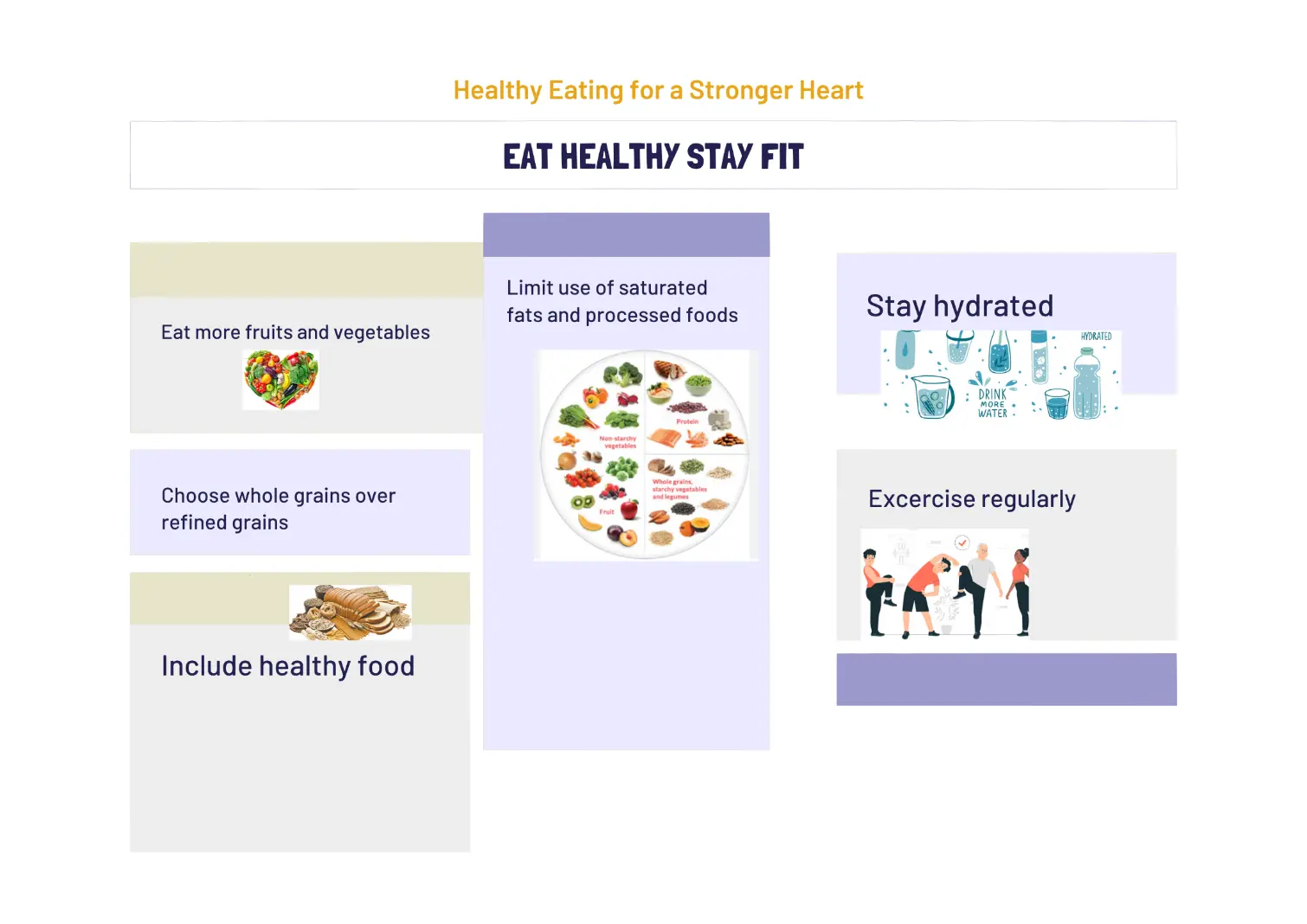
4.2 Deliver a small health promotion campaign.
To implement the “Healthy Eating for a Stronger Heart” health promotion campaign, the utilization of social media and community health promotional methods will be used.
Heated debates and information-sharing relevant to the subject matter will also be posted to the Facebook page as well as Infographics, Short videos, and Testimonials From people who have done some research about the benefits of improving their heart health via consuming the right foods. Weekly live questions and answers with professional dieticians will be held to discuss problematic issues in nutrition and to get a professional opinion with references to the latest research. A specific campaign hashtag such as #HeartHealthyLiving will enable the participants to post images of the health and fitness meals they are consuming alongside motivational images of exercise. Thus, community workshops and events will be held with the local health centres and supermarkets. It will provide an opportunity for the participants to attend free nutrition seminars that will address such topics as heart-healthy foods, portion control and how to read food labels. Cooking demonstrations are the low-sodium, low Cholesterol recipes that will be in sight Stage. Some of the other general health checks that will be occasionally conducted include blood pressure checks, cholesterol checks, etc with a view of checking possible risks at an early stage.
4.3 Analyse any effects of the campaign.
To measure the effectiveness of the “Healthy Eating for a Stronger Heart” campaign, 100 participants of different ages, adults, children, and elderly people were asked several questions. As proven in the study, there has been a rise in awareness of healthy foods by 40% and an improved food choice by 25%,_traits including a decrease in processed foods and increased take of fruits and vegetables. Fifty-five-year-olds confirmed that this behaviour changed their lifestyles by making them more conscious of the kind of foods they were taking and even became used to reading the nutritional value labels. About 30 percent of children who participated were more knowledgeable in the matter of proper eating from the community events which made many of them eager to try out the fruits and vegetables. In this study, elderly participants benefited from specific advice from nutritionists in that 20 percent of the participants changed their meals as advised by the nutritionist. Nevertheless, some difficulties were observed in the course of the study Though it is not a long list of challenges, the following are worth mentioning: Specifically, the youth aged 18-30 years did not show much commitment to the change; most people have not been able to change their eating habits. Also, due to rampant misinformation on social media, there was a need to counter some myths that delayed the process. Key points that can be learned are the ways of utilizing such activities and informative sessions like cooking sessions for modification of people’s behaviour in the long run with support from peers. Future campaigns will entail more engagement of ‘word-of-mouth” tactics and health challenges especially for the young adult market.
4.4 Explain the potential barriers to participation in health promotion campaigns.
There are various reasons that people cannot practically get involved in the health promotion campaigns. This is because, some people are not aware of the need to Eat healthy for them to Genetically be healthy. In regards to this, there is a need to simplify the messages and utilize multiple channels to pass the information. Other factors that may reduce the population’s participation include cultural beliefs and the beliefs regarding food and diets. Some audiences have traditional diets incompatible with those suggested to be healthy. To deal with this, culturally suitable programs that would interpose traditional foods for those programs should be developed. Workplace resistance and personal attitudes to change constitute another factor that affects organizational change. In this case, people would not be willing to change their behaviour for the better because of one reason or the other or rather because it is easier to continue doing things the wrong way. Home based education where clients are given exercises such as being taken through certain recipes and taught how to go about preparing healthy foods can assist in the slow change process as well as peer counselling. As a final factor, it is possible to note the restricted access to healthy foods due to the lack of funds. This breaks the measures to the task such that; the promotion of more affordable options and partnering with local supermarkets to achieve greater discounts can assist in fulfilling this effort.
Conclusion
This assignment focused on the topic of public health policymaking, population health determinants, and methods of interventions to enhance health among the populace. It considered the overall strategy, major players, and involvement of the UK’s policymakers and how the government watches these activities. The following aspects of health determinants; economic and social status and health choices and lastly the prospects of attaining better health for the public were determined. The criterion for the evaluation of the Health Belief Model and the analysis of different public awareness strategies based on the Reasoned Action Approach. An intervention approach referred to as the “Healthy Eating for a Stronger Heart” was indeed created, implemented, and evaluated accordingly. Last, the obstacles to participation were also discussed, and courses of action were put forward to increase learners’ involvement.
References
- Capewell, S. & Millett, C. (2024) ‘Barriers to adopting healthy behaviors and strategies to overcome them’, Public Health Journal.
- Carmichael, L., Townshend, T. G., Fischer, T. B. & Lock, K. (2019) ‘Urban planning as an enabler of urban health: Challenges and good practice in England following the 2012 planning and public health reforms’, Land Use Policy. Available at: https://www.sciencedirect.com/science/article/pii/S0264837718307361.
- de Fougerolles, T. R., Baïssas, T., Perquier, G. & Vitoux, O. (2024) ‘Public health and economic benefits of seasonal influenza vaccination in risk groups in France, Italy, Spain, and the UK: state of play and perspectives’, BMC Public Health. Available at: https://link.springer.com/article/10.1186/s12889-024-18694-5.
- Green, E. C., Murphy, E. M., Gryboski, K. & Sweeny, K. (2020) ‘The Health Belief Model’, ResearchGate. Available at: https://www.researchgate.net/publication/346891594_The_Health_Belief_Model.
- Hagger, M. S., Polet, J. & Lintunen, T. (2018) ‘The Reasoned Action Approach Applied to Health Behavior’, Social Science & Medicine. Available at: https://doi.org/10.1016/j.socscimed.2018.07.038.
- Harrison, C., Butfield, R., Yarnoff, B. et al. (2024) ‘Modeling the potential public health and economic impact of different COVID-19 booster dose vaccination strategies in the UK’, Expert Review of Vaccines. Available at: https://www.tandfonline.com/doi/abs/10.1080/14760584.2024.2383343.
- Lecture Notes (2023) Health Promotion and Public Health Policies.
- Micha, R., Peñalvo, J. L., Cudhea, F. et al. (2024) ‘Impact of dietary changes on cardiovascular health: A systematic review’, The Lancet.
- Razavi, A., Adams, J. & White, M. (2019) ‘Shaping public health policy: thematic content analysis of responses to a public consultation on the regulation of television food advertising to children in the UK’, BMJ Open. Available at: https://bmjopen.bmj.com/content/9/8/e028221.abstract.
- Williams, O. & Fullagar, S. (2019) ‘Lifestyle drift and the phenomenon of "citizen shift" in contemporary UK health policy’, Sociology of Health & Illness. Available at: https://onlinelibrary.wiley.com/doi/abs/10.1111/1467-9566.12783.
Recently Downloaded Answers by Customers
QUESTION 1 Trust Rapid Assignment Help for detailed, accurate, and plagiarism-free Assignment Help, we provide expert guidance...View and Download
Question 1 Enhance your grades with our premium-quality Assignment Help UK, carefully tailored to suit your learning...View and Download
QUESTION 1 Enhance your academic performance with Online Assignment Help. Get expert guidance, well-researched content, and...View and Download
Introduction - Optimisation and Decision Modelling Assignment Answers The Optimisation and Decision Modelling Assignment deals...View and Download
QUESTION: 4 Get timely, well-researched help with your Online Assignment Help, ensuring you stay on top of your...View and Download
Question. 1: Research paper analysis Rapid Assignment Help delivers excellence in education with tailored Assignment Help,...View and Download