Meditation in Managing Anger Assignment Sample
Examine meditation practices, emotional awareness, anger management strategies, mindfulness, family relationships, and conflict resolution in daily life.

- 1. Introduction
- 1.1 Research background
- 1.2 General overview of the literature
- 1.3 Research rationale
- 1.4 Research aim
- 1.5 Research questions
- 2. Method
- 2.1 Research Methods
- 2.2 Approach
- 2.3 Data collection
- 2.4 Ethical considerations
- 3. Results
- 3.1 Summary of primary findings
- 3.2 Thematic analysis
- 4. Discussion
- 4.1 Interpretation of findings
- 4.2 Relation with previous findings
- 4.3 Future Implications
- Type Assignment
- Downloads3942
- Pages37
- Words9185
1. Introduction
Meditation is not only an agent that helps in reducing anger, but it also plays a critical role in improving self-regulation and increasing emotional awareness. As mindfulness develops through training, an individual learns to observe one's thoughts and emotions without immediately acting on them, thus fostering better emotional regulation. The practice allows one to react thoughtfully to family conflicts rather than impulsively, greatly improving interpersonal interactions. Meditation develops psychological resilience, enabling one to recover from emotional perturbations more effectively. Benefits such as these make meditation a proactive measure for maintaining long-term emotional health, especially regarding recurring anger caused by familial difficulties.
Sample papers and reference materials are provided to help students understand assignment structure and enhance academic skills. Our assignment writing service offers detailed examples while ensuring originality and clarity. The Meditation in Managing Anger assignment sample demonstrates effective organisation, practical application of theoretical concepts, and critical analysis of meditation techniques. These resources are intended solely for study and reference purposes.
1.1 Research background
The current generation suffers from many problems in their daily life. Similarly, one of the most significant problems they face is anger arising from family issues. This has become a common emotional response that negatively impacts mental health, relationships and overall well-being. In accordance, unresolved anger leads to aggression, press and communication breakdowns within families. Therefore, to manage the anger issues caused by family problems meditation has gained significant attention as a non-invasive and holistic approach. This noticeably helps regulate emotions which helps reduce anger. According to Divino (2023), meditation is a practice rooted in ancient traditions which involve mindfulness, deep breathing and focused awareness to cultivate inner peace. The study by Calderone et al. (2024), highlights that meditation enhances emotional resilience by promoting self-awareness, reducing stress and improving cognitive control over emotions. As a result, mindfulness-based interventions help individuals recognise triggers, regulate impulsive reactions and foster a sense of calmness. On the other hand, in spite of growing interest in meditation for emotional regulation, its specific role in managing anger caused by family problems remained unexplored (Doménech et al. 2024). Thus, understanding individuals' perspectives on meditation as a coping mechanism might significantly provide valuable insights into its effectiveness and acceptance. Therefore, this research exercises exploring the ways meditation is perceived and utilised in managing angles related to family conflicts. It also helps shed light on meditation's potential as an accessible and sustainable anger management strategy. The research findings further contribute to the development of personalised therapeutic approaches for individuals who experience family-induced stress and anger.
Whether you’re dealing with nursing theories or clinical practices, our nursing assignment help ensures you get the best support to meet your academic requirements.
1.2 General overview of the literature
Experience of anger due to family problems along with common triggers, emotional responses and coping mechanisms
Anger arising out of family issues is not rare in people and results from issues of conflict, arising from unmet expectations or injustice within the family setting. As stated by Blake et al. (2023), “Negative life events, such as physical illness, psychological problems, addiction, problems with the law, being a victim of abuse or financial problems, can contribute to relationships with siblings becoming less active and supportive, and more strained”. These experiences give rise to feelings of annoyance, anger, longing and sadness resulting in temper tantamount to aggression, seclusion or negative aggression. The study by Brundin & Languilaire (2023), highlighted that feelings range from irritation or sadness to furious, which may lead to long-term unfavourable impacts on relationship characteristics. Moreover, attachment theory showcases that attachment styles influence the ways individuals handle conflict (Laufer et al. 2024). Based on this theory, secured attachment fosters open communication, while anxious or avoidant attachment leads to unhealthy conflict resolution strategies such as withdrawal or aggression (Laufer et al. 2024). Hence, it worsens the anger issues. Specifically, meditation has been known to enhance self-compass, emotional inversion and stress management. Hence, it can be useful in reducing anger due to family issues in a positive manner.
Importance of choosing medication as a tool for anger management
Meditation is the most suitable method of anger management because of its healthy and effective ways of dealing with the matter. In accordance, based on Phong (2024), “Buddhist meditation practices play a crucial role in developing individuals’ innate self-healing abilities and cultivating enlightenment within themselves”. It helps in the maintenance of normal cortisol levels, low blood pressure, and a healthy brain. Thus, supporting good healthy psychological well-being in the long run. In addition, the purpose of meditation is achievable, inexpensive and does not complicate any side effects as that of medical treatments (Jia et al. 2021). It improves self-executive functions and thus instead of having persons acting in a foolish manner when faced with stimuli that provoke anger, one can act rationally and calmly. Consequently, cognitive-behavioural theory or CBT suggests that thoughts influence emotions and behaviours (Palmieri et al. 2022). Thus, meditation is beneficial to help individuals as they become aware of their negative thought patterns which allows them to reframe and respond to anger triggers more rationally (Palmieri et al. 2022). Furthermore, meditation enhances interpersonal interaction by decreasing reactive aggression and enhancing the feeling of empathy. However, meditation offers some difficulties that are most common with routine and discipline that many people find challenging. Therefore, it effectively trains one to maintain an internal state of equilibrium and self-control, which makes it a useful, harmless tool in dealing with anger.
Perceived usefulness of meditation in helping individual anger management during family conflicts
Meditation helps to manage anger during conflicts with family members because it enables overseeing all the psychological practices that would assist in managing anger. It enables people to have a moment to think so that anger-related behaviours are not brought out in extreme measures. As stated by Ho et al. (2021), “loving-kindness meditation demonstrated that a brief practice was able to increase feelings of social connectedness and affiliation toward strangers”. However, it is somewhat relative, some people may have a problem with doing it constantly, while others say it is not enough during stressful conditions (Matko et al. 2021). Consequently, a psychological injury may need therapies other than meditation since the problem may lie deeply in the affected person. Based on psychodynamic theory anger might arise from unconscious conflicts or repressed emotions (Henriksen et al. 2021). Similarly, meditation aids awareness but does not necessarily resolve underlying psychological injuries which require deeper therapeutic interventions (Henriksen et al. 2021). Simultaneously, it is for this reason that many have found solace in meditation as a way of helping them to attain adequate patience, strength and proper way of expressing themselves during family altercations.
Impact of meditation on family relationships, interactions, communication and conflict resolution with family members over time
Meditation is effective for the improvement of family relationships since it leads to reduced temper, increased patience and better empathy. In time, it improves interactions since it eradicates hasty responses, in favor of well-intentioned ones. Based on Ben-David (2024), “In specific contexts, there is a tight and close connection between meditation, samādhi, and mindfulness (sati)”. Accordingly, creating self-awareness on subjects such as stress, members of a family faceless struggle while dealing with conflicts and trying to find solutions for the problems. Similarly, effective use of mindfulness also prevents the build-up of intense anger and aggression hence avoiding futile cycles of arguing. The family system theory also indicates that emotional self-regulation within a family affects overall dynamics (An et al. 2024). According to this theory, mindfulness can help individuals detach from emotional reactivity ultimately reducing conflict escalation (An et al. 2024). Thus, as far as the relations between family members are concerned, meditation helps enhance formal and warm feelings, thereby creating more favourable conditions for sharing them. However, it seems to work only when applied consistently and eagerly, since the existing conflicts can often need an additional intervention of a therapist.

 7 Years | MSc in Public Health
Insights for others considering meditation as a strategy for managing anger related to family issues
Meditation is a systematic approach to handling anger since it helps in the regulation of emotions owing to the increase in focus and relaxation. It helps in non-productive assertiveness, that is, it aids one in digesting outcry before aggression. Accordingly, mindfulness-based cognitive therapy or MBCT states that mindfulness meditation with cognitive therapy helps enhance emotional regulation and reduce automatic aggressive resp responses (Shchaslyvyi et al. 2024). Hence, it is beneficial to reduce and manage anger related to family issues. However, it differs for some depending on the level of consistency or for those who may deem it inadequate as their sole coping mechanism in stress and difficult situations under their control. Hence, they may need to seek other forms of help, such as therapy or communication skills. Another instrument that affects meditation adoption is culture and personal beliefs (Divino, 2024). It must also be noted that meditation must be supplemented with other anger management approaches, such as conflict-solving strategies and counselling as well as social support.
Conceptual framework
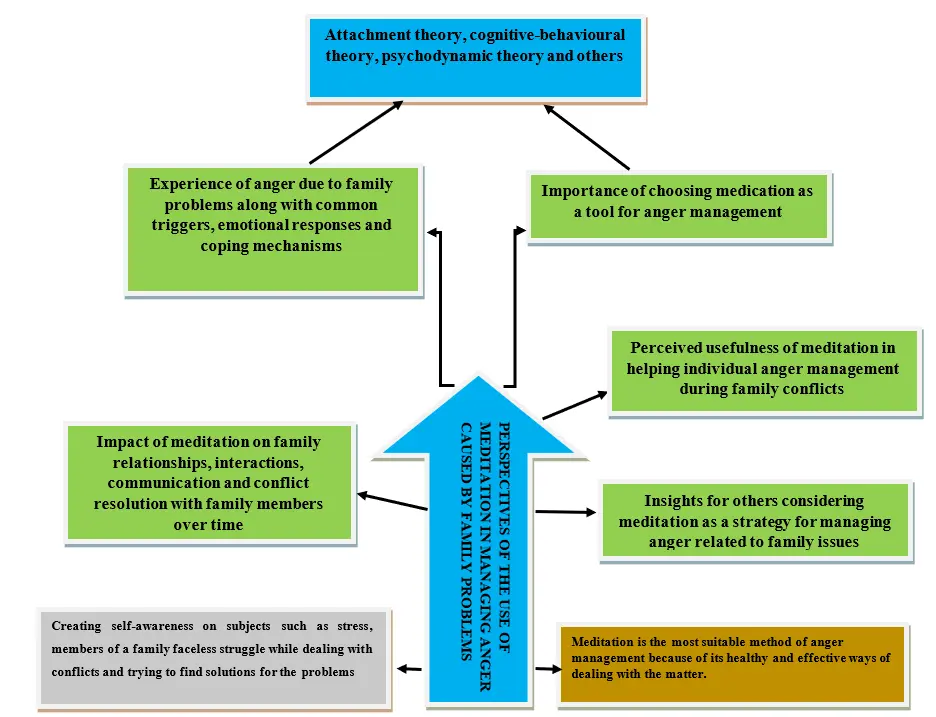
Figure 1: Conceptual framework
1.3 Research rationale
There is growing interest towards the use of meditation as a technique for managing feelings. However, there is relatively limited knowledge about the use of this tool in controlling anger triggered by issues within the family. Based on Ng et al. (2023), stress from family members evokes stronger reactions than from other sources and must result in the worsening of the relationships within the family. Hence, this paper focuses on comprehending ways in which anger can be controlled through meditation that enhances self-identification skills, emotional regulation and the decrease of stress. Thus, in terms of individual perception, this paper seeks to explore whether meditation is effective in managing intra-familial anger and advancing knowledge in psychology and therapy on general and comprehensive anger management.
1.4 Research aim
The aim of this research is to understand the perspective of the use of meditation in managing anger caused by family problems.
1.5 Research questions
- What are the individual experiences of anger in the context of family problems, identifying common triggers, emotional responses, and coping mechanisms?
- What are the explanations for choosing meditation as a tool for anger management, including how and why they initially turned to meditation?
- What is the perceived usefulness of meditation in helping individuals manage anger during family conflicts and identifying any immediate and long-term changes in emotional response and behaviour?
- What is the impact of meditation on family relationships, exploring how it affects interactions, communication, and conflict resolution with family members over time?
- What are the insights and recommendations for others considering meditation as a strategy for managing anger related to family issues, based on participants' shared experiences and advice?
2. Method
This research employs a qualitative approach to explore participants’ experiences with meditation in managing anger caused by family issues. By using semi-structured interviews, the study gathers in-depth insights into personal practices, emotional responses, and perceived outcomes. This method allows for a rich understanding of how meditation contributes to emotional regulation and family relationship dynamics.
2.1 Research Methods
This study uses a qualitative approach to explore how meditation helps manage anger from family issues. It focuses on understanding participants’ experiences, beliefs, and perspectives.
2.2.1 Philosophy
The philosophy of any research is crucial as it provides an initial structure which further helps identify and select effective methods to collect information to understand the use of meditation in managing anger due to family issues. In accordance, this research has selected the interpretivism method. According to William (2024), the interpretivism approach helps understand crucial insights based on exploring meanings, beliefs and perspectives. This method is also very effective in getting important information and acknowledges how cultural, historical and social factors affect various phenomena. On the same note, this approach helps gain different perceptions which makes it appropriate to use when analysing various aspects such as the effects of meditation on anger caused by family issues.
2.2 Approach
This research employs the inductive approach to establish the role of meditation in calming down anger that arises out of family issues. According to Makri & Neely (2021), the inductive approach relies on patterns instead of advancing hypotheses prior to an investigation. This kind of approach enables the free exploration that is useful in establishing the importance of meditation when it comes to anger. It also offers richness and depth which are particularly helpful in areas of interest of a social nature especially issues of anger in a family setup. Accordingly, this methodology tends to make new developments that, at times, complement previous theories and come up with other profound findings.
2.3 Data collection
2.3.1 Participants
The respondents in the research comprised seven people who have engaged in meditation as a way of coping with anger caused by family-related matters. The tutorials had persons with meditating experience of at least a couple of years to those with a couple of decades of practice. The styles used in meditation included Samatha, Vipassana, Metta also known as Loving-Kindness, and mindfulness to the present moment (Walpola et al. 2022). They were able to explain how meditation affected them by increasing self-understanding, helping to pass on the tendencies towards impulsive behaviours and even working on mending the issues in their families. Consequently, some participants encountered some issues like misconceptions of others about calmness or the inability to practice regularly. Moreover, all the participants reported that meditation helped to manage anger and improve mood.
2.3.2 Materials
The interviews were conducted aseptically with the help of a voice recorder so that all the detailed information could be recorded well and properly. Interviews were structured with a number of questions however they allowed the participants to give their perspectives on how they had used meditation to handle anger as a result of family disputes. All the sessions took about half an hour for which the participants were provided with a private room so as to uphold confidentiality. The interview plan focused on problems like personal meditation practices, feelings and perceived advantages. Example questions included: "What meditation techniques do you find most effective for managing anger?" and "How has meditation impacted your family relationships?"
2.3.3 Procedure
The research methodology used in the study was a qualitative method that included the use of semi-structured interviews with the participants hence the experience by participants of anger due to family-related pull factors. The participants were purposively recruited if they had been practising meditation for more than six months and if they had experienced the anger brought about by family issues. Similarly, all the participants therefore consented to be interviewed for thirty minutes individually and comfortably in a secluded area. As a preliminary procedure, participants completed the consent form and got a sheet of information concerning the study (Rowlands, 2021). In admissions, interviews were conducted, with the participants’ consent and voice recorded and later transcribed for analysis. Accordingly, semistructured questions covered meditating procedures, feelings and the perceived effects on family members’ relations. The method adopted in deciphering themes and patterns in the responses was the thematic analysis (Ozuem et al. 2022). There was an assurance of the safety of patient info through the removal of identity numbers from the transcripts.
2.4 Ethical considerations
The administration of this study was given ethical approval from the ethical panel of the Psychology Department at Staffordshire University. Participants gave their informed consent before interviews, to guarantee that their participation was voluntary and could withdraw at any one time. Accordingly, to ensure confidentiality of data, participants were assigned identification numbers which were used to label their transcripts and data was stored in a secure place. After the interview, participants were allowed to debrief in case of any consideration. The study followed the principles of ethical practice throughout the whole process and participants’ confidentiality and welfare were respected and protected.
3. Results
The findings indicate that meditation is an effective tool for managing anger caused by family conflicts. Participants reported improved emotional regulation, increased mindfulness, and better communication with family members. Challenges such as consistency and time constraints were noted, but overall, meditation contributed positively to emotional well-being and family harmony.
3.1 Summary of primary findings
Meditation is shown to be an essential element in handling anger caused by family conflict, as well as in improving emotional well-being and relationships.
Meditation as an Anger Management Tool
Although participants agreed broadly about the effects of meditation, they frequently offered remarks in which they indicated that Meditation in Managing Anger is useful because it reveals emotions more deeply, in particular anger. Meditation, said Participant 1, "calms the thinking down" and inspires an individual to feel emotions instead of having them "in your mind." Like Participant 2, Participant 3 asserted that anger arose from the ego, and Buddhist meditation could also subdue the ego, which would eventually lower the strength of anger as well. Understanding that emotions are impermanent helped Participant 3 decrease the intensity, Participant 3 said. This falls in line with the Buddhist teachings of Anicca, the impermanence premise, which states that emotions, as well as any experiences, are impermanent and one should not hang on to them.
Get assistance from our PROFESSIONAL ASSIGNMENT WRITERS to receive 100% assured AI-free and high-quality documents on time, ensuring an A+ grade in all subjects.
Meditation Techniques and Their Effectiveness
The techniques mentioned for coping with anger were different forms of meditation. Awareness and emotional intelligence that Participant 1 talked about often as being cultivated through samatha meditation, such as breathing mindfulness. Participant 4 stated that another widely practised method was met, such as loving-kindness meditation, that “soothes the mind and heals anger quickly”. Moreover, Tradition's Buddhanussati, which is a recollection of the Buddha's qualities and Vipassana, which is insight meditation, acted as a deeper transformation. The core of the argument is that Samatha and Metta meditations provide immediate relief, while a practice such as Vipassana promotes long-lasting behaviour change through the development of wisdom and lack of selfishness.
Effect on Emotional Response and Behavior
Increased emotional regulation and mindfulness were most reported by the participants. Meditation helped detect anger early on, making it easier to prevent escalation, Participant 1 observed. According to Participant 2, mindfulness equips one to “see the anger before it takes action or form in speech,” thus facilitating more responsive rather than impulsive reactions. Participant 6 reported that before meditation, anger had brought him to the point where he imagined committing suicide, but now inner peace prevails, illustrating the power of meditation to change emotional health.
Challenges and Barriers
Despite having several benefits, it has also disadvantaged as Participant 1 puts it, "Anger is a very fast emotion," and it is difficult to control in real time. Participant 2 brought up his point that sometimes calmness was misinterpreted as weakness, resulting in other people taking advantage of it. As mentioned by Participant 4 and Participant 6, time was the main obstacle, and it reflects the issue of being consistent in practice. Thus, these challenges show that meditation is a strong tool, but it has its limitations to apply in daily circumstances: dedication and adaptation.
Family Relationships and Conflict Resolution
It was discovered that meditation can indeed improve family relationships, not only by helping people to be more patient, to understand each other and to improve emotional intelligence. Both partners started meditating, and Participant 1 claimed there was a strong reduction in arguments. They told Participant 5 that meditation allowed them "to be in witness of the conflict that doesn’t mean that I am in the conflict." But Participant 7 also admitted that though meditation is useful, it is "no guarantee of perfect maturity, just a path of continuing progress."
According to findings, meditation is a transformative tool for the management of anger, regulation of emotion, and family harmony. The benefits definitely outweigh the challenges: speed of emotional reaction, and incorrectly perceived calmness from a social standpoint. It is not merely a practice but rather, a way of life. The process of cultivation of mindfulness, loving kindness and insight gradually leads one toward resilience.
3.2 Thematic analysis
3.2.1 Theme 1: Personal anger triggers and emotional responses to anger significantly cause family conflicts.
Mediation is an effective intervention to Sovereign those responses that arouse the continuous emotional response. The anger present within family settings is a result of personal triggers like unmet expectations, past grievances, or perceived injustice. Undiluted, it is an emotional response that can lead to having little fights turn into long-term conflicts. Psychological studies show that anger is a secondary emotion normally activated as a defensive reaction to threats or frustration. Due to their nature of interactions, anger is more potent in familial relationships, where emotional bonds are deep. This is in line with the fact that emotional triggers are particular to people such that the way one person interprets a matter may differ a lot from another’s interpretation which may result in conflicts motivated by emotional responses based on the subjective responses and the same triggers turn into anger habits, and the reoccurrence of same triggers solidifies the reactive behaviors. Therefore, a cycle of anger and conflict happens without any conscious intervention. Meditation is a technique through which one breaks the habitual nature of the anger responses. It brings up self-awareness, emotional intelligence and impulse control. Practising mindfulness allows one to disassociate from an immediate emotional response and gain insight into their thought process. Psychological principles such as mindfulness allow individuals to identify triggers before these take the form of a full-blown emotional reaction, which is what this is saying. Additionally, the practice of meditation helps bring cognitive flexibility to bring fresh thoughts to conflicts. The meditator learns to observe his emotions, rather than being led by impulse. In family dynamics, the conflicts often come out of the necessity to respond to each other with impulsive, emotionally charged responses instead of intentionally. For example, mindfulness meditation is about recognizing and accepting our emotions without harming them destructively. A transformational aspect of meditation is to "observe the emotion" as opposed to "becoming the emotion." Non-reactivity encourages people to handle conflicts without aggression, with the ability to engage in the conflict gracefully.
Thus, participant 1 supported this by saying “Become more directly aware of emotions," allowing them to manage anger effectively before it escalates into conflict.”
The practice of meditation alters the neural pathways in the brain, in particular, the amygdala, which controls emotional responses. From the studies, it has been found that the practice of sustained meditation helps to decrease the intensity and frequency of anger episodes, and therefore decreases someone’s vulnerability to conflict triggers in the long run. The emotional stability of the person in this family context translates to better communication, as well as greater harmony in the relationship. It is not only the ability of meditation to help an individual control their emotions but also the capacity it holds to instil in the individual the capability to empathize with family members. This is especially important in the case of conflicts because many such disputes occur because of misunderstanding and the lack of emotional attunement amongst members of the family. Besides, meditation also improves emotional intelligence by enhancing self-awareness and social awareness. There is a key role of emotional intelligence in conflict resolution, and this enables an individual to perceive emotions accurately and respond understandably.
Participant 3 stated, "slow down reactions and make responses more mindful rather than impulsive” which helps in demonstrating the overall efficacy in significantly managing the familiar disputes.
Although meditation can be beneficial when managing anger, it is only when committed to and repeated consistently that it proves effective. Unfortunately, being in the habit of meditating consistently is challenging for so many people, who, unfortunately, are restricted by time, scepticism, or the habit of emotional patterns. Furthermore, there may be problems regarding the societal perception of meditation. Meditation may be seen both as a passive resolution of conflict by some and as a weakness, by mistake, where emotional restraint could be mistaken as strength. It also creates an impression that can prevent people from fully embracing meditation as an anger management technique, especially in countries where the practice of conflict resolution hinges on expressing assertiveness in a quarrel. It also has another limitation and that is that anger tends to appear quickly. Unlike deliberate meditation, anger can suddenly occur in the course of any family interaction. Long-term meditation practice imparts emotional regulation but does not predict that one may always respond with mindfulness in high-stress situations.
Participant 7 pointed out that "anger often arises quickly, making it difficult to control in the moment."
It can be defined as the existing challenges of real-time implementation. Hence, it can be depicted that the theme is highly relevant to the research which confirms that anger is deeply rooted in personal emotional triggers, and it might become a primary cause of family disputes to some extent.
3.2.2 Theme 2: Changes in emotional awareness and self-regulation based on meditation techniques adequately help in anger management and provide short-term and long-term benefits.
Ultimately, the research indicates that such a choice in meditation practice is heavily related to the background a person comes from, family and the type of religion followed. Taken from the interviews, the codes reflect that ‘Buddhist Upbringing’ motivates an individual to do meditation. The first inspiration was exposure to Buddhist teaching and family background, as lots of participants reported.
For example, Participant 4 "Since childhood, I can say like 30 years now, more than 30 years actually, like when I started Dharma school time, school age".
This further emphasizes that the theme is displayed as religious and family influences involved in the meditation engagement. Nevertheless, meditation for anger management begins with an initial motive of background and religious beliefs, but they are not the only or even main reasons for continuing meditation practice for anger management. There is evidence in the interview data that individuals do continue to meditate because of their ability to douse their ego, develop mindfulness and attain calmness. These factors directly play a part in anger management rather than just the first spurring of motivation.
Hence, participant 1 noted, "I think anger is like an emotional response, and so for me, Meditation in Managing Anger helps me to become more directly aware of my emotions." This demonstrates how the practice improves emotional intelligence and supports long-term anger management.
It can be depicted that if the family has religious and other influences on an individual, it can be stated that the particular person might sustain meditation practice driven by emotional revolution, self-awareness, and family pressure. Aside from that, it is important to apply meditation techniques such as Vipassana, Metta “loving-kindness”, and Samatha meditation “Meditation Techniques” to control anger. Participating in those techniques helps participants realize when an emotional trigger has struck and can respond mindfully instead of reactively.
This further proves that although initial background and beliefs can be used as a starting point for anger management, the actual process of anger management is actually due to practice and the good application of techniques.
For instance, participant 1, "I usually do maybe 30 minutes a day of breathing mindfulness meditation... I think that helps me to calm things down so that I become more sensitive to my emotional state".
In addition, the theme under consideration does not exhaustively encompass additional important determinants of anger management via meditation. Some of the codes on meditation including Emotional Balance and Avoiding Conflict, indicate what impact meditation has on the development of emotional intelligence and self-awareness.
Moreover participant 5, "Now I know that I have anger and changes in emotions. Now I am mindful when I think, when I'm responding to situations, conflicts".
Such an occurrence proves that it is not simply the motive for getting angry in the first place, but the development of emotional resilience through meditation over time, that makes it easy to manage anger.
Additionally, the theme disregards the reasons that practitioners face when attempting to use meditation as an aid for anger control. Codes for barriers such as Time Constraints, Family and Social Commitments indicate that in most cases, it is challenging for people to sustain their meditation practice especially because of practical limitations that are not necessarily connected with their life background or religious beliefs. As a result, it implies that the theme is a legitimate way of viewing things without completely summarizing the intricacy of employing meditation as a means of dealing with anger.
Considering all these evaluations, it can be stated that the theme is partially true, but it’s not entirely accurate and closer to a partial truth to correctly overlook some important and more impactful parts of meditation in anger management. Interview data strongly indicate, however, that emotional intelligence, mindfulness, and hard practice of meditation techniques are what, but not what religious and familial influences provide, are used to manage anger. For this reason, the research should be based on a revised theme that combines the initial motivation and continuous effectiveness of meditation in anger regulation.
For participants, the first purpose of meditation is related to helping people become more self-aware and the ability to regulate their emotions. Statements also reveal that meditation helps people to be aware of anger at its beginning and to handle it before it slips out of control.
Participant 5 stated, "Now I know that I have anger and changes in emotions".
Additionally, this portrays the improvement of self-reflective capacity brought by meditation. Furthermore, mechanisms in terms of developing emotional intelligence and self-regulation have been identified for meditation through techniques such as Vipassana and Metta meditation. Vipassana meditation, which is about insight and mindfulness, helps to understand the impermanence of emotions and thereby controls the level of anger.
Participant 3 noted, "As long as we are thinking of that impermanent volitional formation, our anger will not come that much sharply"
It is said that it is essentially related to the Resilience and the Acceptance of Life Challenges. This shows that meditation tackles immediate responses to anger but also contributes to the development of longer-lasting change regarding emotional resilience. From a practical perspective, the consequences of meditation are more than the self-regulation of an individual but enhances interpersonal relations and communicational dynamics between family members. Better Communication Through Mindfulness does this by proving that meditation strips people of impulsive reactions and gives them the possibility of more constructive dialogue.
Participant 2 stated, "Meditation helps to keep a conversation focused on a subject matter without getting too much personally or emotionally sensitive"
In addition, Maintaining Effective Conversations shows how mindfulness prevents needless clashes and contributes to the harmony of the family. Furthermore, the subcodes 'Family Well-being and Harmony' and 'Avoiding Conflict & Anger' justify the theme that meditation supports peaceful interaction. Participants said that they were now able to detach from feelings and be more compassionate towards others with family members.
Participant 6 stated, "I have come to believe that meditation is the ultimate and most effective solution for resolving family issues caused by anger."
Statement of Participant 6 mainly explains the practical benefits of meditation. Nevertheless, it is worth noting that the theme is largely supported, but with several challenges in tow. Moreover, “Challenges in Meditation” and “Emotional Management” are that meditation does work but consistency and proper discipline are necessary. Participants stated that some had trouble making meditation a regular habit because of a busy life or social responsibilities.
Participant 6 stated, "The biggest challenge I face is the lack of time to dedicate to meditation."
It seems that although meditation has benefits, its efficacy depends upon practice and continued use. More importantly, the theme covers both short and long-term benefits. Meditation temporarily calms down and alleviates anger shortly, while anger does not escalate into conflicts. In the long term, it supports better emotional intelligence, resilience, and an increase in healthy family dynamics. This further supports the argument that the coding structure had themes like "Emotional Intelligence in Family Interactions" and "Transformation of Meditation." This indicates that the theme is based on sufficiently justified by the interview data and the coding. Meditation helps emotional awareness, helps regulate anger and causes better communication within families. Yet, there are challenges, but there is overwhelming evidence that the theme should be included in the research.
3.3.3 Theme 3: Continuous meditation practice might help in anger management and emotional well-being to boost psychological and philosophical harmony in family relationships.
The interview revealed that internal challenges like consistency in meditation practice are well documented. Many participants mentioned that it was difficult to create a habit to meditate regularly, as people would forget or just lack the discipline to do so. One of the participants specifically stated that meditation involves a daily routine and building emotional resilience, but it is hard to maintain that consistency mainly because demands of life.
Participant 7 noted that forgetfulness is considered the main abstract by stating, "Sometimes I forget the techniques of meditation, and when that happens, anger wins".
This illustrates that meditation works only if practiced frequently, because infrequent attempts at meditation may not be enough to regulate emotions when they are raging in real-time conflict scenarios. In addition, meditation is effective, subject to external challenges, such as family and social expectations. Several participants replied that it drills one’s life into a time commitment to meditation. Participant 2 then stated that all too often, societal perceptions of calmness from meditation undermine the practice, even when the result seems to be weakness. This implies that the external expectations of meditation as an accepted conflict resolution practice may act as a restriction of the opportunity to practice meditation, as well as an environment that does not allow for meditation to occur.
Meditation does not allow emotions to be effectively regulated during conflict if those internal and external barriers are also present. Meditation also brings with it gradual development of benefits such as emotional intelligence and self-awareness. Consistency in practice may not enable the practitioner with mindfulness high enough to prevent reactive anger in real-time conflicts. Furthermore, the meditator is expected to be calm in society and amid family pressures. In the case of anger, this tension can render meditation meaningless, as expressed by Participant 5, who felt frustrated about the inability to apply one's meditative insights on the spot.
Meditation helps emotional balance and self-regulation, however, its effect on real-time conflict also depends on the environmental circumstances beyond the control of the practitioner. For instance, Participant 4 stated how meditation had reduced her anger to a degree, but the expectation of a fast reaction to family members added more stress. This implies that while the subject indulges in meditation, he or she may be unable to take advantage of meditative principles in conflicts, and this may be influenced by external pressures. It also needs to work with the dynamic nature of anger. Anger is something that several participants noticed is a fast and involuntary response, which is hard to manage with meditation unless it is deeply ingrained in a habit. The same extends to the psychological research that shows emotional regulation strategies need reinforcement to be effective under pressure. However, the role of meditation in anger management is limited because regular practice and application are hindered by internal and external challenges. All this evidence strongly supports the claim that the real-time applicability of meditation is hindered by internal barriers such as inconsistent practice and external constraints like society’s expectations. Meditation continues to be a valuable tool, however, success in conflict still boils down to conditionality, hence supporting the proposed theme.
Meditation is found to be an important instrument for developing emotional intelligence, clarity of self, and conflict resolution in the family dynamics through the analysis of participant interviews.
Meditation is a means to help stabilise emotions, which is a major factor in preventing the onset of anger triggered by familial disputes. Several participants explained how meditation helped them become aware of their emotional states and then use them to control anger before it became a conflict. Participant 1 indicated that meditation enabled them to know when they were getting angry early enough to take preemptive action to prevent its escalation. This is in line with the concept of mindfulness, which encourages people to observe emotions without letting them traumatise them. The codes taken from the research piece reinforce the idea that meditation is a transformative experience as it allows one to process emotions constructively. In addition, various kinds of meditation like Vipassana, Samatha and Metta, which define loving-kindness meditation are very useful in reducing emotional volatilities. Vipassana meditation was found to allow participants to see that emotions are impermanent and to not react in anger.
Participant 3 stated, “Understanding impermanence reduces the strength of anger next time”.
Similarly, Metta meditation promotes compassion and decreases hostility, in perfect agreement with the idea that meditation improves family relationships through psychological harmony. Participant 6 was explicit that gratitude meditation enabled Metta meditation, which allowed them not to resort to angry and destructive behaviours following family conflict, but rather with a sense of calm and kindness.
Another factor that lends credence to the claim is the role of meditation in developing resilience and acceptance of the trials and tribulations in life. Meditation practitioners cultivate a less personally taking stance, such as Anatta Sanya, in which the blows of fate are approached from the perspective of impermanence. This detachment from philosophy has allowed them to settle family issues at hand, leaving them with a composed mind. In addition, participant 2 said that the Buddhist meditation practice helped subdue the ego and thus not enter into heated family disputes. Meditating on the letting go concept allows an individual to let go of the reactive patterns that drive conflicts on and on.
Meditation also aids a lot in solving conflicts and maintaining family harmony. One of the benefits people regularly spoke about feelings that meditation helped them communicate more effectively, and be less inclined to make reactive responses. Further depicted too is that meditation enables effective conversations, allows for emotional intelligence in family interactions and promotes mindfulness in communication. Not being able to go crazy during tough times is one of the calculating things that help to create peace in the family.
Participant 5 noted, “allows me to be a witness to the situation rather than being involved in the conflict.”
Additionally, it showed that mindfulness enables people to ride out tensions within the family without taking it to the next level. This can be seen as direct support to the fact that mediation is key because it makes an individual emotionally stable and inner peace.
Furthermore, particular meditative practices, for example, Buddhanussati (reflection on the Buddha's qualities) and Anicca Bhavana (meditation on impermanence) are included in Meditation in Managing Anger, supporting the validity of making the claim. The fact that practising these meditations brought Participant 6 to deep tranquillity and helped to prevent impulsive emotional reactions. Also, just like grappling with Anicca, Anicca Bhavana teaches practitioners to see that anger too has a time limit and cannot remain attached to grievances. This is in line with the broader theme in the philosophy of harmony that people be reasonable concerning family relationships and mind the long term rather than being consumed by momentary disputes. Although meditation is along an edge which can rise in a way to manage anger and emotions, it still comes with a lot of challenges. Time constraints and social commitments were some of the barriers that some of the participants found to be obstacles to regular meditation practice. Also, others mentioned that if they did not embrace the practice of emotions in the first few stages of meditation, they created internalised stress as they let themselves feel before actually falling asleep in their everyday routine. That means that despite its ability to be a powerful tool, to be effective, meditation has to become a part of a person’s lifestyle, and while it is a great tool, people can’t implement it consistently.
The research findings strongly support that continuous meditation practice helps to manage anger, emotional well-being, and family harmony has been depicted. With the variety of meditation techniques practised by the participants, they possess Emotional Intelligence, decrease reactive tendencies, and support constructive communication in familial interaction. Furthermore, the philosophical basis of meditation, such as impermanence and non-self, provides a place from a perspective of wisdom and distance to approach family conflict as it happens. Thus, there is empirical evidence to support from participants’ experiences that this claim can be made in the research.
4. Discussion
Meditation helps manage anger and improves emotional well-being in family settings. Participants noted better self-awareness, emotional control, and healthier relationships, despite some challenges.
4.1 Interpretation of findings
The findings have shown that meditation plays an important part in anger control and emotional and family harmony. Meditation helps one to be more sensitive to individuals' feelings in that, they described how they were able to prevent anger from escalating by being able to notice it (Gilbert & Van Gordon, 2023). In the reduction and treatment of various symptoms, Samatha or breathing mindfulness, Metta or loving-kindness and Vipassana or insight meditation appeared to be highly efficient in the short run and equally beneficial in the long run (Gilbert et al. 2024). Meditation was therefore also effective in developing emotional intelligence and mindfulness which makes those involved in the conflict respond calmly. Several participants reported significant change and one said that through meditation, they were able to eliminate thoughts of suicide resulting from anger. Furthermore, those who meditated benefited from better interpersonal relations, especially with family members (Lathren et al. 2021). This was due to an increase in tolerance and decreased levels of conflict.
In addition, as much as there are positive benefits to practising anger management, there are some drawbacks. In accordance, anger is unpredictable and it may arise at any time making it difficult to practice it at that specific moment (Contreras et al. 2024). Similarly, society has tagged that any sign of calmness is equivalent to cowardice and time constraints may interfere with the constant practice of anger management. Meditation, therefore, cannot be considered a one-time affair but more of a process that is greatly upheld since it entails dedication. Hence, taking all these findings into consideration, one can assert that this disturbing phenomenon of anger can be effectively addressed by way of meditation when benefiting both an individual as well as interpersonal relationships. That is where it becomes necessary to engage in its consistent practice and find ways to incorporate it into one’s lifestyle.
4.2 Relation with previous findings
The research findings indicate that there is significant evidence that supports the use of meditation in addressing anger issues, especially within the family setting. According to Blake et al. (2023), reaction arises from faulty familial relationships, hope, mental health issues or previous disappointments that make them resort to anger and mutual purposeful, continuous conflict. Similarly, self-reflection is well recommended as a measure towards controlling anger as it enhances cognitive reformulation, self-regulation of emotions, as well as less likelihood of impulse control (Palmieri et al. 2022). However, even though it has been suggested that medication is helpful, it is not applicable in all cases as well as comes with some drawbacks that prevent its adoption in actual real-life conflicts.
In addition, the results fully endorse the literature in this regard by showing that meditation enhances mindfulness. Therefore, people are aware of when they are becoming angry and turning into aggressive individuals. Accordingly, some of the participants stated that they could train emotional intelligence by practising meditation and therefore, could better handle family disputes in a rational manner. Therefore, Vipassana, Samatha and Metta were pinpointed as being highly beneficial for these conditions (Walpola et al. 2022). Vipassana helps to analyse and genuinely comprehend the temporariness of feelings, whereas, Samatha provides immediate feeling of relief from feelings and Metta helps to develop compassion towards other living beings (Ho et al. 2021). In support of these findings, Jia et al. (2021), have posited that mindfulness-based techniques enable positive re-interpretation of thoughts in conflict and management. However, meditation cannot be considered an ideal therapeutic tool for dealing with anger issues (Parlar‐Yazıcı et al. 2025). Another self-generated concern described by the participants was the volatility of anger as a phenomenon. Therefore, some said that aggression can surface too fast even with a daily practice of meditation. Hence, one is unable to really employ the techniques during the conflict. This limitation complements the finding that deep-rooted psychological trauma would require other forms of treatment apart from meditation (Henriksen et al. 2021). Accordingly, individual cultural and family requirements from society restrict the application of meditation. In addition, several participants complained about their opponents perceiving them as weak and passive when they remain calm during the conflict, which shows that such a state of culture and society regarding meditation impedes the acceptance of anger management practices.
On the other hand, although self-regulation and patience are gained through meditation, it does not mean that conflicts occurring in a family would be erased. The research also found that although acting or reacting through meditation was helpful in controlling emotions, they still experienced conflicts as a result of various reasons such as misunderstanding, personal perception or feeling harboured grudges (van der Schans et al. 2024). This observation is in agreement with An et al. (2024), who stated that emotional self-regulation is a good way of handling family disputes. Similarly, there is a need for other methods such as talking matters over, agreeing on methods of finding solutions to disagreements or seeking professional help. Moreover, the long-term practice of meditation is highly contingent on compliance which most of them lacked due to time constraints and other activities.
Apart from this, it is perceivable from the study that anger that erupts in family conflicts is a result of individual factors, psychological reactions and expectations. The major theories that have been showcased in the literature dealing with how individuals experience and manage anger include the attachment theory, the cognitive behavioural and the psychodynamic theory. Many consider meditation to be an effective way of managing anger, helping to improve impulse control and increase self-consciousness (Cartwright & Doronda, 2023). Consequently, as for the positive change, the participants mentioned immediate positive emotions and long-term positive outcomes including better family relationships and conflict resolution. The challenges are more in following the practice, perception from the society and the contemporary application of the system. This means that meditation should be employed as a long-term practice, and one’s success may require other tools such as therapy or communication skills training to maximise the results. Furthermore, meditation must have a place in promoting emotional stability and harmony in the family.
Overall, this study supports the existing literature by asserting that meditation plays a useful role in anger management yet is dependent on the frequency of its use, social context, as well as additional conflict-solving strategies. Meditation is a form of practice that fosters mindfulness, decreases emotional fluctuations and improves the manner in which people interact with other individuals (Engert et al. 2023). However, to be optimally helpful, it needs to be carried out with other things such as emotional intelligence communication skills and counselling support.
4.3 Future Implications
4.3.1 Recommendation 1: Integration of Meditation into Family Counseling and Therapy
It is recommended that meditation be forcefully included in the counselling and therapy of families as a way of managing anger with a structured approach. Due to its effectiveness in helping people become more aware of themselves and regulate their emotions, therapists can include mindfulness techniques as an add-on to Cognitive behaviour therapy or CBT (Pruessner et al. 2024). Families getting counselling ought to be encouraged to do regular meditation practice to meet their needs. It can also be stated that the focus on a structured program of Mindfulness-based stress reduction, along with mindfulness-based cognitive therapy, might help in providing tangible benefits to resolve conflict to maximize familial harmony (Ghasemi Beversdorf & Herman, 2024). Moreover, the launch of mobile apps and digital platforms that provide guided meditation specifically related to family-related anger management would further increase adoption. Policies that help include meditation in mental health programs should be considered by the healthcare sector.
4.3.2 Recommendation 3: Cultural Adaptation and Accessibility of Meditation Practices
The acceptance of meditation is determined by cultural and personal belief systems. The purpose of meditation techniques is to adapt them to different cultural situations, keeping their heart's essence (Aithal & Srinivasan, 2024). It can be stated that if the traditional pattern of conflict resolution involves vague verbal assertiveness, meditation should be considered a supplementary rather than a substitutional approach (Jiwani et al. 2023). In addition, meditation programs should be designed in several languages and formats, such as online, community-based training, and spiritual or religious adjustments for greater acceptance and availability.
4.3.3 Future scope
Meditation offers enormous possibilities of being a tool for families to manage anger in the future. More research may be done as to how other forms of meditation, including loving-kindness meditation, transcendental meditation, and guided imagery, impact one’s ability to be emotionally resilient and resolve conflict. Longer duration, longitudinal studies can be able to determine the long-term effect of meditation in reducing the anger patterns in family relationships over a longer duration. Additionally, understanding the impact meditation has on neural pathways linked to anger and aggression would be bolstered by the development of neuroscience and psychology, which would enhance the credibility of the science validating meditation as an intervention. Virtual Reality (VR) and Artificial Intelligence (AI) can be used to further integrate technology in meditation in order to increase immersion and tailor to one’s needs. Real-time meditation-based therapy applications can be developed to offer individuals de-escalation techniques when they are in an angry state. Future research should additionally attempt to determine whether anger management could be achieved through the combination of meditation with other psychological therapies. Therefore, the success of meditation in controlling the discomfort caused by family issues about anger lies in its constant practice and acceptance by society.
4.4 Conclusion
In conclusion, meditation can be used as a way of dealing with anger which is a result of family conflict as demonstrated by the study. Research shows that the practice of meditation raises the level of well-being felt in and through relationships. Similarly, the ability to modulate and direct attention to one’s emotions and impulses and thus the ability to relate better to family members. This paper explains that engineering skills ensure that different methods such as mindfulness and loving-kindness meditation prevail to counterbalance reactive aggression. However, some of the issues that one may find difficult to address include consistency, the aspects of society and real-time. Consequently, although meditation may not be able to heal underlying psychological problems, pairing it with therapy and a conflict-solving approach would indeed enhance the feelings of family unity when practised together.
References
- Aithal, P. S., & Srinivasan, R. (2024). Sanathana Dharma based Mindfulness and Meditation Apps: Bridging Ancient Wisdom with Modern Technology. Chapter, 6, http://dx.doi.org/10.2139/ssrn.4906267
- An, J., Zhu, X., Shi, Z., & An, J. (2024). A serial mediating effect of perceived family support on psychological well-being. BMC Public Health, 24(1), 940. https://doi.org/10.1186/s12889-024-18476-z
- Ben-David, A. (2024). Bridging the gap between sīla and samādhi: The role of mindfulness in pre-meditative practice. Mindfulness, 15(9), 2386-2401. https://doi.org/10.1007/s12671-024-02411-9
- Blake, L., Bland, B., & Rouncefield-Swales, A. (2023). Estrangement between siblings in adulthood: A qualitative exploration. Journal of Family Issues, 44(7), 1859-1879. https://doi.org/10.1177/0192513X211064876
- Brundin, E., & Languilaire, J. C. (2023). When the display of emotion is not enough: An emotion boundary management perspective on the quality of strategic decisions. Long Range Planning, 56(5), 102245. https://doi.org/10.1016/j.lrp.2022.102245
- Calderone, A., Latella, D., Impellizzeri, F., de Pasquale, P., Famà, F., Quartarone, A., & Calabrò, R. S. (2024). Neurobiological Changes Induced by Mindfulness and Meditation: A Systematic Review. Biomedicines, 12(11), 2613. https://doi.org/10.3390/biomedicines12112613
- Cartwright, T., & Doronda, T. (2023). ‘It stretches your body but makes you feel good too’: A qualitative study exploring young people’s perceptions and experiences of yoga. Journal of Health Psychology, 28(9), 789-803. https://doi.org/10.1177/13591053221146840
- Contreras, A., Blanchard, M. A., Mouguiama-Daouda, C., & Heeren, A. (2024). When eco-anger (but not eco-anxiety nor eco-sadness) makes you change! A temporal network approach to the emotional experience of climate change. Journal of anxiety disorders, 102, 102822. https://doi.org/10.1016/j.janxdis.2023.102822
- Divino, F. (2023). Mindful apocalypse: Contemplative anthropology investigating experiences of world-loss in deep meditation. Religions, 14(7), 941. https://doi.org/10.3390/rel14070941
- Divino, F. (2024). From Meditation to Techno-Mindfulness: On the Medicalization of Contemplative Practices and Future Prospects. Histories, 4(1), 125-143. https://doi.org/10.3390/histories4010008
- Doménech, P., Tur-Porcar, A. M., & Mestre-Escrivá, V. (2024). Emotion regulation and self-efficacy: The mediating role of emotional stability and extraversion in adolescence. Behavioral Sciences, 14(3), 206. https://doi.org/10.3390/bs14030206
- Engert, V., Klimecki, O. M., Kanske, P., & Mindful Universities Research Group. (2023). Spreading positive change: Societal benefits of meditation. Frontiers in Psychiatry, 14, 1038051. https://doi.org/10.3389/fpsyt.2023.1038051
- Ghasemi, F., Beversdorf, D. Q., & Herman, K. C. (2024). Stress and stress responses: A narrative literature review from physiological mechanisms to intervention approaches. Journal of Pacific Rim Psychology, 18, 18344909241289222. https://doi.org/10.1177/18344909241289222
- Gilbert, P., & Van Gordon, W. (2023). Compassion as a skill: A comparison of contemplative and evolution-based approaches. Mindfulness, 14(10), 2395-2416. https://doi.org/10.1007/s12671-023-02173-w
- Gilbert, P., Huxter, M., & Choden. (2024). Exploration of evolution-informed compassion-focused therapy and Buddhist approaches to insight meditation: a three-way exploration. Mindfulness, 15(5), 1014-1037. https://doi.org/10.1007/s12671-023-02141-4
- Henriksen, A. K., Ulberg, R., Tallberg, B. P. U., Løvgren, A., & Johnsen Dahl, H. S. (2021). Conflicted anger as a central dynamic in depression in adolescents—a double case study. International journal of environmental research and public health, 18(12), 6466. https://doi.org/10.3390/ijerph18126466
- Ho, S. S., Nakamura, Y., & Swain, J. E. (2021). Compassion as an intervention to attune to universal suffering of self and others in conflicts: a translational framework. Frontiers in psychology, 11, 603385. https://doi.org/10.3389/fpsyg.2020.603385
- Jia, L. Y., Feng, J. X., Li, J. L., Liu, F. Y., Xie, L. Z., Luo, S. J., & Han, F. J. (2021). The complementary and alternative medicine for polycystic ovary syndrome: a review of clinical application and mechanism. Evidence‐Based Complementary and Alternative Medicine, 2021(1), 5555315. https://doi.org/10.1155/2021/5555315
- Jiwani, Z., Tatar, R., Dahl, C. J., Wilson-Mendenhall, C. D., Hirshberg, M. J., Davidson, R. J., & Goldberg, S. B. (2023). Examining equity in access and utilization of a freely available meditation app. Npj mental health research, 2(1), 5.https://doi.org/10.1038/s44184-023-00025-y
- Lathren, C. R., Rao, S. S., Park, J., & Bluth, K. (2021). Self-compassion and current close interpersonal relationships: A scoping literature review. Mindfulness, 12, 1078-1093. https://doi.org/10.1007/s12671-020-01566-5
- Laufer, I., Mizrahi, D., & Zuckerman, I. (2024). Enhancing EEG-Based attachment style prediction: unveiling the impact of feature domains. Frontiers in Psychology, 15, 1326791. https://doi.org/10.3389/fpsyg.2024.1326791
- Makri, C., & Neely, A. (2021). Grounded theory: A guide for exploratory studies in management research. International Journal of Qualitative Methods, 20, 16094069211013654. https://doi.org/10.1177/16094069211013654
- Matko, K., Sedlmeier, P., & Bringmann, H. C. (2021). Differential effects of ethical education, physical Hatha yoga, and mantra meditation on well-being and stress in healthy participants—An experimental single-case study. Frontiers in Psychology, 12, 672301. https://doi.org/10.3389/fpsyg.2021.672301
- Ng, Z. Z., Li, G., Flynn, S., & Yow, W. Q. (2023). How COVID-19 news affect older adults’ mental health—evidence of a positivity bias. International Journal of Environmental Research and Public Health, 20(5), 3950. https://doi.org/10.3390/ijerph20053950
- Ozuem, W., Willis, M., & Howell, K. (2022). Thematic analysis without paradox: sensemaking and context. Qualitative Market Research: An International Journal, 25(1), 143-157. https://doi.org/10.1108/QMR-07-2021-0092
- Palmieri, A., Fernandez, K. C., Cariolato, Y., Kleinbub, J. R., Salvatore, S., & Gross, J. J. (2022). Emotion regulation in psychodynamic and cognitive-behavioural therapy: An integrative perspective. Clinical Neuropsychiatry, 19(2), 103. https://doi.org/10.36131/cnfioritieditore20220204
- Parlar‐Yazıcı, A., Norman, A., & Bacon, A. (2025). Exploring anxiety, uncertainty perception, treatment experiences and coping strategies: An interpretative phenomenological analysis. Counselling and Psychotherapy Research, 25(1), e12872. https://doi.org/10.1002/capr.12872
- Phong, C. T. (2024). Awakening from within: an exploration of self-healing through Buddhist approach. Journal of Spirituality in Mental Health, 1-29. https://doi.org/10.1080/19349637.2024.2361666
- Pruessner, L., Timm, C., Kalmar, J., Bents, H., Barnow, S., & Mander, J. (2024). Emotion Regulation as a Mechanism of Mindfulness in Individual Cognitive‐Behavioral Therapy for Depression and Anxiety Disorders. Depression and Anxiety, 2024(1), 9081139. https://doi.org/10.1155/2024/9081139
- Rowlands, J. (2021). Interviewee transcript review as a tool to improve data quality and participant confidence in sensitive research. International Journal of Qualitative Methods, 20, 16094069211066170. https://doi.org/10.1177/16094069211066170
- Shchaslyvyi, A. Y., Antonenko, S. V., & Telegeev, G. D. (2024). Comprehensive review of chronic stress pathways and the efficacy of behavioral stress reduction programs (BSRPs) in managing diseases. International Journal of Environmental Research and Public Health, 21(8), 1077. https://doi.org/10.3390/ijerph21081077
- van der Schans, K. L., Holland, R. W., van Damme, J., de Snoo, T. P., & Karremans, J. C. (2024). Exploring the interpersonal outcomes of mindfulness-based stress reduction training among police employees. International Journal of Applied Positive Psychology, 9(2), 1127-1151. https://doi.org/10.1007/s41042-024-00175-0
- Walpola, P., Walpola, I., & Toneatto, T. (2022). A contemporary model for right mindfulness based on Theravada Buddhist texts. Mindfulness, 13(11), 2714-2728. https://doi.org/10.1007/s12671-022-01988-3
- William, F. K. A. (2024). Interpretivism or constructivism: Navigating research paradigms in social science research. International Journal of Research Publications, 143(1), 134-138. http://dx.doi.org/10.47119/IJRP1001431220246122
Recently Downloaded Samples by Customers
Introduction to Understanding The Business And Economic Environment Assignment Sample The business and economic environment...View and Download
Introduction to Business Start-Up Module Assignment Sample Task 1 Edmundo Simulation Reflection 1A In the context of...View and Download
Introduction Get free samples written by our Top-Notch subject experts by choosing Online Assignment Help services. These...View and Download
Introduction The management skill is important because it helps in drive the results and allows the organization to succeed in...View and Download
Introduction to Business Economics Assignment Business economics is explained as a field of applied economics which studies the...View and Download
Introduction It has been observed that remote prescribing has gained prominence in healthcare facilities in order to offer...View and Download