
001 CWK Case study Answers
Master microbiology case studies on Chlamydia, Listeria & Influenza through detailed pathogen analysis to excel in your 001 CWK assignment and clinical microbiology understanding.
- Type Assignment
- Downloads2658
- Pages6
- Words1468
Question 1.
For the first case the pathogen is Chlamydia trachomatis.
The female came to the clinic with complaints of mid-cycle bleeding, foul-smelling mucoid discharge per vagina and a friable cervix UK Assignment help. Due to this the physician suspected the presence of bacterial infection; the bacteria was found to be gram-negative. For Chlamydia trachomatis, the patient was treated with doxycycline, which is the common antibiotic administered in such cases (Kellermann et al. 2021). It is an STI and results to cervicitis, urethritis and PID, when left untreated for a long time.

 9 Years | MSc in Biology
In the case of Case Study 2, the pathogen involved is Listeria monocytogenes.
There are historical suggestions that ham and soft cheese are Listeria monocytogenes risky foods as the pregnant woman came down with fever, muscle aches and headache after consuming them. Listeria was suspected due to gram-positive rods with tumbling motility on the blood examination (Srinivasan et al. 2025). The bacterium also has the potency to pass through the placenta and lead to a miscarriage or newborn infections. She was prescribed ampicillin and gentamicin, which is the specific antibiotic given to her.
For Case Study 3 the pathogen is Influenza virus
Headache, fever, muscle pains, watering of the eyes, and a dry cough characterised the main symptoms of male patients. The Influenza virus’s symptoms often worsen over time and sadly his health began to decline rapidly. Regarding the throat swab, the result came back positive for viral infection. Flu is interpreted as a virus that causes flu infection through the respiratory droplets most of the time in certain seasons. She is given antiviral drugs to treat the virus that infects, and is advised to rest to allow her body to recover.
These are Symmetrical with the Symptom Scale, the Laboratory with the Risk Factor Scale, and the Symptomatic with Risk Factor Scale.
Question 2.
Get assistance from our PROFESSIONAL ASSIGNMENT WRITERS to receive 100% assured AI-free and high-quality documents on time, ensuring an A+ grade in all subjects.
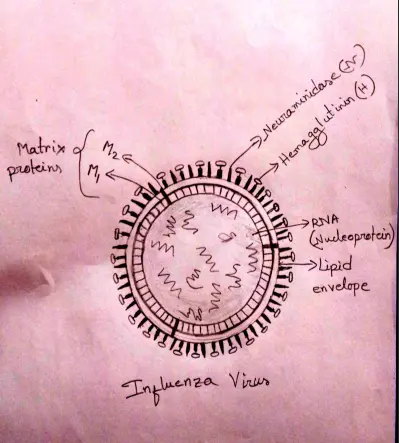
Figure 1: Hand-drawn diagram of Influenza Virus
The main parts are lipid envelope, nucleotide, matrix proteins, neuraminidase and hemagglutinin.
Question 3.
Functions of Haemagglutinin and Neuraminidase in Virus Transmission
In this case, the HA and NA are among the major surface glycoproteins of the Influenza virus (Case Study 3). They also play a similar function as they help the virus in spreading and establishing new ground in the body.
As a protein located on the surface of the virus, hemagglutinin (HA) facilitates the invasion of host cells in human beings. It binds itself to specific receptors located on the outer lining of respiratory tissues (Bao et al. 2021). This enables the virus to attach and enter the cell and start replicating itself within the host cell. Indeed, the possibility of the virus infecting cells is not possible if HA is not present.
Neuraminidase (NA) facilitates the spread of the virus. After reproduction within a given cell, the virus has to get out of the cell and go to other cells. NA effectively disrupts the connection between the virus and the host cell in order to allow the newly formed viruses to move to other cells. This makes the infection spread within the respiratory system steadily and uncontrollably.
HA and NA are significant for the Influenza virus in order to infect since Both HA and NA are glycoproteins that play a significant role in the life cycle of the Influenza virus and are involved in the process of viral entry into a host cell (Gao et al. 2021). These proteins are considered crucial by scientists in the development of vaccines and antiviral drugs for the treatment of the virus. For instance, there are drugs that block the action of NA so that the virus cannot replicate and spread. Understanding HA and NA is beneficial to doctors, as it helps them fight flu.
Question 4.
Listeria monocytogenes can grow at a temperature range of 1°C to 45°C making it possible for the bacteria to multiply in refrigerated foods (Osek et al. 2022). It is able to survive in cold temperatures; therefore, it is a threat.
Question 5.
Virulence Factors of Listeria monocytogenes
Listeria monocytogenes (Case Study 2) is associated with serious infections, but it poses a great risk to pregnant women. It has two weapons to make it penetrate and spread in the body like, Listeria adhesion protein (LAP) and internalin A (InlA).
Listeria adhesion protein, otherwise known as LAP helps the bacteria to adhere to intestinal cells. It binds particularly to a receptor on the host cell to facilitate the transit of the bacteria through the intestinal barrier (Liu et al. 2023). This is so because Listeria ordinarily gets into the body through contaminated food products. LAP helps the bacteria spread from the gut to the blood stream and the consequent severe infections.
Internalin A (InlA) facilitates the entry of Listeria into human cells. InlA targets the host cell protein called E-cadherin, which is attached on the surface of the human cell. This helps bacteria to penetrate the cells and avoid any confrontation with the immune system. InlA is highly important in pregnant females since E-cadherin is expressed in placenta in large quantities (Medeiros et al. 2021). This is how Listeria monocytogenes could therefore penetrate to the infant, resulting in either a miscarriage or severe disease in the newborn.
Lap and InlA are relevant genes in the Listeria monocytogenes infections causing diseases. From the understanding of these factors, the scientists can develop drugs and measures to control food-borne infections for instance a pregnant woman.
Question 6.
Chlamydia trachomatis is another example of bacteria that affects the genital tract and eyes of people (Case 1). It is mainly spread through sexual contact and also by contact with affected hands or any other objects contaminated with the virus.
Genital Tract Infections
C.trachomatis is capable of infecting cells found in the cervical, urethral, and reproductive tissues. It penetrates the cells, reproduces inside them and ‘spits’ out the new virus particles, which penetrate other cells. This leads to inflammation, discharge and bleeding, as shown by the case study that is used in this research study (Godoy-Mancilla et al. 2022). Many people don’t have any kind of symptom, but if not treated, the infections may lead to pelvic inflammatory disease (PID), infertility and chronic pain. They can also cause premature delivery and can also be transmitted to the infant in pregnant women.
Ocular Infections
C. trachomatis also affects the eyes causing trachoma, one of the major global causes of blindness. Transmission can be through touching the infected hands with the eyes, touching things contaminated with the fluid and use of towels and flies. This type of bacteria spreads to the inner skin of the eyelid which results in redness, inflammation, and discharge (El-Moneem et al. 2024). Chronic infections result in the formation of scar tissue and pulls the eyelashes towards the inner side. It literally causes rashes, and if they touch the eyes they scratch the cornea which means blindness if untreated.
Both the infections can be treated with antibiotics, and the patient may be advised to take doxycycline or azithromycin. Both following proper hygiene and practising safe sex and periodic checks help to curb the occurrence of C. trachomatis.
Reference List
Journals
- Bao, D., Xue, R., Zhang, M., Lu, C., Ma, T., Ren, C., Zhang, T., Yang, J., Teng, Q., Li, X. and Li, Z., 2021. N-linked glycosylation plays an important role in budding of neuraminidase protein and virulence of influenza viruses. Journal of Virology, 95(3), pp.10-1128.
- El-Moneem, A., Kholoud, M., Hamza, M.N., El-Sayed, S.B. and Soliman, A.M., 2024. Clinical profile and molecular detection of Chlamydia trachomatis in follicular conjunctivitis: Insights from Egypt. Microbes and Infectious Diseases, 5(3), pp.1176-1189.
- Gao, J., Wan, H., Li, X., Rakic Martinez, M., Klenow, L., Gao, Y., Ye, Z. and Daniels, R., 2021. Balancing the influenza neuraminidase and hemagglutinin responses by exchanging the vaccine virus backbone. PLoS pathogens, 17(4), p.e1009171.
- Godoy-Mancilla, J., Oyarzun-Barrientos, C., Marín-Cornuy, M., Carrasco-Sanhueza, E. and Águila-Torres, P., 2022. Bacterial eye infections associated with sexual transmission infections: A review. Archivos de la Sociedad Española de Oftalmología (English Edition), 97(1), pp.17-27.
- Kellermann, M., Scharte, F. and Hensel, M., 2021. Manipulation of host cell organelles by intracellular pathogens. International journal of molecular sciences, 22(12), p.6484.
- Liu, D., Bai, X., Helmick, H.D., Samaddar, M., Amalaradjou, M.A.R., Li, X., Tenguria, S., Gallina, N.L., Xu, L., Drolia, R. and Aryal, U.K., 2023. Cell-surface anchoring of Listeria adhesion protein on L. monocytogenes is fastened by internalin B for pathogenesis. Cell Reports, 42(5).
- Medeiros, M., Castro, V.H.L.D., Mota, A.L.A.D.A., Pereira, M.G., De Martinis, E.C.P., Perecmanis, S. and Santana, A.P., 2021. Assessment of internalin A gene sequences and cell adhesion and invasion capacity of Listeria monocytogenes strains isolated from foods of animal and related origins. Foodborne Pathogens and Disease, 18(4), pp.243-252.
- Osek, J., Lachtara, B. and Wieczorek, K., 2022. Listeria monocytogenes – how does this pathogen survives in food-production environments?. Frontiers in microbiology, 13, p.866462.
- Srinivasan, R., Ramadoss, R., Kandasamy, V., Ranganadin, P., Green, S.R., Kasirajan, A. and Pillai, A.B., 2025. Exploring the regulatory role of small RNAs in modulating host-pathogen interactions: implications for bacterial and viral infections. Molecular Biology Reports, 52(1), p.115.
Recently Downloaded Answers by Customers
Question 1 Enhance your grades with our premium-quality Assignment Help UK, carefully tailored to suit your learning...View and Download
Introduction to Algorithm Efficiency Assignment Answers Focusing on data manipulation as one of the key concepts of computer...View and Download
QUESTION 1 Enhance your academic performance with Online Assignment Help. Get expert guidance, well-researched content, and...View and Download
CACHE Level 3 Diploma in Early Years – Unit 1 This section provides complete solved work for CACHE Level 3 Diploma in...View and Download
Introduction - Contemporary Issues In Accounting Part A Take the stress out of your academic journey with our professional...View and Download
Part 1: Understanding NIST, Wireshark, and Ransomware Threats Cyber threats are evolving, making online Assignment Help Services...View and Download