
BM461 Global Business Environment Assignment from UK Experts
Analyze Manchester's economic growth, AI workforce impacts, and investment strategies. Master global business environment analysis with this comprehensive BM461 assignment help writing sample.

- 1. With the improving economic forecasts – linked to UK inflation and monetary policy, labour rates and economic growth. Consider how government spending and fiscal policies will impact the local town and to what extent business investment will be needed giving examples.
- 2. Assess how AI has and will continue to impact the UK labour market and explain the benefits and limitations for a chosen business as well as considering the impacts on the internal business environment.
- Type Assignment
- Downloads2163
- Pages11
- Words2832
1. With the improving economic forecasts – linked to UK inflation and monetary policy, labour rates and economic growth. Consider how government spending and fiscal policies will impact the local town and to what extent business investment will be needed giving examples.
Introduction
Manchester is among the most important industrial cities in the North of England, proficient at the fast pace of business development (Manchester City Council, 2023). Overall, the present condition of the UK's economic activity is more favourable, with decreasing inflation rates, changes in monetary policies, and emerging growth rate targets. Students using assignment help writing can effectively analyze how these changes impact the Manchester economy through governmental spending and fiscal policies, and assess implications for business investment in Manchester (Poku et al., 2022). It is recommended that the city continue to promote its economic growth to be economically stable and productive.
Economic Conditions

 7 Years | MA in Human Resource Management
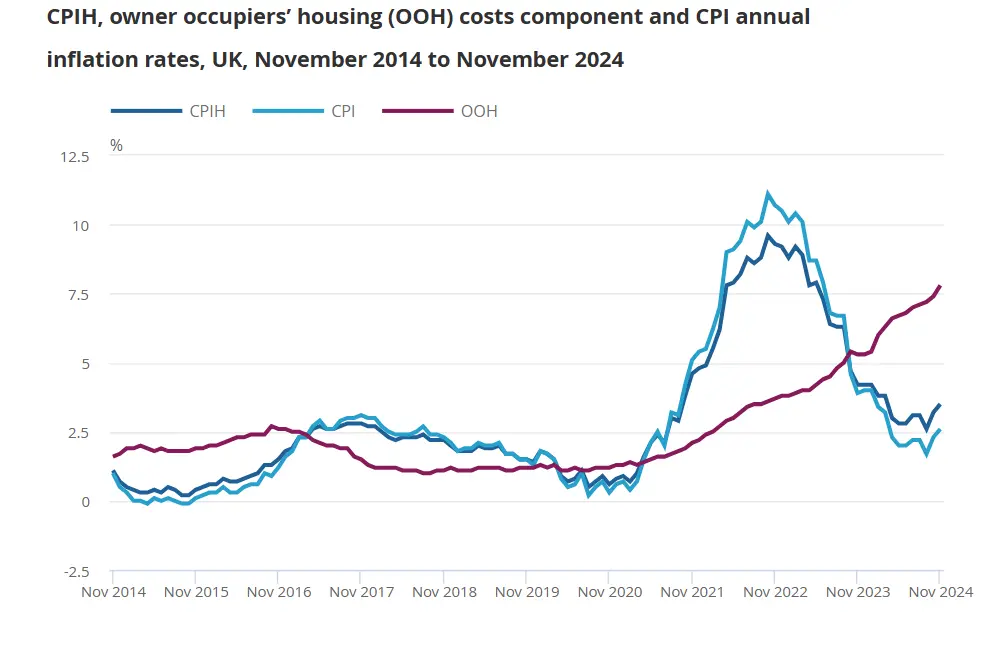
Figure 1: Annual CPI and CPIH inflation rates rose for a second consecutive month
There is an economic recovery in the UK through a stabilizing inflation rate, from over 10 per cent up to 2024 to below five per cent (Gourinchas, 2024). This has enhanced the utilization of consumer money and reduced various costs within operational units. The operations of the Bank of England's financial policy, which involved raising interest rates to curb inflation, have inspired more stability of the business and, therefore, economic stability (Bank of England, 2024). These national measures meant an uplift in the retail industry, more property construction, and upbeat tourism in Manchester especially.
However, challenges persist. Constraints by human capital shortages in certain areas, such as technology and construction, are also an issue (Abioye et al., 2021). This is through wage inflation, where a competitive labour market raises the operational costs of employers, most especially in industries that primarily employ skilled workers (Akomah et al., 2020). Therefore, manufacturing companies operating in Manchester must embrace automation and train their employees to remain competitive.
Government Spending and Fiscal Policy
The UK government has vowed to improve public spending on infrastructure, which will inevitably contribute to economic development and cities such as Manchester (Gray and Broadhurst, 2023). Processes currently being launched to achieve such goals include the Northern Powerhouse project, which concerns transportation, digital environment, and development schemes (Martin et al., 2022). For instance, the extension of the Metrolink tram system improves accessibility, thus helping the city attract businesses and people.
Taxes and subsidies for SMEs and programs encouraging environmental sustainability offer challenges that allow companies to grow. All these measures correspond with Manchester’s vision to transform into a sustainable digital city (Rhodes, 2020). Nevertheless, these advantages can only be achieved if local authorities and businesses coordinate funding for such projects.
Business Investment Needs
Manchester’s economic development ultimately depends on the right investments in specific sectors. One main area that needs improvement is the digital infrastructure; increasing connections of high-speed internet and 5G will help technology start-ups grow (Mendonça et al., 2022). Similarly, sustainable practices/reusable technologies are required to comply with the existing legislation and market demands.
There remains a need to focus on workforce development efforts. To solve the problems of labour deficits, the Lyons economies must fund and support vocational training schemes and collaborations with learning establishments like MMU (Attaran, 2021). It must be noted that many of the efforts mentioned above can help develop the workforce for the new economy, especially in advanced manufacturing and renewable energy.
Public, private and other forms of partnership should be able to support these investments. For instance, the local council and private investors could jointly finance renewable energy (Olokundun et al., 2022). The result would be dual benefits, positively impacting the economy and the environment. The availability of cheap funds and government-backed grant funding will also be ways by which SMEs can expand and develop new products.
Get assistance from our PROFESSIONAL ASSIGNMENT WRITERS to receive 100% assured AI-free and high-quality documents on time, ensuring an A+ grade in all subjects.
Recommendations
Enhance Collaboration: Build relationships between local administrations, companies, and schools to attract investment in facilities and human capital (Gohar and Nencioni, 2021).
Leverage Fiscal Incentives: Increase the visibility of collaborative local tax relief and grants to encourage local companies towards innovation and growth.
Invest in Sustainability: Offer specific financial support to spur companies' utilisation of renewable technologies while extending guidance (Gohar and Nencioni, 2021).
Support Digital Transformation: Develop information and communication technologies and support innovations to enhance organization productivity and attract investments.
Conclusion
Manchester now finds itself at a crossroads as Britain’s economic outlook brightens (Dangi et al., 2021). As such, the opportunities and challenges that characterise the city’s development will directly depend on where and how it invests in improving access to digital technology, more sustainable forms of development, and human resources (Pons et al., 2023). The collaboration between the public and private sectors is good for Manchester since it can form a strong economic base and improve its position in an ever-changing economy.
2. Assess how AI has and will continue to impact the UK labour market and explain the benefits and limitations for a chosen business as well as considering the impacts on the internal business environment.
Introduction
Artificial intelligence (AI) is swiftly and continuously revolutionising organisations throughout the United Kingdom and altering the working theatre. AI is now rising in Manchester, which boasts an intense tech scene and a rich and varied business environment. The following report analyses AI, considering its effect or contribution to the labour market in the United Kingdom, the advantages and disadvantages of a chosen organisation and the impact of the analysis as a result of considering the role and significance of AI in the internal business environment (Sharps, 2024). Best practices are offered to ensure that companies apply AI optimally while meeting underlying difficulties.
Impact on the Labour Market
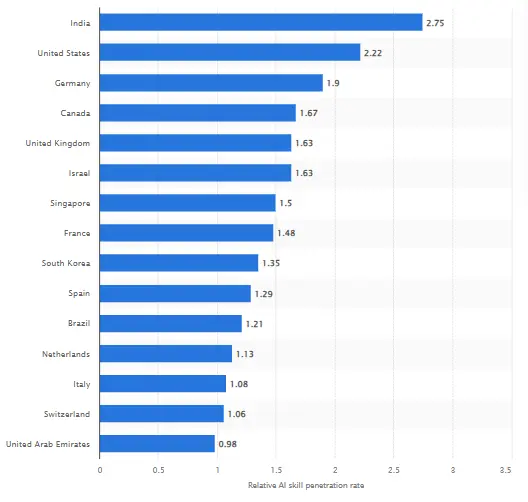
Figure 2: AI skills' relative penetration rate worldwide 2015-2023, by region
The use of AI is having tremendous impacts on the labour market in the UK through the provision of improved efficiency through automation of tasks, data analysis for decision-making purposes, and the creation of new jobs in technology analysis, among others (Wang et al., 2024). Specialities in the production line, supply chain, sales, and customer care departments gradually decrease due to automation, while technical competencies in technical trades and industries are rising. For instance, the advancement of the use of artificial intelligence in customer service through chatbots has replaced conventional positions (Saba and Ngepah, 2024). However, creating a market for artificial intelligence system designers and data analysts.
Sectors such as healthcare, advanced manufacturing, and retail have experienced high levels of automation and data utilization in Manchester (Ahi et al., 2021). For example, intelligent diagnosis can be applied in the healthcare sector to enhance patients' lives, and analytical prognosis can be used to improve the production method of the production line. However, the switch brings problems such as calls for skilled labour and layoffs of operatives in the low-skills category (Babu et al., 2021). Filling these gaps through reskilling and education is vital to achieving inclusive and adaptable workers.
Benefits for Businesses
AI greatly benefits companies by increasing business performance and productivity, decreasing expenses, and providing competitive advantages (Czarnitzki et al., 2023). For instance, a mid-sized retail business in Manchester can benefit from applying AI to understand consumer behaviour and how to effectively target them. Inventory control reduces general wastage while using algorithms for forecasts means businesses can easily predict market movements rather than using guesswork (Visconti et al., 2023). The application of AI in customer service through chatbots and virtual assistants improves the quality of the service delivered since customers can get support at any given time of the day. These capabilities not only enhance the operational performance of the companies but also contribute to innovation and profits as the market advances.
Limitations and Challenges
The problems resulting from high implementation costs are that apart from the cost of acquiring the right software to support the implementation of AI systems and the appropriate hardware to support it, there is also the cost of training the employees on how to use the software appropriately (Selvam et al., 2024). Moreover, technology has advanced rapidly with the profound penetration of artificial intelligence in organizations, which has raised the problem of scarcity of qualified human capital (Gao and Feng, 2023).
Internal Business Environment
AI integration affects the organizational internal environment in the following ways. It sometimes results in workforce restructuring due to changes in demands and expectations from the employees, from labour-intensive jobs to knowledge-intensive work (Gao and Feng, 2023). Such change results in higher levels of work satisfaction in some employees in their work setting, while we also note that others may experience resistance to change due to the possible loss of their jobs. AI also contributes to effective decision-making, enabling the business to get more relevant information to facilitate its decision-making about market situations (Antonio et al., 2024). However, to get the benefits from AI, there has to be a change in corporate culture which fosters innovation at the organizational level.
Recommendations
Organizations should embrace skills development to maximize AI's opportunities while minimizing risks (Perifanis and Kitsios, 2023). Hiring local universities and training providers can assist in providing solutions to many of these gaps and developing employees for higher positions. Executive Summary The use of artificial intelligence (AI) in the organization requires a phased approach involving trials to reduce risks and extend the application of AI in prosperous circumstances (Mishra et al., 2022).
Conclusion
Artificial intelligence is reforming the labour market in Great Britain and ensuring significant changes in the management of business processes. Although it has several issues like skills, ethics, and cost issues, all discussed below, this paper has found numerous benefits that turbo-charged companies in Manchester can tap into. Through workforce development, ethical procurement, and government incentives, opportunities embedded in utilizing AI can be exploited effectively without compromising the company’s organizational culture and premises.
References
- Abioye, S.O., Oyedele, L.O., Akanbi, L., Ajayi, A., Delgado, J.M.D., Bilal, M., Akinade, O.O. and Ahmed, A. (2021). Artificial Intelligence in the Construction industry: a Review of Present status, Opportunities and Future Challenges. Journal of Building Engineering, 44(1), p.103299. doi:https://doi.org/10.1016/j.jobe.2021.103299.
- Ahi, A.A., Sinkovics, N., Shildibekov, Y., Sinkovics, R.R. and Mehandjiev, N. (2021). Advanced technologies and international business: A multidisciplinary analysis of the literature. International Business Review, [online] 31(4), p.101967. doi:https://www.sciencedirect.com/science/article/pii/S0969593121001852.
- Akomah, B.B., Ahinaquah, L.K. and Mustapha, Z. (2020). Skilled Labour Shortage in the Building Construction Industry within the Central Region. Baltic Journal of Real Estate Economics and Construction Management, 8(1), pp.83–92. doi:https://www.sciendo.com/pdf/10.2478/bjreecm-2020-0006.
- Antonio, M., Verónica, R., Hernández, S.R., Ruíz, S., Zubirías, G.C. and Alberto, M. (2024). Artificial intelligence an essential factor for the benefit of companies: systematic review of the literature. Cogent Engineering, 11(1). doi:https://doi.org/10.1080/23311916.2024.2380344.
- Attaran, M. (2021). The impact of 5G on the evolution of intelligent automation and industry digitization. Journal of Ambient Intelligence and Humanized Computing, [online] 14(5). doi:https://doi.org/10.1007/s12652-020-02521-x.
- Babu, M.M., Rahman, M., Alam, A. and Dey, B.L. (2021). Exploring big data-driven innovation in the manufacturing sector: evidence from UK firms. Annals of Operations Research, [online] 333. doi:https://doi.org/10.1007/s10479-021-04077-1.
- Bank of England (2024). Monetary Policy Report - May 2024. [online] www.bankofengland.co.uk. Available at: https://www.bankofengland.co.uk/monetary-policy-report/2024/may-2024 [Accessed 13 Jan. 2025].
- Czarnitzki, D., Fernández, G.P. and Rammer, C. (2023). Artificial intelligence and firm-level productivity. Journal of Economic Behavior & Organization, [online] 211, pp.188–205. doi:https://doi.org/10.1016/j.jebo.2023.05.008.
- Dangi, R., Lalwani, P., Choudhary, G., You, I. and Pau, G. (2021). Study and Investigation on 5G Technology: A Systematic Review. Sensors (Basel, Switzerland), [online] 22(1), p.26. doi:https://doi.org/10.3390/s22010026.
- Gao, X. and Feng, H. (2023). AI-Driven Productivity Gains: Artificial Intelligence and Firm Productivity. Sustainability, [online] 15(11), pp.8934–8934. doi:https://doi.org/10.3390/su15118934.
- Gohar, A. and Nencioni, G. (2021). The Role of 5G Technologies in a Smart City: The Case for Intelligent Transportation System. Sustainability, [online] 13(9), p.5188. doi:https://doi.org/10.3390/su13095188.
- Gourinchas, P.-O. (2024). As inflation recedes, global economy needs policy triple pivot. [online] IMF. Available at: https://www.imf.org/en/Blogs/Articles/2024/10/22/as-inflation-recedes-global-economy-needs-policy-triple-pivot [Accessed 13 Jan. 2025].
- Gray, N. and Broadhurst, K. (2023). Post-Brexit regional policy in England: exploring ‘Levelling Up’ in practice. Regional Studies, 57(12), pp.1–12. doi:https://doi.org/10.1080/00343404.2023.2179031.
- Manchester city Council (2023). Appendix 1 Investing in Success: An Economic Strategy for Manchester. [online] Available at: https://democracy.manchester.gov.uk/documents/s43583/Appendix%201%20for%20Investing%20in%20Success%20An%20Economic%20Strategy%20for%20Manchester.pdf [Accessed 13 Jan. 2025].
- Martin, R., Pike, A., Sunley, P., Tyler, P. and Gardiner, B. (2022). ‘Levelling up’ the UK: reinforcing the policy agenda. Regional Studies, Regional Science, 9(1), pp.794–817. doi:https://doi.org/10.1080/21681376.2022.2150562.
- Mendonça, S., Damásio, B., Charlita de Freitas, L., Oliveira, L., Cichy, M. and Nicita, A. (2022). The rise of 5G technologies and systems: A quantitative analysis of knowledge production. Telecommunications Policy, [online] 46(4). doi:https://doi.org/10.1016/j.telpol.2022.102327.
- Mishra, S., Ewing, M.T. and Cooper, H.B. (2022). Artificial intelligence focus and firm performance. Journal of the Academy of Marketing Science, 50. doi:https://doi.org/10.1007/s11747-022-00876-5.
- Office for National Statistics (2024). Consumer Price Inflation, UK. [online] Ons.gov.uk. Available at: https://www.ons.gov.uk/economy/inflationandpriceindices/bulletins/consumerpriceinflation/november2024.
- Olokundun, M., Ogbari, M.E., Falola, H. and Ibidunni, A.S. (2022). Leveraging 5G network for digital innovation in small and medium enterprises: a conceptual review. Journal of Innovation and Entrepreneurship, 11(1). doi:https://doi.org/10.1186/s13731-021-00181-5.
- Perifanis, N.-A. and Kitsios, F. (2023). Investigating the influence of artificial intelligence on business value in the digital era of strategy: A literature review. Information, 14(2). doi:https://doi.org/10.3390/info14020085.
- Poku, K., Opoku, E. and Agyeiwaa Ennin, P. (2022). The influence of government expenditure on economic growth in Ghana: An Ardl approach. Cogent Economics & Finance, 10(1). doi:https://doi.org/10.1080/23322039.2022.2160036.
- Pons, M., Valenzuela, E., Rodríguez, B., Nolazco-Flores, J.A. and Del-Valle-Soto, C. (2023). Utilization of 5G Technologies in IoT Applications: Current Limitations by Interference and Network Optimization Difficulties—A Review. Sensors, [online] 23(8), p.3876. doi:https://doi.org/10.3390/s23083876.
- Rhodes, C. (2020). Infrastructure policies and investment. commonslibrary.parliament.uk. [online] Available at: https://commonslibrary.parliament.uk/research-briefings/sn06594/ [Accessed 13 Jan. 2025].
- Saba, C.S. and Ngepah, N. (2024). The impact of artificial intelligence (AI) on economic growth in BRICS: Does the moderating role of governance Matter? Research in Globalization, 8, pp.100213–100213. doi:https://doi.org/10.1016/j.resglo.2024.100213.
- Selvam, P., Harshavardhan, V., Dornadula, R., Madhur, P. and Kotehal, P. (2024). Application of Artificial Intelligence in Business Operations and its impact on Organisational Performance: An Empirical Study. Prabu Selvam/Afr.J.Bio.Sc, [online] 6(6), pp.6812–6820. doi:https://doi.org/10.33472/AFJBS.6.6.2024.6812-6820.
- Sharps, S. (2024). The Impact of AI on the Labour Market. [online] Institute.global. Available at: https://institute.global/insights/economic-prosperity/the-impact-of-ai-on-the-labour-market [Accessed 13 Jan. 2025].
- Statista (2024). Relative penetration rate of artificial intelligence (AI) skills from 2015 to 2023 worldwide, by region. [online] Available at: https://www.statista.com/statistics/1472152/relative-ai-skill-penetration-rate-by-region/#:~:text=AI%20skills'%20relative%20penetration%20rate%20worldwide%202015%2D2023%2C%20by%20region&text=In%202023%2C%20artificial%20intelligence%20(AI,global%20leader%20in%20AI%20skills. [Accessed 13 Jan. 2025].
- Visconti, R.M., Rambaud, S.C. and Pascual, J.L. (2023). Artificial intelligence-driven scalability and its impact on the sustainability and valuation of traditional firms. Humanities and Social Sciences Communications, [online] 10(1). doi:https://doi.org/10.1057/s41599-023-02214-8.
- Wang, X., Chen, M. and Chen, N. (2024). How artificial intelligence affects the labour force employment structure from the perspective of industrial structure optimisation. Heliyon, [online] 10(5), pp.e26686–e26686. doi:https://doi.org/10.1016/j.heliyon.2024.e26686.
Recently Downloaded Samples by Customers
Introduction Get free samples written by our Top-Notch subject experts for taking online Assignment Helper services. Task 1:...View and Download
Introduction to Computer Systems And Security Module Assignment Cryptography is widely known as an essential component of the...View and Download
1. Operational Flow Model for SKOPOS The operational flow model at SKOPOS is structured around the...View and Download
Introduction Get free samples written by our Top-Notch subject experts for taking online Assignment...View and Download
Activity 9.1: Security Threats to Mobile Devices Technological advancement, especially on the mobile devices, has brought about...View and Download
Introduction: Health Inequalities in India Health inequalities are one of the major problems of every country. Every country has...View and Download