Innovate Lunchbox or Travel Mug for Engineering Case Study
Eco-Friendly Lunchbox With Airtight Seal And Built-In Utensil Storage

- Introduction - Innovate Lunchbox or Travel Mug for Engineering Case Study
- Double Diamond Process
- Discover Phase
- Several core problems are:
- Market Research and Competitor Analysis
- Environmental Challenges
- Design Features Considered
- Concept assessment and choice
- Justification of the Final Choice
- Part-by-Part Overview
- CAD drawings and engineering Drawings
- Materials and Eco-Friendly Choices
- Distinction from Existing Solutions
- Direct Commercial Lunchboxes Comparison
- Conclusion & Reflection
- Type Case Study
- Downloads540
- Pages12
- Words2939
Introduction - Innovate Lunchbox or Travel Mug for Engineering Case Study
The contemporary lifestyle requires easily transportable, productive solutions that deliver meals wherever they are needed. Whether it is professionals, students, or travellers, no one wants to use unreliable, unhygienic, and space-wasting methods of transporting food. However, current lunchboxes tend to be heavy and incapable of accommodating users whose needs are flexible. Sustainability, with the number of people realising the impact of disposable packaging on the environment, is becoming important. The current market demands more and more ecological solutions that would eliminate waste and adjust to active and on-the-go lifestyles. The "Discover, Define, Develop, Deliver" process under the Double Diamond is being used to systematically analyse system requirements, requirements, and capabilities to create the designing technologies; and offer the feasible design and manufacturable design.
Struggling with tight deadlines? Assignment Help For Students from Rapid Assignment Help UK delivers well-researched, expertly written papers on time, every time.

 8 Years | PhD in Structural Engineering
Double Diamond Process
Discover Phase
The world is becoming environmentally conscious, and the necessity of convenience and sustainable options for storing meals to cope with on-the-go lifestyles is growing. To determine this challenge, it is considered mainly for three main categories: professionals who travel to work, busy students and travellers. Professionals take a home lunch mainly to save money as well as have proper choices, yet they encounter the inconvenience of carrying bulky receptacles that do not fit a bag well (TEJ, J.B., 2023). Students usually depend on disposable takeaway containers and need a cheaper but reusable and portable alternative. Travellers require multifunctional, small-sized products, which are not prone to spilling and need not occupy extra space in luggage.
Several core problems are:
Bulkiness: Lunchboxes available in the market are often bulky and hard, making them useless when they are not full.
Disposable products: Disposable plates, utensils, cups, etc, are a part of everyday waste.
Low portability: Actions involving limited modular/folding capabilities.
Hygiene matters: Storage of loose or external utensils can be contaminated with loose or external utensils.
Inflexibility: Compartments that are fixed cannot accommodate different meals and different sizes.
Market Research and Competitor Analysis
Some of the products already available in the market are bento boxes, simple plastic lunchboxes, and foldable silicone boxes. Although bento boxes are characterised by internal divisions, they lack flexibility and are also large. Space-saving collapsible silicone boxes consume less space, but to become compact, these usually go short of compartmentalisation and storage of the utensils (Hu, Y. et al., 2022). Not many products are collapsible, cutlery-equipped and airtight.
Environmental Challenges
Disposable plastics are still a prevailing top environmental threat. Even reusable alternatives will fail to pass the test when they are created using non-recyclable, unrecycled, or plastics that contain BPA (Burke et al., 2021). People are also showing their interest in recycled materials products or biodegradable products. Some manufacturing processes also tend to be highly environmentally unfriendly in their production.
Insights
- Small size with the ability to fold into a slim form during non-use.
- Combined, healthy food storage.
- Several meal selection and serving units.
- Leak-proof durable structure.
- The recycled or bio-degradable material, or the use of food-safe, sustainable materials.
These were the insights used in the process of coming up with concise and realisable design requirements in the latter stages of the process.
Define Phase
The results of the Discover research period were pointed down into an accurate and meaningful statement of the problem, which was kept in sync with user needs and the environmental objectives:
Problem Statement:
Today, professionals, students and travellers need a portable, sustainable, and flexible meal storage system that can eliminate the single-use packaging, increase convenience and reduce their footprint on the environment (Roshan 2024). Current lunchboxes do not provide all of the following features: collapsibility, lack of leaks (reliability), modular compartments, and dedicated compartments for the storage of utensils in a unified, environmentally friendly solution.
Get assistance from our PROFESSIONAL ASSIGNMENT WRITERS to receive 100% assured AI-free and high-quality documents on time, ensuring an A+ grade in all subjects.
Functional Requirements
Collapsible Design: Should fold flat to accommodate the storage of a bag when it is empty, thus making the most of the space.
Leak-proof construction: Leak-resistant joints that will help to ensure that contained liquids and enclosed foods do not spoil.
Built-in Utensil Storage: It has an inbuilt storage space for utensils, so there is no need to use disposable cutlery, thus it maintains hygiene.
Modular Compartments: adjustable, segregated sections, used to serve meals of various categories and preserve the portion size.
Requirements
The following design should be:
It is so easily transportable and can be carried in ordinary bags.
Lightweight to prevent an extra burden.
Easy to fold/ unfold, even by novice users.
Environmental Requirements
One of the key areas in design is sustainability. The selection of the material should give preference to:
Recycled plastics in BPA-free form are labelled as food grade.
Used other biodegradable materials suitably.
Few mixed components, so they are easily recycled.
Long lifecycle to minimise the replacements.
The reduction of energy consumption and waste production should be the goal of manufacturing processes.
Limitations
Size: It should be able to comfortably accommodate a normal adult lunch around 1.5 litres total capacity, yet it should fold down to a minimal size possible like 3 cm collapsed height.
Weight: Designed to be lighter in weight; designed to be easily transported (weight less than 400 grams).
Price: Cost can reflect sales at retail within an affordable range.
Compatibility: Has to be compatible with the regular sizes of utensils.
Finale Design brief
Design and make an eco-friendly, foldable lunchbox which combines airtight lids, removable food compartments, with inbuilt cutlery space compartments. The product needs to be focused on sustainability with recycled or biodegradable materials, its production needs to be as environmentally friendly as possible and still provide a portable and easy-to-use solution and allow busy and mobile individuals to practice sustainability in their daily lives.
Develop Phase
The past phases help in aiming to deal with the portability, modularity, leak- proof storage, and integrated utensil organisation (AZMI et al., 2022). The original sketches were made based on how to minimize volume by collapsing the walls and still keep its structural integrity when open.
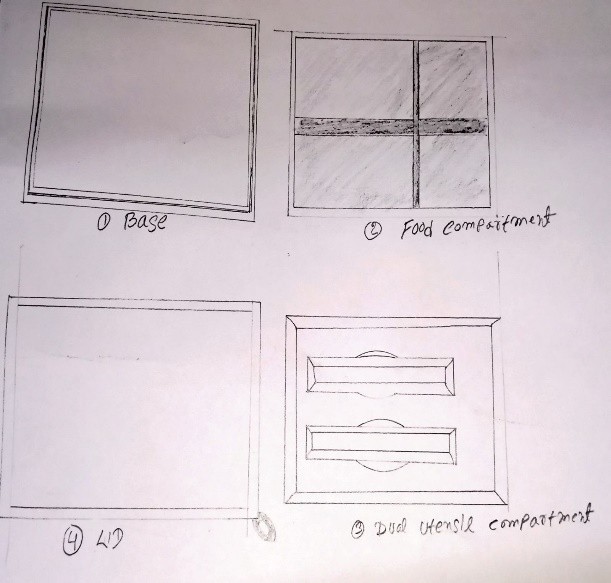
Figure 1: Sketch of 4 components of Lunchbox
Ideas
Folding accordion-like silicone container and lid.
Folding hard-shell construction and hinged walls and latches.
Flexible portion system, modular bento shape containers.
One-piece lid or base with utensil pockets.
Spill-preventing airtight gasket systems.
Cross-sections of folding walls, alternate hinge designs and utensil storage layouts were examined in sketch form with annotation. Some of the concepts involved the walling of polypropylene materials that had a living hinge and modular inserts that were used to separate food types.
Design Features Considered
Airtight seal: The sealing of silicone to the groove of the lid the airtight performance.
Folding Mechanism: Recycled polypropylene walls are designed using a living hinge to allow straightforward collapse into a flat arrangement without the need to add additional components.
Modular Compartments: The removable compartment ensures a variety of meals and controls the amount of food.
Built-in Utensile space: Stepping plate with a fixed spoon place above the food compartment, so that hygiene and accessibility are added.
Concept assessment and choice
A matrix has been designed of concepts, against such criteria as portability, functionality, user friendliness, sustainability, cost, and manufacturability. The last concept was selected on the basis of balanced user-friendly considerations and the feasibility of production.
Justification of the Final Choice
The design chosen has incorporated, in order to form a combination, a foldable base, living hinges, an airtight sealing lid with silicone groove, modular food compartments, and an integrated utensil storage plate (Xu, et al., 2024). The given solution comprehensively addresses the brief, all the major key points that users can have, and is unique in offering a sustainable, convenient, and compact storage solution.
Deliver Phase
The offered Folding Eco-Friendly Lunchbox with built-in Utensil Storage would be a well-rectangular structure that will ensure portability and functionality, as well as sustainability. This design has four major components, which include the base, the lid, the food compartment, and the spoon compartment plate. All the parts are well designed to be durable, convenient to use by the customer and with little adverse effects to the environment.
Part-by-Part Overview
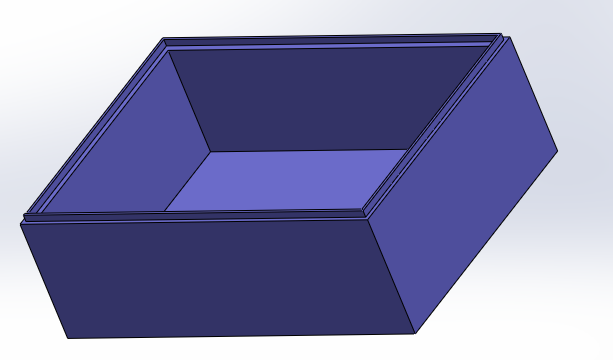
Figure 2: Base with sealing extension for airtight fit
(Solidworks)
Base: Shaped with built-in fold lines and a sealing extension which fits very well in the lid groove to make it airtight. It has a collapsible and expandable base made of recycled polypropylene (rPP) so that when empty, the base folds into a flat shape yet has structural integrity when opened.
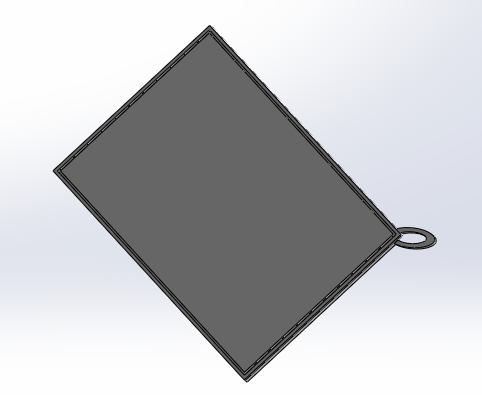
Figure 3: Airtight lid with sealing groove
(Solidworks)
Lid: It has an internal groove which takes the extension on the base to form a leak-proof seal. Food-grade silicone was used to make it flexible to clean and seal airtight. The cover firmly fixes to the bottom of the container to avoid spilling on the way.
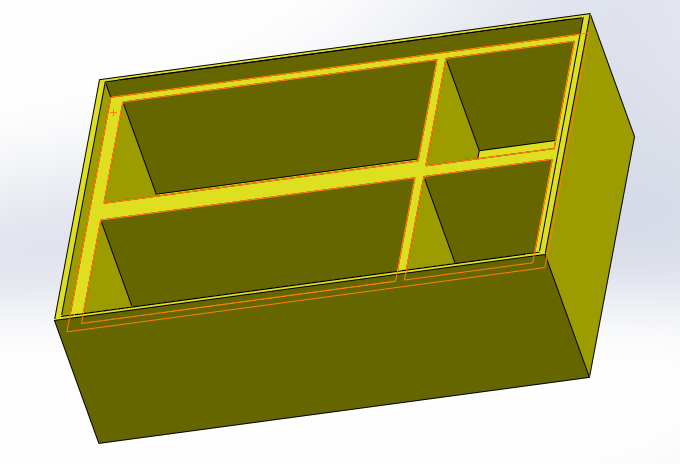
Figure 4: Removable food compartment insert for base
(Solidworks)
Food Compartment: A detachable compartment set, which is firmly set in the base, has a set of separate compartments, allowing the food items to be kept separate. This insert can be removed so that it is easily cleanable and so that users can vary the layout of the user according to the type of meal and size of the portion.
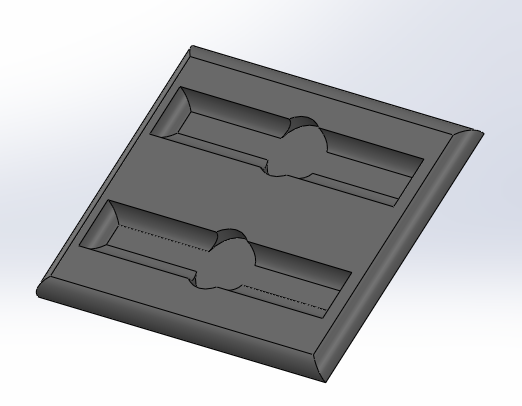
Figure 5: Top plate with dual utensil compartments
(Solidworks)
Spoon Compartment Plate: This is a specific compartment located over the food insert and is where standard reusable utensils are located in two slots. It gives hygienic, combined storage, and no particularly packed cutlery has to be used.
An Airtight Sealing System
A gasket of silicone is built into the groove on the lid. Upon closing, the base extension squashes into this gasket, making a non-leaking seal (Bullock et al., 2021). The model will keep the food fresh and non-spill even when put in a bag.
Modular Compartment Layout
The food compartment allows consumers to customise their lunchbox according to their dietary requirements or the number of meals.
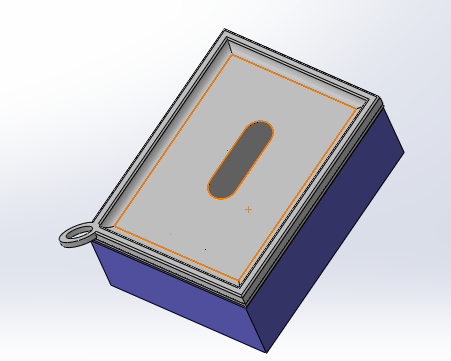
Figure 6: Lunchboz Assembly
(Solidworks)
Folding/Collapsing Mechanism
The base has what is called living hinges that are made into the walls of polypropylene so the base can slide down flat. Compact storage of the folded form is performed through secured latches to keep them secure when stored in bags.
CAD drawings and engineering Drawings
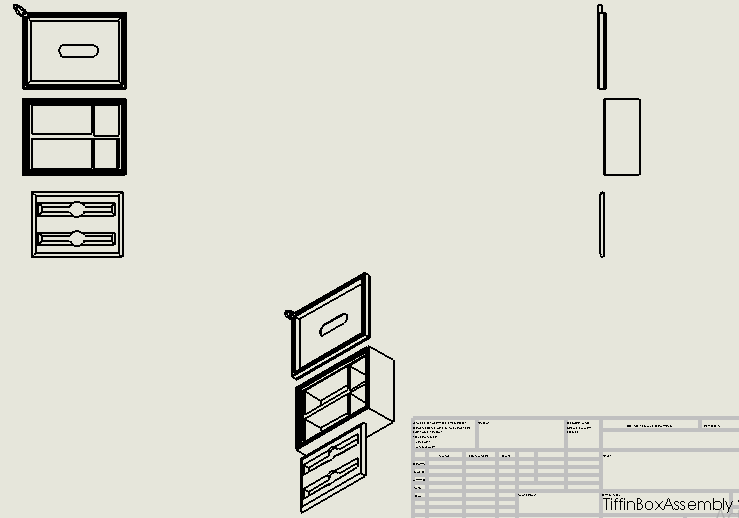
Figure 7: Assembly Drawing and Exploded View of Folding Eco-Friendly Lunchbox with Built-In Utensil Storage
(Solidworks)
CAD models comprise exploded illustrations of the separate components and assembly drawings of the way to fit and create alignment, and elaborate dimensioned illustrations (Tanubamrungsuk 2021).
Materials and Eco-Friendly Choices
Base and inserts: BPA-free rPP food-grade polypropylene (rPP) recycled.
Lid and gasket: silicone gasket material, food grade, durable.
Every material chosen is recycled, is food safe, and has a long life cycle of products.
Manufacturability
Polypropylene parts are produced using injection moulding, and the non-rigid lid is made by casting using silicone. These are well-established processes, are economical economies-of-scale, and allow recycled materials (Nilsen et al., 2021). The estimated production cost allows a low retail price to be charged and not compromising quality standards and sustainability levels.
Distinction from Existing Solutions
Direct Commercial Lunchboxes Comparison
Existing consumer options are bento-like lunchboxes, regular rigid hardened plastic containers and simple foldable silicone boxes (Kedzierski et al., 2021). Although these meet certain user requirements, they always underperform in major areas of portability, sustainability and built-in functionality.
Competitors’ Limitations
Bento Boxes: Provide compartmentalisation and are firm, massive and take the same space both with inventory and without (Gabrić et al., 2022). They are often not self-contained when it comes to cutlery, whereby one has to carry cutlery that comes in separate packaging.
Collapsed Siliconeply Containers: store flat when not in use, but normally have individual large partitions and no modular division (Roshan 2024). Storing utensils is normally either external or absent, which raises questions about the hygiene issue.
Standard Plastic Lunchboxes: Inexpensive and not as flexible, not made to consider modern areas of portability and more often than not, made of non-recycled and BPA materials.
Distinctive Solutions in Design
Folding Eco-Friendly Lunchbox offers several priorities for the user in a single product. Its main distinctive attributes are:
Incorporated Cutlery: A special hygienic position means that separate silverware is not necessary, but the chance of contamination is minimised.
Folding Bottom Base Airtight: The base can be folded down to decrease in volume substantially when not in use, making it easy to lug around in bags, et,c and the silicone-sealed lid ensures air air-tight seal and hence the food remains fresh during transportation.
Modular Food Compartments: Each insert can be adjusted to allow the separation of meal components, which enhances a variety of diets and portion control.
Green, recyclable Polypropylene A recycled polypropylene and food-grade silicone provide safe, sustainable, long-lasting and help in realising the circular economy objectives.
Non-Standard Features
These benefits managed to be turned on at the same time and aggravated by many of its competitors (Kamarudin et al., 2022). The majority of commercial solutions compel the user to trade off one or more important features, portability, leak-proofing, compartmentalisation or cutlery integration.
Creativity and Imagination Discussion
It has some creativity in the form of living hinge fold lines, built-in utensil compartment, and sealing extension, which depict a creative and problem-solving attitude that creates balance in terms of convenience and eco-friendliness.
User-Centered Thinking
All features are built on the actual user problems, and the solution is not just innovative, but practical and easy to adopt (Debnath et al., 2022). The model highlights sustainability at the cost of flexibility and convenience that the contemporary audience expects.
Striking the Portability, Functionality, Sustainability Balance
The solution is well balanced through its design: wearable, when folded, it is very compact, completely functional and waterproof, and does not contribute as much to the environmental pollution (Burke et al., 2021).
Conclusion & Reflection
The design presents a full use of the Double Diamond process in order to create a creative and user-focused solution to the problem of sustainable storage of meals. The systematic research of the user needs, the development of concrete and realistic requirements, testing the possibilities of the creative design solutions and providing a feasible and able-to-produce idea, the project succeeds in overcoming the fundamental issue of the problem of compromise between portability, functional properties, and environmental responsibility.
The Folding Eco-Friendly Lunchbox design focuses on the practicality of everyday needs but does not compromise on sustainability. Its collapsible base and its own living hinges make it occupy less space when unused, as well as its silicone-sealed lid makes it a leak-proof storage of meals. In modular compartments, meal diversity and portion control are assisted, and there is a special and hygienic cutlery compartment so that single-use cutlery is not needed. With a material composition based on food-grade recycled polypropylene and silicone, the model is with environmental requirements.
Looking back on the design process, it is possible to define some important challenges and choices. The achievability of flexibility, combined with the structural integrity of the foldable base, needed thoughtful consideration with regard to material selection and how the hinges are built. The ease of use and ensuring an airtight seal also affected the gasket system and the groove of the lid. The solution of a spoon compartment plate was reached by bringing in the utensil storage without complexity. Such problems were addressed with the help of sketching, CAD modelling, and the continuous comparison to the needs of the users. The future possibilities of improvement might include experimenting with additional kinds of modularity, the range of colours suitable to various user needs, or even using biodegradable bioplastics to achieve an even further reduction in environmental impact.
Reference List
Journals
- AZMI, N.I.B., RAMLI, A.S.B. and ROSLI, N.R.A.B., 2022. Eco–Friendly Food Carrier.
- Bullock, C.H., Thorball, N., Somlai, C. and Gallagher, J., 2021. Packaging waste statistics, producer motivations and consumer behaviour. Environmental Protection Agency.
- Burke, H., Wallis, L.A. and Gorman, A., 2021. Recycle (d): Objects and Their Afterlives. Brighton: Wallis Heritage Consulting.
- Burke, H., Wallis, L.A. and Gorman, A., 2021. Recycle (d): Objects and Their Afterlives. Brighton: Wallis Heritage Consulting.
- Debnath, M., Sarder, R., Pal, L. and Hubbe, M.A., 2022. Molded pulp products for sustainable packaging: production rate challenges and product opportunities. BioResources, 17(2), p.3810.
- Gabrić, D., Kurek, M., Ščetar, M., Brnčić, M. and Galić, K., 2022. Effect of Non-Thermal Food Processing Techniques on Selected Packaging Materials. Polymers 2022, 14, 5069 [online]
- Hu, Y., Zhou, X., Hu, C. and Yu, W., 2022. HS-GC-IMS identification of volatile aromatic compounds of freshly-cooked rice packaged with different disposable lunchboxes. Journal of Hazardous Materials, 438, p.129516.
- Kamarudin, S.H., Rayung, M., Abu, F., Ahmad, S.B., Fadil, F., Karim, A.A., Norizan, M.N., Sarifuddin, N., Mat Desa, M.S.Z., Mohd Basri, M.S. and Samsudin, H., 2022. A review on antimicrobial packaging from biodegradable polymer composites. Polymers, 14(1), p.174.
- Kedzierski, M., Le Maguer, G., Maffessoli, A. and Bruzaud, S., 2021. First insights on the behavior of foamed polystyrenes in the marine environment and on the ways to reduce this pollution. OceanWise reports. 214p. Main contributors, 2, p.4.
- Nilsen‐Nygaard, J., Fernández, E.N., Radusin, T., Rotabakk, B.T., Sarfraz, J., Sharmin, N., Sivertsvik, M., Sone, I. and Pettersen, M.K., 2021. Current status of biobased and biodegradable food packaging materials: Impact on food quality and effect of innovative processing technologies. Comprehensive reviews in food science and food safety, 20(2), pp.1333-1380.
- Roshan Kharrat, R., 2024. Dynamic and Adaptive Photovoltaic Shading Systems: Design and Architectural Integration for Energy Production and Indoor Comfort (Doctoral dissertation, Politecnico di Torino).
- Roshan Kharrat, R., 2024. Dynamic and Adaptive Photovoltaic Shading Systems: Design and Architectural Integration for Energy Production and Indoor Comfort (Doctoral dissertation, Politecnico di Torino).
- Tanubamrungsuk, W., 2021. Reducing plastic packaging at the Prince George Farmers' Market.
- TEJ, J.B., 2023. IOT ENABLED THERMAL LUNCH-BOX (Doctoral dissertation, Andhra University).
- Xu, R., Yin, C., You, J., Zhang, J., Mi, Q., Wu, J. and Zhang, J., 2024. Sustainable, thermoplastic and hydrophobic coating from natural cellulose and cinnamon to fabricate eco-friendly catering packaging. Green Energy & Environment, 9(5), pp.927-936.
Recently Downloaded Case Studies by Customers
Task 1: Technological and Skill Gap Analysis For IKEA Get Online Assignment Help to enhance your understanding of...View and Download
Task 1 of 2 Looking for expert support with writing on inclusion and equality in healthcare? Get professional guidance with your...View and Download
Introduction to Leadership in Organizations Summative Case Study 1.1. Leader’s background information Sheryl...View and Download
Background In this study the notable problem spins around determined medicine shortages in Ghana and Rwanda because of the...View and Download
1. Efficient Installation of Closed Cavity Facades Planning and Programming Effective supply chain management plays a crucial...View and Download
Introduction: Key Social Factors Enhance your grades with our premium-quality Online Assignment Help, carefully tailored to...View and Download