
BS6201ATY1324 Strategic Management Assignment Sample on organisational strategy, resource allocation, corporate governance, ethical leadership, stakeholder management, and long-term business objectives.
The module BS6201ATY1324 Strategic Management taught me about how organizations deploy their resources with capabilities while handling stakeholder requirements and linking strategies to culture. The module provided me with knowledge about corporate governance as well as ethical leadership and CSR concepts. The concepts delivered deeper knowledge about strategic decision processes together with the multiple variables that define organizational goals and long-term objectives.
Reference materials and samples are provided to clarify assignment structure and key learning outcomes. Through our assignments writing help, guidance is reflected while maintaining originality. The BS6201ATY1324 Strategic Management Assignment Sample highlights strategic planning, business analysis, and effective decision-making in organisational contexts. These resources are intended solely for study and reference purposes.
 12 Years | PhD
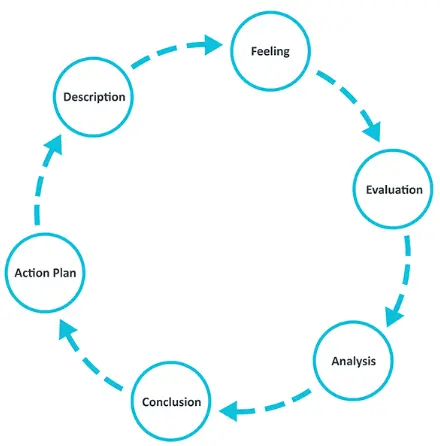
Figure 1: Gibbs Reflective cycle
This module on strategic management has done a lot to change my concept of what strategy is. Initially, the strategy was also about goal setting and long-term planning. Yet I started to realize what strategy was through activities such as simulations, case studies, reading academic readings, and listening to guest lectures. Especially for the part of the simulation exercise, it was extremely eye-opening: how complicated it is to manage the various interests of the stakeholders and at the same time the ethical grounds of real-time decision-making (Chandrakumara and Rathnayake, 2023).
The stakeholder analysis slides gave a good framework to analyze power Dynamics within organizations, by way of the Power/ Attention matrix. Also, I learned how internal resources and capabilities, for example, innovation and leadership, can lead to competitive advantage, in Week 3. Additionally, the content on culture and history in Week 5 gave me insights into how so much of our values run through strategic choices. This has encouraged me to view the strategy not only as a business tool but rather as a thoughtful and ongoing process guided by internal strengths as well as external influences.
In the beginning of the BS6201ATY1324 Strategic Management module, I was uncertain and intimidated by strategic management. Students generally believe the strategy to be a highly theoretical exercise when first introduced. But what I started to engage with at the same time was the simulations and case discussions, and my awareness started shifting. The first simulation was especially anxiety-inducing because I wasn’t sure how to make good decisions or had a real value to bring to my group. But as the weeks passed and I started to watch the lectures, and read the slides and readings, my confidence increased. Learning about stakeholder theory and resource-based views made me more connected to the subject, especially when learning about these concepts that appeared intellectually stimulating and practically relevant.
Get assistance from our PROFESSIONAL ASSIGNMENT WRITERS to receive 100% assured AI-free and high-quality documents on time, ensuring an A+ grade in all subjects.
With the help of frameworks like stakeholder theory and resource-based views on real-time decisions, I built my confidence and critical thinking. In the stakeholder analysis, exploring the dynamics of the Power/Attention Matrix especially helped me understand how strategic outcomes are influenced by power dynamics. The course work helps to become active and reflective over time (Pieper et al., 2021). It was this emotional switch from confusion to clarity that allowed me to take on strategy as a dynamic and value-driven process. With contemporary views of responsible management, I came to appreciate strategy as ethical and as being human-centered and analytical.
I have found using Gibbs Reflective Cycle application to my learning journey through Strategic Management module to have gone a long way in helping me understand the subject. From the Description stage, I was introduced with core concepts like stakeholder analysis, strategic evaluation and the significance of organizational resources and capabilities. Lectures like the early one evaluating strategies and resources, and capabilities emphasized that internal and external factors influence the formation of business strategies. At first I found it difficult to understand how theories such as the VRIO framework or gap analysis could apply directly to real world decision making. This is simply learning the VRIO framework and gap analysis which can help boost my career by introducing me to a step-by-step approach to assess how organizational resources and strategies apply to an organization. These tools can help to determine competitive advantages and areas for improvement, which can inform decision making, increase performance and make a useful addition to strategic planning and management roles to gain competitive advantages (Ariwibowo et al. 2021)). Yet, the Feelings placed me on a higher ground to understand how complicated the organizational decisions are; but it made me understand that recognizing stakeholders and using corporate governance principles is crucial for long term success. During the Evaluation phase, I understood the depth of the required analysis in stakeholder mapping and governance models in which interest conflicts in the stakeholders were the biggest impediment in gaining ground. With understanding these frameworks, I was then able to comprehend the relevance of strategic choice choices for organizations that were oriented to cost leadership, differentiation or growth. So, this insight helped me looking at the interlinking of the different strategic management elements.
I evaluated the way the module unfolded using Gibbs’ Reflective Cycle, using this learning experience. During the Analysis phase one of the significant insights that came up was when I compared the content of different weeks. Lectures on stakeholders and governance as well as resources and capabilities are so clear as to how these interact. The Stakeholders and Governance lecture, gave me an idea of how governments model their organizations and corporate responsibility. This fits in with the resources and capabilities analysis as strategic positioning of a firm involves looking at internal resources both in terms of resources and how it is related to the stakeholder interest and expectations (Grover and Dresner, 2022). The use of VRIO, value chain analysis and SWOT in the Resources and Capabilities lecture made me able to pinpoint which capabilities would give me a competitive advantage. It was what stood out to me on how these capabilities could be leveraged by organizations to meet their stakeholder expectations without getting stuck in strategic drift. In the Evaluating Strategies lecture I realized that there is yet another aspect of decision making, which connects to governance structures or to ethical decision making, for that matter, and that is the fact that strategic decisions do not only revolve around financial outcomes, but also on meeting the needs of the stakeholder.
Conclusion
Using Gibbs' Cycle as a reflection, the module had helped me to better understand strategic management. The Evaluating Strategies lecture made us remember that alternative evaluation strategy should not only focus on its economic returns but also takes into consideration its kasi alignment with corporate goals and stakeholder expectations. Resources and Capabilities lecture further equipped me with the learning by stressing the necessity to use internal strengths and the distinction between threshold and distinctive capability. I have come to realize that to have sustainable success, an organization’s ability to innovate and adapt to changes is fruitful especially through the creation of dynamic capabilities. Stakeholders and Governance lectures enlighten me more on the importance of having good governance structures for the easiest identification of the interest of various stakeholders. The lessons for this combine to reveal that strategic management is a complicated, multidimensional practice that is in constant cross-stream, contingent on internal potential and exterior impacts. Not only have I learned the tools to assess a firm's strategic position to determine its effectiveness but also that it is crucial to align the firm’s governance and ethical issues into strategic decisions. Only now am I ready to make wiser decisions, to judge the strategic decisions of organisations better.
Action Plan
In the future, I realize that I have to learn more about strategy implementation, a less-covered area in the module. Through models such as Resource-Based View and stakeholder theory, I gained insights into formulation, but now I would like to concentrate on what strategies are and how they are operational and measured. It also covers the exploration of such tools as the Balanced Scorecard, which connects strategic goals with performance metrics (Freeman et al., 2021). To provide this learning as context, I will explore real-world case studies of not only great but terrible ways of implementing these practices. According to Kolb’s experiential learning theory, I will be able to use practical knowledge to learn by facing it and reflecting upon outcomes of experiential learning, such as internships or consulting projects. I will also study cultural frameworks taught to me in Week 5 content to deepen my understanding of global strategic contexts. Furthermore, I intend to better equip myself with evaluating the ethical parts of strategic decisions, in line with the standards of corporate responsibility. The plan is to focus more on theory and practice combined with responsible leadership to be able to contribute more informed, more sustainable, and more strategic to complex organizational environments (Galli and New, 2022).
Conclusion
This BS6201ATY1324 Strategic Management module has changed the way strategy feels for me, it is no longer something that exists in theory but is now a dynamic, ethical, and people-connected process. I learned about critical aspects of strategic thinking, stakeholder management, and corporate responsibility through my engaging activities and academic learning, which I developed as a foundation to become a reflective and responsible future leader.
Our assignment sample demonstrates how sources should be cited, and you can refer to a detailed Harvard Referencing Guide Example to ensure your work meets academic standards and maintains consistency throughout.
References
Task 1: If you're struggling with complex healthcare topics, our College Assignment Help services offer expert support for...View and Download
Assignment 2 Enhance your academic performance with our customized Assignment Help UK, tailored to meet the highest...View and Download
Slide 1- Balancing Care and Safety in Schizophrenia Treatment Looking for expert academic support? Our Assignment...View and Download
Understanding TUI's Business Environment Get expert Custom Assignment Help UK for college students with tailored,...View and Download
Introduction:Vascular Dementia Get free samples written by our Top-Notch subject experts for taking online Assignment...View and Download
Introduction to Portfolio Assessment Assignment Efficient leadership promotes positive behaviour that can lead to a thriving,...View and Download
Copyright 2026 @ Rapid Assignment Help Services