NS1503 Foundations of nursing practice CASE STUDY
Applying The Roper-Logan-Tierney Model In Nursing Assessment, Care Planning, And Evaluation: A Case Study Of Post-Operative Rehabilitation In Older Adults
- Introduction - NS1503 Foundations of nursing practice CASE STUDY
- 1. Foundations of Nursing Theory and the Use of Models (Learning Outcome A)
- 2. Person-Centred Engagement and Holistic Assessment (Learning Outcome B)
- 3. Evidence-Based Care Planning and Use of Research (Learning Outcome C)
- 4. Co-Designing and Evaluating Care with Support Networks (Learning Outcome D)
- Type Case Study
- Downloads543
- Pages11
- Words2774
Introduction - NS1503 Foundations of nursing practice CASE STUDY
Nursing practice involves assessing patients and developing care plans to ensure the delivery of holistic, person-centred care tailored to individual needs. Nursing models, such as the Roper-Logan- Tierney model support nurses in evaluating the physical, psychological, and social factors influencing a patient's health (Holland et al., 2021, p. 12). This essay will examine the application of nursing assessment models within a hospital rehabilitation ward, with a particular focus on their role in supporting patient recovery. It will highlight the importance of delivering compassionate, personalised care and the value of collaborating with the patient, their support network, and the multidisciplinary team (MDT). In line with the Nursing and Midwifery Council (NMC, 2018) guidance on confidentiality, all identifiable patient information has been anonymised. For this essay, the patient will be referred to as Henry (a pseudonym).
The Roper-Logan-Tierney (RLT) model promotes person-based, holistic care because it examines the illness and the environment's influence on everyday life activities (Jenkins et al., 2008). Relating to the Orem self-care approach, RLT is better adapted to meet the requirements of Henry as it allows the nurses to provide the evidence-informed, interconnected intervention with the focus on evaluating and managing the physical, emotional, and social health.
Aiming for top grades? Our Assignment Help For Students gives you expert guidance, custom-written solutions, and 24/7 support, all delivered before your deadline.
1. Foundations of Nursing Theory and the Use of Models (Learning Outcome A)
Roper, Logan and Tierney (RLT) model of nursing is a conceptual model that is focused on 12 Activities of Living (AL), and ALs are necessary to sustain health and wellbeing: breathing; a safe environment; communication; eating and drinking; elimination; washing and dressing; controlling body temperature; mobilising; working and playing; expressing sexuality; sleeping; and dying (Holland and Jenkins, 2019). These activities are considered at the lifespan of an individual and even through five factors affecting this development, which are: biological, psychological, sociocultural, environmental, and politico economic (Roper et al., 2000).

 10 Years | MSc in Nursing
In the situation with Henry, who is 75 and recovering after his hip replacement surgery, the RLT model will support a more detailed triple assessment of his functional limitations in the mobilisation AL, which is affected by chronic osteoarthritis and post-operative pain, needs of support via assistive devices and provision of pain reduction. Elimination, washing and dressing are also impaired by the limited mobility, and special support should be provided. It is important to provide emotional support because psychological aspects interfere with communication, sleep, and socialisation; fear of falling is a powerful condition. The environmental and politico economic focus of the model also enables the home environment of Henry and access to the community services to be considered, which is vital to discharge planning.
Objectively, the Self-Care Deficit Nursing Theory (SCDNT) by Dorothea Orem focuses on self-care agency, or the ability of a person to undertake self-care, and points out when a self-care deficit is adequate enough to require nursing action (Orem, 2014). Orem also identifies three nursing support systems, which are: wholly compensatory system, partially compensatory or supportive-educative. Her model has shown such results as increased self-efficacy and the quality of life in hypertensive patients (n=80; SPSS ANOVA, p=0.03).
The Orem model might not apply to the old, relatively complex surgical patients, such as Henry. Its main attention towards re-establishing agency of self-care is insufficient to reflect the impact of the larger socioeconomic and environmental initiatives, which makes certain actions to be ignored, like sexual expression or a confrontation with dying, both inherent in RLT. In addition, the model of Orem may be complex and time-consuming when applied in an acute context, as it may have a lot of documentation that cuts across holistic care.
The RLT model offers a more grounded-to-cover framework of Henry, who is more flexible. Its ALs are directly aimed at his limited mobility, inability to take proper care of himself daily, and psycho-social fears. The presence of environmental and socio-political categories in it is compatible with the human-centred rehabilitation strategy, which advocates interdisciplinary cooperation and realistic discharge planning (Giesen et al., 2024). On the contrary, the model provided by Orem, as much as it may be of assistance concerning the education and empowerment of chronic patients, is not comprehensive enough to facilitate the post-surgical recovery of an acute illness, especially concerning the systemic forces that may affect care (Roper et al., 2020). In the case of Henry, RLT would be more useful in terms of holistic assessment and individualised nurse-focused interventions, where independence should be reinforced with references made to limitations.
2. Person-Centred Engagement and Holistic Assessment (Learning Outcome B)
Engagement with older adults, such as Henry, should be person-centred and support empathy, effective communications, and dignity as the core directives stated in the NMC Code (2018). The Code focuses on treating people as individuals and respecting their dignity, listening to the people and addressing their inclinations and anxieties, as well as making sure that physical, social and psychological needs are evaluated and answered (Gonzalo, n.d.).
Get assistance from our PROFESSIONAL ASSIGNMENT WRITERS to receive 100% assured AI-free and high-quality documents on time, ensuring an A+ grade in all subjects.
There are multiple obstacles to engagement in the process of rehabilitation. Fear of falling, which is often experienced by the elderly after surgery on the hip, may result in low activity, isolation and insecurity. A barrier to mobility and sleep is also caused by persistent post-operative pain (Xu et al., 2020). Depression and impeded motivation to rehabilitate can be caused by social isolation, which is enhanced by the fact that he has children who are very far away.
NICE guidance allows nurses to use structured assistants to determine these barriers. To give an example, NICE CG 146/NG 249 considers a complex falls assessment, such as inquiring about past history with falls and risk factors in the environment as well as medical review (NHS, 2013). Combined with validated pain measures and short anxiety measures, this enables objective means of measuring the concerns of Henry.
The findings indicate that such positive measures of engagement as active listening and empathetic communication help patients become active participants. According to one of the Spanish qualitative studies, older women reported becoming more empowered and equal when their nurses actively practised active listening, although it was commonly assumed by these nurses as a privilege (Sharkiya, 2023). A fast review of the communication strategies in the older patients (n = 7 qualitative, 1 experimental) attributed the effective communication through empathic, nonverbal behaviours to better trust, higher adherence, and patient satisfaction (NICE, 2025).
In the case of Henry, the nurse receives information through several sources, such as (a) self-reported pain (b) physical assessment by the occupational therapy (c) contribution of the physiotherapists on the mobility (d) updates by the family through the phone/ video and uses them to create a unified picture of the assessment. This interdisciplinary data enables him to have a subtle interpretation of his needs (Martínez-Angulo et al., 2024).
Engagement will be established with the help of developing a therapeutic relationship through shared decision-making: the nurse will explain assessment results, go through objectives and fears, and encourage Henry (and his distant relatives) to construct a care plan jointly. Such a partnering practice suits the NMC's focus on respect, listening, and individualised care.
3. Evidence-Based Care Planning and Use of Research (Learning Outcome C)
Agarwal et al., (2024) concluded a randomised trial of 120 patients following hip surgery and found that mobilisation within 48 hours greatly decreased 30-day readmission by 15 per cent as compared to regular care. The experiment included a control group and implemented a chi-square test, and the statistical significance (p < 0.05). Such results reinforce the tendency to early mobilisation, decreasing complications and increasing functional independence. This can be applied to the care of Henry, and a physiotherapy-led ERAS program specifically aims to institute assisted ambulation within 24 hours after surgery.
Damar et al., (2018) performed a phenomenological study of 15 patients who had undergone hip replacement surgery on their experience related to fear of falling. The scholar employed a methodology of a semi-structured interview, thematic analysis and criteria of trustworthiness by Guba and Lincoln. They were found using fear as another major obstacle to movement and participation in rehabilitation activities. These observations emphasise psychosocial assessment and emotional support in taking care of Henry.
The study observed 75 rehabilitation patients through the use of surveys and interviews with an embedded mixed-methods design as Vick et al., (2024) sought to understand the role of family involvement in discharge planning. The increased confidence score was evidenced in quantitative findings (ANOVA, p < 0.01); greater commitment and less worry were subject to qualitative themes when family involvement was shown. Such incident can be used to emphasise why it is important to consider the children of Henry in the plans, even remotely, to achieve better results.
Critical Appraisal
The quantitative design by Agarwal et al., is sturdy, has a specific intervention population, and has measurable readmission outcomes. The sample size is large enough to implement generalisability, but the diversity of patients in demographics can be low, thus limiting universality. Although Damar et al., is rich in personal narratives, a small and homogenous sample has limited the study by external validity. However, the qualitative approach provides the necessary background to the emotional walls of Henry. Quantitative data and experience give a fair report by Vick et al.; its results might not apply to other healthcare institutions because it is a single-site study.
Relevance to Henry’s Care
The findings of Agarwal et al., provide the reasoning to include the early mobilisation policies in the plan used by Henry to reduce the length of stay and the chances of adverse outcomes. The qualitative answers of Damar et al., make the nurse evaluate fear based on their empathic dialogue and respond to their emotional needs in advance. Vick et al., confirm the significance of engagement with family remotely, proposing that family incorporation should be structured through virtual meetings during the rounds and preparation of the discharge.
4. Co-Designing and Evaluating Care with Support Networks (Learning Outcome D)
Co-Production with Henry, Family, and MDT
The process of co-creation can start with the experience of Henry and his children by carrying out a video consultation. This distant arrangement guarantees the participation of his family, who give moral support and contribute to preferences. Even further, family members can be engaged by means of such adaptations as an application or a digital care diary to monitor the progress and exchange knowledge even at a long distance. In MDT, such as physiotherapists, occupational therapists, social workers, and the nursing team, there must be daily or weekly meetings (Koenders et al., 2021). They allow mutual decision-making, the evaluation of progress, and the optimisation of aims jointly so that all professionals are focused on the demands of Henry.
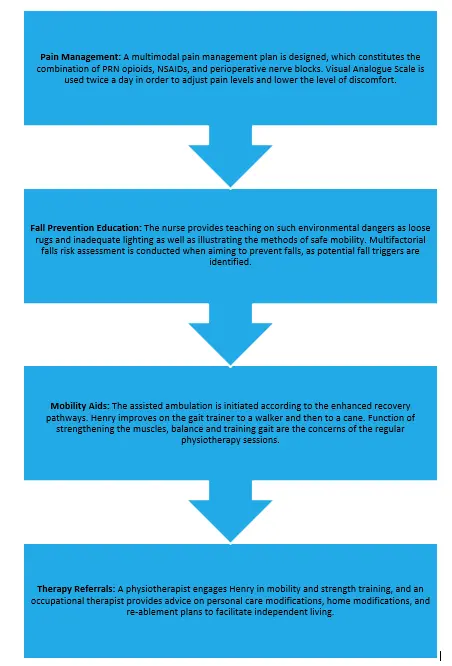
Figure 1: Specific Care Components
(Source: Self-Developed)
Family Involvement and Remote Support
The family of Henry is also significant, despite the distance that exists between them. Video sessions that are scheduled can make them aware and interested in making care decisions. The digital pathway through the use of a care diary will act as an ongoing means of communication where family members will be aware of the health of Henry and able to input into future planning (Götz et al., 2024). This participation not only makes Henry more motivated but will guarantee the continuity of care, particularly in the transition to home.
Role of Social Services and Community Resources
A social worker can determine whether Henry needs home care assistance, Meals on Wheels services and adaptations such as the use of a railing or stairlifts. Social services, where deemed necessary, are referred to, and they assist in getting the help of a third party. Age UK and others are advised to offer fall-prevention education and social support, encourage socially engaging activities and through this minimise isolation (Ahmadi et al., 2022).
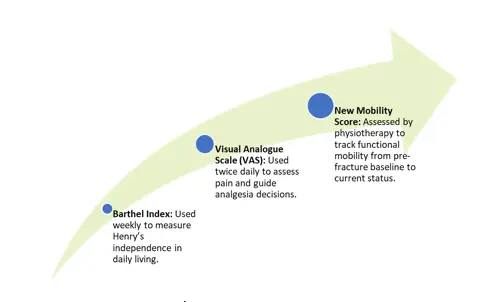
Figure 2: Evaluation and Adaptation Plan
(Source: Self-Developed)
Outcome Measures
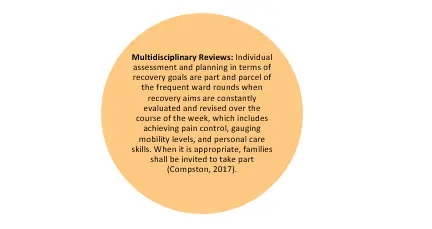
Figure 3: Outcome Measures
(Source: Self-Developed)
Recovery milestones are set; these include obtaining a Barthel Index score greater than 17 and ensuring the pain level remains less than a VAS of 3 (Fairhall et al., 2022). When these objectives are not achieved, the plan will be modified, including more sessions of therapy, a stricter safety approach to environmental safety and/or maximised medication management (Begum and Hossain, 2019).
Long-Term Follow-Up
Once discharged, a community physiotherapist also continues to aid the mobility aspirations of Henry, and the district nursing team also keeps watch on the wound treatment and recovery condition. Close follow-ups with social services and third-sector engagement occur every month so that functional improvement and readmission can be prevented (NICE, 2020). Continued education on fall prevention and peer support is also recommended in order to maintain autonomy and associate with others. This is a person-centred approach that will ensure that Henry is examined, treated and cared for in a person-centred way that harnesses his strengths, engages his family and uses the expertise of MDT and measurement of outcomes in practice to inform continued refinement based on his and his family's satisfaction and success with his recovery.
Conclusion
The model of Roper-Logan-Tierney (RLT) allowed a look at the overall, comprehensive and organised view on the physical, psychological, and social needs of Henry, as well as offered a chance at personalised and collaborative care planning. RLT was better suited compared to the model implemented by Orem since it is more effective in terms of facilitating everyday living and functionality, which were the goals of the rehabilitation Henry was pursuing. An evidence-based practice and working collaboratively with Henry, his family and the MDT guaranteed that treatment was responsive and person-centred. This strategy was able to meet important learning outcomes through the application of the nursing theory, the evidence, and the research, effective interactions with support networks, and co-production of care that considers the whole situation of the patient.
References
- Agarwal, N., Feng, T., Maclullich, A., Duckworth, A. and Clement, N., 2024. Early mobilisation after hip fracture surgery is associated with improved patient outcomes: A systematic review and meta‐analysis. Musculoskeletal Care, 22(1), p.e1863.
- Ahmadi, S., Irandoost, S.F., Ahmadi, A., Yoosefi Lebni, J., Mohammadi Gharehghani, M.A. and Baba Safari, N., 2022. Explaining experiences, challenges and adaptation strategies in COVID-19 patients: a qualitative study in Iran. Frontiers in Public Health, 9, p.778026.
- Angelo Gonzalo, n.d. Dorothea Orem: Self-Care Deficit Theory. Available at: https://nurseslabs.com/dorothea-orems-self-care-theory/ [Accessed June 16th, 2025]
- Begum, M.R. and Hossain, M.A., 2019. Validity and reliability of visual analogue scale (VAS) for pain measurement. Journal of Medical Case Reports and Reviews, 2(11).
- Compston, J., 2017. NOGG and NICE: new guidelines and quality standards for osteoporosis. Maturitas, 106, pp.97-98.
- Damar, H.T., Bilik, O., Karayurt, O. and Ursavas, F.E., 2018. Factors related to older patients' fear of falling during the first mobilization after total knee replacement and total hip replacement. Geriatric nursing, 39(4), pp.382-387.
- Fairhall, N.J., Dyer, S.M., Mak, J.C., Diong, J., Kwok, W.S. and Sherrington, C., 2022. Interventions for improving mobility after hip fracture surgery in adults. Cochrane database of systematic reviews, (9).
- Götz, J., Maderbacher, G., Leiss, F., Zeman, F., Meyer, M., Reinhard, J., Grifka, J. and Greimel, F., 2024. Better early outcome with enhanced recovery total hip arthroplasty (ERAS-THA) versus conventional setup in randomized clinical trial (RCT). Archives of Orthopaedic and Trauma Surgery, 144(1), pp.439-450.
- Holland, K. and Jenkins, J. eds., 2019. Applying the Roper-Logan-Tierney Model in Practice-E-Book: Applying the Roper-Logan-Tierney Model in Practice-E-Book. Elsevier Health Sciences.
- Jeltje Giesen, et al., 2024. What can nurses learn from patient's needs and wishes when developing an evidence-based quality improvement learning culture? A qualitative study. Available at: https://onlinelibrary.wiley.com/doi/10.1111/scs.13252 [Accessed June 16th, 2025]
- Jenkins, J., Solomon, J., Whittam, S. and Holland, K., 2008. Applying the Roper-Logan-Tierney model in practice. Elsevier Health Sciences.
- Koenders, N., Marcellis, L., Nijhuis-van der Sanden, M.W., Satink, T. and Hoogeboom, T.J., 2021. Multifaceted interventions are required to improve physical activity behaviour in hospital care: a meta-ethnographic synthesis of qualitative research. Journal of physiotherapy, 67(2), pp.115-123.
- Martínez-Angulo, P., Rich-Ruiz, M., Jiménez-Mérida, M.R. and López-Quero, S., 2024. Active listening, shared decision-making and participation in care among older women and primary care nurses: a critical discourse analysis approach from a gender perspective. BMC nursing, 23(1), p.401.
- Nancy Roper, et al., 2020. Roper-Logan-Tierney Model of Nursing Based on Activities of Living. Available at: https://nursology.net/nurse-theories/roper-logan-tierney-model-of-nursing-based-on-activities-of-living/ [Accessed June 16th, 2025]
- NHS, 2013. RightCare Pathway: Falls and Fragility Fractures. Available at: https://www.england.nhs.uk/rightcare/wp-content/uploads/sites/40/2017/12/falls-fragility-fractures-pathway-v18.pdf [Accessed June 16th, 2025]
- NICE, 2020. Joint replacement (primary): hip, knee and shoulder [P] Evidence review for inpatient hip and knee postoperative rehabilitation. Available at: https://www.nice.org.uk/guidance/ng157/evidence/p-inpatient-hip-and-knee-postoperative-rehabilitation-pdf-315756469339 [Accessed June 16th, 2025]
- NICE, 2025. Falls: assessment and prevention in older people and in people 50 and over at higher risk. Available at: https://www.nice.org.uk/guidance/ng249 [Accessed June 16th, 2025]
- NMC, 2018. The Code. Available at: https://www.nmc.org.uk/globalassets/sitedocuments/nmc-publications/nmc-code.pdf [Accessed June 16th, 2025]
- Orem, D., 2014. Self-care deficit theory of nursing. Nursing Theories: A Framework for Professional Practice, p.153.
- Roper, N., Logan, W.W. and Tierney, A.J., 2000. The Roper-Logan-Tierney model of nursing: based on activities of living. (No Title).
- Sharkiya, S.H., 2023. Quality communication can improve patient-centred health outcomes among older patients: a rapid review. BMC Health Services Research, 23(1), p.886.
- Vick, J.B., Golden, B.P., Cantrell, S., Harris-Gersten, M.L., Selmanoff, M.R., Hastings, S.N., Oyesanya, T.O., Goldstein, K.M. and Van Houtven, C., 2024. Family Involvement in the Care of Hospitalized Older Adults: Protocol for a Qualitative Evidence Synthesis. JMIR Research Protocols, 13(1), p.e53255.
Recently Downloaded Case Studies by Customers
Introduction to Managing and Leading People in International Organizations Case Study Management comprises supervising a team or...View and Download
Introduction The term strategic agility is defined as capability of the business in order to determine potential threats,...View and Download
Introduction Struggling with deadlines or complex topics? Our tailored Assignment Help UK service delivers high-quality,...View and Download
Introduction to The Deepwater Horizon Disaster Of 2010 Case Study British Petroleum (BP) is a well-known UK-based company which...View and Download
Introduction: Organisational Behaviour Get free samples written by our Top-Notch subject experts for taking Online...View and Download
Introduction Struggling with assignments? Get professional Assignment Help for top-notch academic support. Our experts ensure...View and Download