
Role of Wind Energy in Sustainable Power Generation Assignment Sample
Wind Energy sample examines wind turbine types, Betz efficiency limit, site selection, offshore and onshore farms, technological innovations, grid integration, and sustainable power generation challenges.

- 1. Introduction: Wind Energy in Sustainable Power Generation
- 2. Wind Turbines
- 2.1 Overview of Wind Turbines
- 2.2 Types of Wind Turbines
- 2.3 Design Considerations
- 2.4 Technological Advancements
- 3. Betz Efficiency Limit
- 3.1 Introduction to the Betz Limit
- 3.2 Mathematical Explanation
- 3.3 Practical Implications
- 3.4 Real-World Efficiency
- 4. Location Selection for Wind Turbines
- 4.1 Factors Influencing Location Selection
- 4.2 Offshore vs. Onshore Wind Farms
- 4.3 Case Studies
- 5. Challenges and Future of Wind Energy
- 5.1 Technological Challenges
- 5.2 Economic and Social Challenges
- 5.3 Future Trends and Developments
- 5.4 Role in Global Sustainability
- 6. Critical Analysis of Wind Energy Technologies
- 6.1 Comparison with Other Renewable Energy Sources
- 6.2 Technological Innovations in Wind Energy
- 6.3 Promise of Wind Energy
- Type Assignment
- Downloads2715
- Pages24
- Words5935
1. Introduction: Wind Energy in Sustainable Power Generation
Among all the different types of renewable energy, wind energy has become the most promising resource, though it is drawing the most attention around the world for its power to curb climate change, lessen reliance on fossil fuels, and spur the growth of sustainable energy. Wind is a natural resource that is available in abundance and can be used as a clean, renewable and inexhaustible source of energy and has been used for centuries. Over the past decades, among the fundamental aspects that support the global evolution towards a low-carbon energy future, the role of wind energy has dramatically intensified.
Firstly, wind energy is an environmentally friendly option, as the energy produced is not as harmful to the environment. Whereas fossil fuels emit such harmful pollutants as “carbon dioxide (CO2), sulfur dioxide (SO2), or nitrogen oxides (NOx) that substantially contribute to air pollution and global warming, wind energy does not (Hannun and Razzaq, 2022). Therefore, great importance has been given to wind power within the national and international strategies to reduce greenhouse gas emissions and to fight against global warming. Moreover, wind energy helps maintain energy security through energy diversity and reduces dependence on imported fuel power to enhance the energy system’s resiliency.
Reference materials and sample papers help students understand assignment structure and academic writing standards. Through our UK assignment help, guidance is shared while maintaining originality. The Role of Wind Energy in Sustainable Power Generation Assignment Sample presents structured discussion on wind turbines, efficiency limits, and site selection. These resources are intended for study and reference purposes only.
Recently, wind energy has experienced tremendous advancement in technology, resulting in the generation of larger and more input wind turbines that can produce enough power to provide a community with the energy it needs. Support from the government in the form of policies that encourage wind energy growth, technological innovations, and the growing awareness of public attention to the need to use clean energy sources has spurred the growth of wind energy. The price of wind power has fallen too, and so wind power has become economically competitive with the traditional fossil-fuel-based power generation.
Wind energy is important for meeting energy needs in wind resource-rich regions all across the globe. The sector of Wind Energy Generation has become a game of countries, with China, the United States, Germany and Denmark leading in this sector by producing more and more wind farms onshore and offshore (Canales Muñoz, 2022). Moreover, wind power generation is also a clean energy solution, a driver of economic growth, job creation, a boost to the local economy and a spur to technological innovation.
With that, this essay concentrates on 3 key aspects of wind energy, namely wind turbines, Betz efficiency limit and location selection. Secondly, the wind turbine design, its working principles, and technological advancements are discussed have enhanced its efficiency and power production capacity. Betz efficiency limit is looked at to understand the theoretical limits of wind turbine efficiency and their practical limits on turbine performance. The essay then goes on to explore factors that impact the choice of those sites with the optimal wind farm locations, such as wind patterns, geographic conditions and economic and environmental factors.
Don't let tough engineering concepts hold you back. With Engineering Assignment Help, you get step-by-step solutions, detailed explanations, and plagiarism-free content crafted by real engineering professionals
2. Wind Turbines
Wind turbines are the core technology used to convert wind’s kinetic energy into electrical power. Their efficiency depends on blade design, turbine size, wind speed, and control systems. Continuous improvements in materials, aerodynamics, and turbine scaling have significantly enhanced power output, making wind turbines suitable for both onshore and offshore energy generation.
2.1 Overview of Wind Turbines
Wind turbines are useful devices that convert the kinetic energy of the wind into electrical energy. This is a core element of wind power production. This causes the wind to blow the blades of the turbine and rotate on the rotor which then drives the turbine. Then, the electricity produced is transmitted from the nacelle to a generator that is also inside the nacelle. This demonstrates the central role of wind energy in sustainable power generation, highlighting how turbines convert wind into clean electricity efficiently.
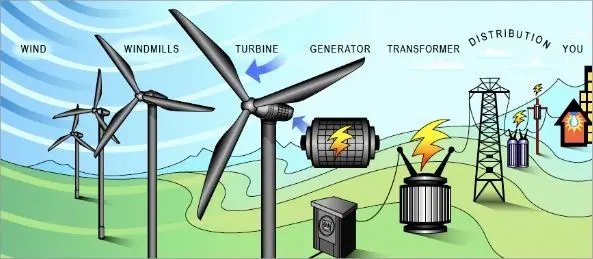
Figure 1: Wind Turbines
A wind turbine consists of a blade, rotor, nacelle, generator, and tower as its main components. The lightweight yet durable material used to make the blades is such that they can efficiently capture the energy in the wind. The blades and the hub attached to this shaft constitute the rotor, these can transmit the rotational energy. The mechanical and electrical components are housed in a nacelle that rides on top of a tower to position the turbine in an elevation that provides stronger and more consistently blowing winds. It generates electrical energy from mechanical energy and transmits it to the grid for use.
2.2 Types of Wind Turbines
Wind Turbines are classified into two categories: Horizontal-axis wind turbines (HAWT) and Vertical-axis wind turbines (VAWT). Though both types are designed to capture wind energy, they have different mechanical designs and their ideal applications.
The most used type of turbine is the horizontal-axis wind turbine (HAWT) in both the onshore and offshore wind farms. Blades mounted on a horizontal rotor rotate around a horizontal axis and these turbines. HAWTs are simply ordinary propellers, and as the wind blows the blades spin. Because these turbines could tilt towards the direction of the wind with the use of a yaw mechanism, they capture more wind energy. Because they are more efficient and have the potential to generate more power than other wind energy concepts, HAWTs are generally used in large commercial wind farms (Rosato et al., 2024). The two or three-bladed turbines are built normally, and their efficiency is enhanced with the increase of size of the turbine and the diameter of the rotors.
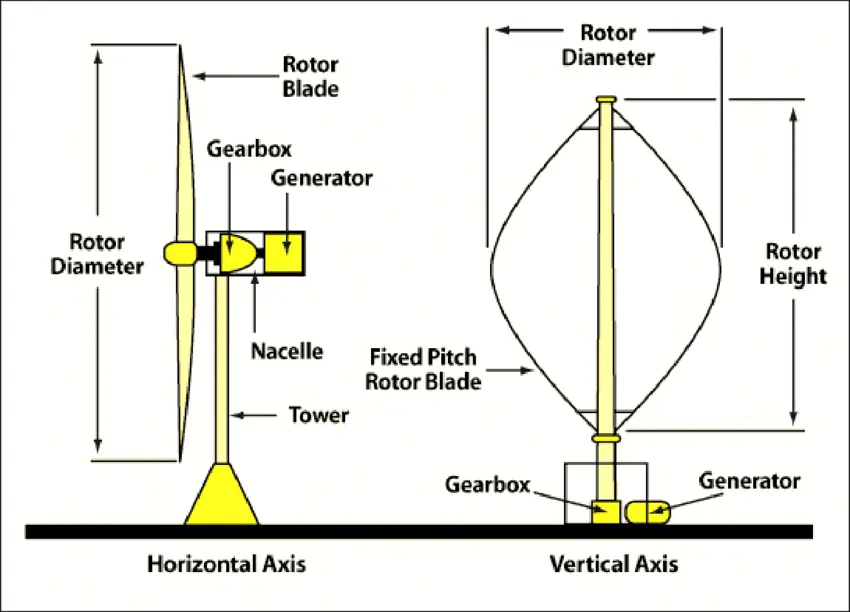
Figure 2: Horizontal-Axis and Vertical-Axis Wind Turbines
This means vertical axis wind turbines (VAWT) have their blades rotate around the vertical axis whereas those in horizontal axis HAWTs. But in the case of VAWTs, they are not so common in scale but can be beneficial in some of the configurations. One of the main advantages of VAWTs is that they can work make no wind direction (Barnes et al., 2021). Generally, these turbines are used in urban areas or smaller-scale applications where space and wind direction are not constant. However, VAWTs are typically less efficient than HAWTs and are not as good at absorbing wind energy, including in large commercial contexts.
2.3 Design Considerations
- Blade Design and Materials: The blades of the wind turbine are designed to be very important. Blades are often made of lightweight yet strong compounds like fiberglass, carbon fiber, etc. Both aspects of stiffness, necessary to stand up to high winds, and lightness, to enable the blades to rotate efficiently, are supplied by these materials (Ebissa and Alemu, 2024). Of course, the shape of the blades, particularly its airfoil design, is also important as it determines the lift-to-drag ratio.
- Size and Scaling of Turbines: In other words, the energy production capacity of wind turbines depends on their size. Turbines of greater size have longer bladed and higher towers because they can contain more wind and produce more electricity. Also, the performance of turbines under various wind conditions relies on the scaling of turbines.
- Efficiency and Power Output: Some of the factors like wind speed, aerodynamics and turbine size affect how efficient a wind turbine can be. For wind turbines to operate most efficiently, locations with consistent moderate to high wind speeds are favorable. Small increases in wind speed makes a big impact on energy generation as the power output is in the cubed relationship with wind speed (Roga et al., 2022).
2.4 Technological Advancements
These are some of the technological advancements:
- Larger Blades: By allowing some of the rotors on offshore wind farms to halt their rotations, wind farms can harvest high winds at certain times when the environment is calm.
- Advanced Materials: Carbon composites and lightweight materials were used so that turbines are more durable and lighter weight, making them more effective.
- Control Systems: Although the wind is present, it strays outside the optimum range for sustaining vapor blade motion, and turbine blades must be pitched to adjust their shape, maximizing energy capture relative to changing wind conditions.
- Offshore Wind Turbine Technology: Turbines have been able to be installed in deeper waters with the sound of stronger, more consistent wind resources thanks to the development of floating platforms.
3. Betz Efficiency Limit
The Betz efficiency limit explains the maximum theoretical energy that can be extracted from wind by a turbine. It establishes that no turbine can convert more than 59.3% of wind’s kinetic energy into mechanical energy. This concept plays a crucial role in turbine design by defining realistic performance expectations under physical and aerodynamic constraints.
3.1 Introduction to the Betz Limit
Betz Efficiency Limit, also known as Betz law, is a fundamental concept for wind energy. It is the maximum theoretical efficiency with which a wind turbine may transform the kinetic energy of wind into mechanical energy. According to German physicist Albert Betz’s Betz limit, a wind turbine does not extract all the kinetic energy in the wind (Antonchik et al., 2024). The critical insight the law reveals is that if a turbine captured all the energy within the wind, the wind would stop, and the turbine would no longer be able to produce power. Therefore, the wind ‘wastes’ some of the Kinetic energy passing through the turbine to keep moving and generate the energy.
The Betz limit is important because it puts a limit on the amount of work that wind turbines could provide and consequently influences the design of the turbine and expectations of energy production (Kimiti et al., 2024). This limit can then be understood by engineers and scientists to construct more efficient wind turbines with account for the physical limits of wind energy conversion.
3.2 Mathematical Explanation
Principles from fluid dynamics and conservation of the mass and energy are used to derive the Betz efficiency limit. In order to apply this limit, a wind turbine have to be imagined as an object that takes energy from wind by passing the wind rotor. How much the wind’s velocity reduces upon passing through the turbine determines the amount of energy extracted and reduces can’t be taken too far.
In the rotor wind enters at velocity v0 and exits at v1. The kinetic energy of the wind before and after passing the turbine rotor is proportional to the wind energy captured and delivered by the turbine.
The power available in the wind at any point can be defined as:
Where:
- ρ is the air density,
- A is the area swept by the turbine blades (rotor area),
- v is the wind speed.
Assuming mass conservation, the mass flow rate of wind before and after being passed over by the turbine must be equal. The response is that the captured energy of the rotor is maximized when wind speed is reduced by one-third. The maximum efficiency or power coefficient (Cp) is given by:
The value for this case, i.e. 59.3% of the wind kinetical energy could not be converted to mechanical energy is referred to as the Betz limit which means the speed of no wind turbine can exceed 59.3 % of the speed of kinetic energy conversion.
| Turbine Type | Maximum Efficiency (%) | Description |
|---|---|---|
| Theoretical Betz Limit | 59.3 | The theoretical maximum efficiency according to Betz's law. |
| Modern Onshore Turbines | 35 | Efficiencies of current onshore turbines, impacted by location, wind speed, and environmental factors. |
| Modern Offshore Turbines | 45 | Offshore turbines typically perform better due to more consistent winds. |
Table 1: Betz Efficiency Limit Comparison
The values are theoretical, and it is assumed that it operates under ideal conditions and not considering the real-world factors which include turbulence, friction, and mechanical inefficiencies.
3.3 Practical Implications
The Betz efficiency limit defines the upper limit on the amount of energy captured by the wind turbine. Betz law states that no wind turbine can convert more than 59.3% of the wind’s kinetic energy into mechanical energy, which becomes 59.3% of the energy reached from the wind. If a turbine were to capture 100% of the wind’s energy, it would cease the wind from flowing, and therefore any further energy extraction would not be possible.
Modern turbines come close to the Betz limit because of many factors, which affect turbine efficiency. They include wind speed, turbine design, and environmental conditions (Adeyeye et al., 2021). The Betz” limit is hard to achieve due to real-world problems that influence efficiency, such as turbulence, different wind directions and mechanical losses. In addition, poor energy capture results from operational issues such as blade wear, aerodynamic drag and imperfect blade angles. With modern turbine designs, rotor design, materials for the blades as well as control systems, are optimized to approach the Betz limit, modern turbines usually operate between 35-45% under average conditions.
3.4 Real-World Efficiency
In practice, the actual efficiency of wind turbines in the real world is less than the Betz limit by various factors including mechanical and environmental impacts. The Betz limit is a theoretical upper bound of 59.3%, but, typically, modern turbines operate with an efficiency of 30% or less to 45%. The cause of this gap is due to the fact of imperfect conditions like varying wind speed, turbulence and complexities of the turbine control mechanism. Furthermore, operational losses from friction, electrical conversion and wind turbulence further hamper the performance of the turbine.
As turbines approached the Betz limit, improved turbine design has been made through using more advanced blade materials, smarter control systems, and new improved rotor configurations.
4. Location Selection for Wind Turbines
Selecting an appropriate location is essential for achieving optimal wind energy production. Factors such as wind speed consistency, terrain, proximity to infrastructure, environmental impact, and economic feasibility influence site selection. Coastal and offshore areas often provide stronger and more reliable wind conditions, while onshore locations offer lower installation and maintenance costs.
4.1 Factors Influencing Location Selection
Wind turbines are located at several key factors such as wind speed and consistency, topography and geography, proximity to infrastructure, environmental impact, and economic factors.
Wind Speed and Consistency:
Wind speed and consistency are the two main factors in the selection of a place to locate a wind farm as the power in the wind turbine is directly proportional to the wind speed (Olabi et al., 2021). To achieve high energy production strong steady winds are required that typically are between 5-8 meters per second.
| Region | Average Wind Speed (m/s) | Wind Consistency (%) | Description |
|---|---|---|---|
| Offshore Location A | 8.5 | 90 | High consistency and strong winds, ideal for offshore turbines. |
| Offshore Location B | 9.2 | 85 | Consistent winds but slightly less powerful than Location A. |
| Onshore Location A | 6.5 | 70 | Moderate winds, variable in nature, suitable for onshore installations. |
| Onshore Location B | 5.8 | 65 | Lower consistency, affected by local topography, less optimal for wind farms. |
Lower consistency, affected by local topography, less optimal for wind farms.
Table 2: Wind Speed and Consistency Comparison
When combined with maps and patterns indicating areas with favorable conditions, they aid in the identification of areas with favorable conditions. Big wind farms require wind speed and so offshore locations tend to have more consistent and higher wind speeds thus are better suited for large-scale wind farms.
- Topography and Geography: The geography and topography of a location contribute to the wind flow. The sea breeze effect is beneficial to coastal places because the temperatures are different from the land and sea respectively, thus creating stronger winds (Xu et al., 2021). However, inland regions may experience more turbulent winds as wind is disturbed by the terrain around it such as mountains, valleys, or forests.
- Proximity to Infrastructure: Installation and operational costs must be minimized, which requires proximity to other infrastructure. To transport electricity from the wind farm to the power grid, grid connection is essential and locations close to transmission lines minimize the cost of additional expansion infrastructure. Moreover, they have easy access to transportation networks so that turbine components can be delivered and maintained efficiently.
- Environmental Impact: As wind farms are a consideration of their environmental impact, that is, alternative sources of energy. Also, wind turbines should be placed in places that do not adversely affect the habitat or ecosystems of endangered species (Estellés‐Domingo and López‐López, 2024). Another conflict that needs to be avoided is with agricultural, residential and conservation land use, so noise pollution is an important matter to consider.
- Economic Factors: The effects of land cost, or lack thereof, and government incentives are huge economic factors. The cost varies depending on where the land is located. However, some regions are luring the greenfield development with local government incentives like tax credit or subsidy. Careful site selection further emphasizes the role of wind energy in sustainable power generation by ensuring optimal energy output and minimal environmental impact.
4.2 Offshore vs. Onshore Wind Farms
Advantages of Onshore Wind Farms:
Typically, onshore farms are cheaper to construct than offshore ones because of the lower costs of construction and operations.
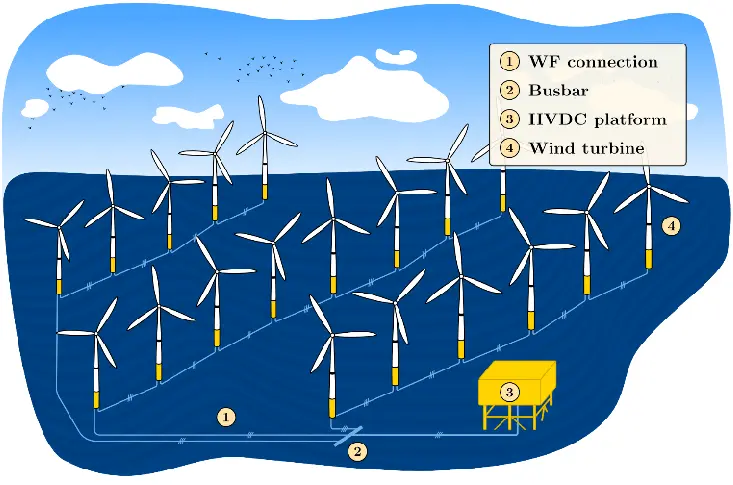
Figure 3: Onshore Wind Farm
Easier access to infrastructure (such as roads and electrical grids) gives them also. Another advantage is that maintenance is easy as well as cheap because it is close to land and the transportation systems are already in place.
- Disadvantages of Onshore Wind Farms: Because land availability is generally limited for onshore wind farms, such wind farms can also be limited by turbulence induced by terrain features such as mountains and forests. Additionally, these turbines experience problems both with noise and visual pollution and are opposed by communities next to them. Additionally, the cost of land can be high in extremely populated or export opportunities.
- Advantages of Offshore Wind Farms: Being located farther offshore, such sites provide stronger and more consistent winds than onshore sites and therefore offer great efficiency.
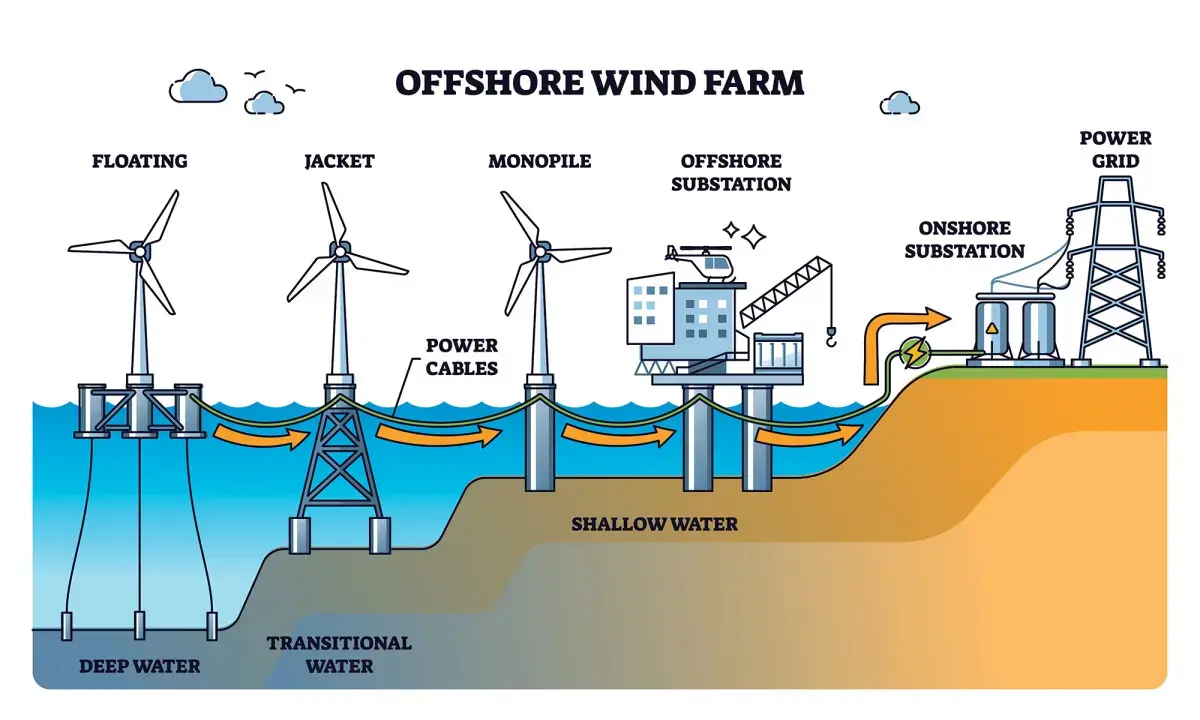
Figure 4: Offshore Wind Farm
Because land use is less of an issue, they are also in areas less prone to problems of conflict and environmental and social conflicts that tend to go hand in hand with land-based projects (Hanti, 2022). More turbines often mean higher energy production, which is possible with offshore wind farms.
Disadvantages of Offshore Wind Farms:
However, disadvantages of its primary are the high initial cost of installation, complicated movement in the sea due to sad logistics in bad sea conditions. Special equipment also makes offshore projects more expensive, since longer construction periods are also needed.
Offshore Wind Energy Potential:
The higher and more consistent wind speeds in oceanic areas make offshore wind farms a potential source of energy. Such scale of production makes them ideal for large energy production, especially to countries with long coastlines like Denmark and Germany, as well as in the UK.
4.3 Case Studies
Several efficient wind energy facilities operating on land and sea demonstrate successful power generation technology across the globe.
- Hornsea One (UK - Offshore): The world’s biggest offshore wind facility exists at Hornsea One which operates off British coastal waters. Its 174 turbines installed across 407 square kilometers territory generate 1.2 GW of electricity to power 1 million homes simultaneously (Moss, 2021). This important wind farm demonstrates offshore energy opportunities by using North Sea wind power consistently for efficient power production.
- Gansu Wind Farm (China - Onshore): One of the largest facilities of its kind globally China operates the massive Gansu Wind Farm which exists within Gansu province boundaries. The farm should achieve its total capacity target of 20 GW before 2020 because the region maintains high wind speeds (Feng and Zhang, 2023).
- Walney Extension (UK - Offshore): The Walney Extension ocean-based wind farm near Cumbria provides electricity for 590,000 homes while operating at a capacity of 659 MW (Clewley et al., 2021). The successful completion demonstrates how enormous offshore energy initiatives operate effectively and has enabled more offshore wind projects across the UK and European regions.
These case studies prove that offshore as well as onshore wind farm installations possess substantial power to generate renewable energy at scale.
5. Challenges and Future of Wind Energy
Despite its benefits, wind energy faces challenges related to intermittency, energy storage, grid integration, and public acceptance. However, advancements in turbine technology, offshore installations, energy storage systems, and smart grids continue to address these issues. With ongoing innovation and policy support, wind energy is expected to play a vital role in future sustainable power systems.
5.1 Technological Challenges
Energy Storage Issues:
The major technical obstacle in wind power generation is the need to store energy. The production of wind power remains intermittent because it does not match the times when customer demand requires electricity. The storage of wind energy becomes vital to maintaining the power supply at all times.
| Challenge | Onshore Wind Farms | Offshore Wind Farms |
|---|---|---|
| Initial Costs | Medium | High |
| Operational Costs | Low | High |
| Maintenance Costs | Medium | High |
| Energy Efficiency | Moderate | High |
| Environmental Impact | Moderate | Low |
Table 3: Technological and Economic Challenges Comparison

 8 Years | PhD in Structural Engineering
Both batteries along with pumped hydro storage systems presently act as energy storage methods, however they demonstrate various constraints. Battery systems cost too much money, and their energy capacity remains restricted although pumped hydro facilities require specific geographical locations. To provide better and more economical solutions, solid state batteries and compressed air energy storage (CAES) are researched.
Grid Integration and Transmission:
The process of connecting wind energy to power grids alongside the transmission requirements presents significant obstacles. The electricity from wind turbines must travel across extended distances to serve consumers because these facilities normally operate in remote areas. Wind power cannot easily connect to established power grids that mainly operate with steady energy sources because the wind is an inconsistent power source (Ali et al., 2021). As wind power is increasingly supplied to modern grids, it is necessary to upgrade such grids with more flexible infrastructure and energy storage solutions to cope with their fluctuating supply.
5.2 Economic and Social Challenges
High Initial Costs:
- There is significant capital required for offshore wind farms in terms of costs of turbines, infrastructure and grid connections.
- Offshore increases costs by specialized equipment and accordingly transportation and installation in harsh marine environments (Chitteth Ramachandran et al., 2021).
- However, technological advances and economies of scale do lower costs, but still an initial investment can be high.
- Installing on a larger scale is prone to be more costly in regions with lesser developed infrastructure.
- The cost of developing wind energy projects is being helped through government incentives in reducing upfront costs and improving financial feasibility.
Public Acceptance and Environmental Concerns:
- Onshore wind projects come up against the local communities' resistance because they are usually opposed by concerns about the visual impacts of turbines and noise pollution (Sander et al., 2024).
- Opposition is also tied to concerns about property values which could also experience negative effects within the locality.
- Others object to environmental concerns that the pump could have an impact on wildlife, including birds, bats and others.
- Cobble-on, offshore wind farms may impact marine ecosystems less on visual, noise grounds, but still.
- To develop such projects successfully, there is a need for careful planning, environmental impact assessments, and community engagement to address public concerns in respect to such projects.
5.3 Future Trends and Developments
Next-generation Wind Turbines:
- Larger and more efficient turbines: Under good wind conditions the air flowing past the turbine can be further sped up.
- Improved materials: Lighter materials and sturdier materials that prolong the lifespan of the turbine.
- Advanced control systems: AI, thereby the incorporation of AI and machine learning in the advanced control systems to enhance performance in varied wind conditions and predictive maintenance.
Offshore Wind Energy Advancements:
- Floating wind farms: New developments in floating platforms that permit the turbines to be set in deeper waters which have stronger winds.
- Reduced maintenance costs: Innovations to reduce the number of required maintenances in the offshore environments, making offshore installations cheaper.
Smart Grid Integration and Innovative Turbine Designs:
- Smart grid systems: Integration of smart grids does better by fluctuating wind energy generation and placing energy distribution.
- Adaptable turbine designs: Turbines that have adjustable tilt of the blades to optimize the energy captured from the wind in various wind conditions for overall increased efficiency.
5.4 Role in Global Sustainability
Reduction of carbon emissions and combating climate change greatly depend on wind energy. Wind power constitutes a renewable energy source that produces electricity without causing harmful pollutants, aiming at decarbonizing the global energy sector. Countries can make a big impact in reducing their greenhouse gas emissions by replacing fossil fuels with wind energy, as needed for meeting targets to tackle climate set in international agreements like the Paris Agreement (Wang and Azam, 2024).
In addition to generating electricity, wind energy also provides an environmental benefit by cutting air pollution greatly, one of the main culprits of respiratory diseases and unsustainability, respectively. Addressing technological, economic, and social challenges is essential to maximize the role of wind energy in sustainable power generation.
6. Critical Analysis of Wind Energy Technologies
Wind energy offers a reliable and low-emission renewable power source with strong future potential. Although efficiency and intermittency challenges exist, continuous technological improvements are enhancing performance and integration into modern energy systems.
6.1 Comparison with Other Renewable Energy Sources
Other than solar, geothermal, and hydroelectric power, wind energy is compared. All these alternatives have their own pros and cons.
There is an abundance and wide availability of solar energy, especially in sunny areas. It comes with limitations though, such as having a limit of time that the energy generated only happens in the day and is dependent on weather conditions. Wind energy cannot be produced at night but is not intermittent since it continues to generate energy, day and night, as long as there is wind. Therefore, wind farms are more site-dependent than solar panels since they are more productive in areas with consistent winds.
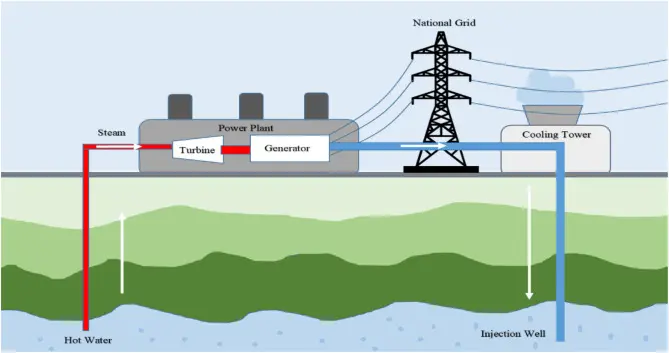
Figure 5: Geothermal Energy
Geothermal energy that captures heat from the earth is a stable and renewable energy source that has a minimal environmental impact. Unfortunately, its proximity is geographically limited to areas where there is some geothermal activity (Santos et al., 2022). However, wind energy can be placed not only onshore sites but offshore locations where the wind resource is stronger.
Hydroelectric power is very efficient, has the potential to generate large amounts of electricity on a huge scale, has important water resources and has some important environmental effects such as habitat disruption and fish migration problems (Geist, 2021). Unlike wind energy, whose environmental footprint may be much smaller, wind energy can affect local wildlife and ecosystems although no more than other forms of energy generation.
Get assistance from our PROFESSIONAL ASSIGNMENT WRITERS to receive 100% assured AI-free and high-quality documents on time, ensuring an A+ grade in all subjects.
6.2 Technological Innovations in Wind Energy
Recent wind energy technology innovations seek improvements in efficiency, reduction of costs and expanded deployment options. Development of the vertical-axis wind turbines (VAWTs) is one significant advancement. VAWTs are different from conventional horizontal axis turbines (HAWTs), in that they can take the wind from any direction which makes them excellent for urban environments where the direction of the wind is less predictable (Abdolahifar and Zanj, 2024). The comparatively quiet and smaller sizes of VAIs also satisfy these concerns of noise pollution and space limitations in populated regions.
Another exciting development is bladeless turbines. Where the turbines differ from traditional blades is in that their blades are replaced by a vibrating structure that captures the wind energy. The benefits are, of course, less noise and bird impact, as well as less maintenance because there are fewer parts to maintain. Even at early stages, bladeless turbines promise to completely change the wind energy groundwork, especially in areas where the environment or aesthetics are at stake.
Moreover, AI and machine learning are also included in wind turbine technology. Through the use of these technologies, the wind pattern can be predicted, and turbine settings can be adjusted in real time to help optimize turbine performance for the reduction of downtime (Udo et al., 2024). The combination of AI power systems with wind energy reduces the operational and capital costs, extends the life of turbines, and ultimately improves wind energy in relation to other energy sources.
6.3 Promise of Wind Energy
Wind energy has great potential in the future energy landscape, where it can be used as a scalable, benign energy source at a cost equivalent to current production. As the demand for global energy grows, wind energy provides an attractive resource for providing cleaner, renewable electricity. Wind energy in the future through further development of technology can make a significant contribution to the filling of an energy mix that is more diversified and reduce their reliance on fossil fuels and mitigating the impacts of climate change.
Ongoing improvement in the turbine industry is one of the key factors for wind energy’s future. The utilization of larger turbines, as well as harder materials, has increased energy capture even at wind speeds that are lower. Rapidly expanding offshore wind farms are based on increased and steadier winds in regions with huge coastlines (Ryu et al., 2022). By floating turbines, offshore wind energy further increases its potential to be installed at greater depths that were not previously viable.
Additionally, AI and smart grid integration will enable wind energy to better fit in with the national and international grids and, as such, minimize the intermittency issues by more seamlessly integrating wind energy into the general energy distribution. In this sense, these innovations are not only making wind energy more economically viable but the most efficient as well as a more reliable service on a global scale.
Conclusion
In this essay, a few aspects of wind energy have been covered such as wind turbines, “Betz efficiency limit and location selection. Wind energy is among the most promising renewable energy sources in the fight to eliminate the use of fossil fuels of all kinds and thus cut drastically carbon emissions and curb and combat climate change. However, the realization of this potential requires wind turbines that are as efficient and performing as the Betz efficiency limit offers a theoretical framework for the maximum amount of kinetic energy that can be extracted from the wind. Betz’s law sets a limit of 59.3% of the wind’s energy that can be captured by wind turbines and so sets the boundary for the design and expectations of wind turbine operation.
Over the years, wind turbines have become the primary technology for converting the energy of wind into electricity. For decades, wind turbine blade design, materials and control systems have improved wind turbine efficiency, durability and scalability. The horizontal-axis wind turbines (HAWT) and the vertical-axis wind turbines (VAWT) are categorized as two main types of wind turbines and there are advantages of each at specific locations or at specific applications, HAWT used widely in large-scale wind farms and VAWT is promising for the small scale and urban settings.
Optimizing wind turbine performance requires the selection of its location. Care must be given to factors like wind speed and consistency, topography and geography, proximity to infrastructure, and environmental impact. Areas with consistent, strong, winds, like coastal regions and offshore locations, have the best potential production of energy at wind farms. Offshore farms have higher costs and more logistical problems, while onshore farms may have opposition for reasons of environment and society. Another reason for the feasibility of wind energy projects is economic factors like land costs and government incentives.
Looking forward, wind energy brings great promise to help global energy sustainability. The new ways of using wind energy and the advanced technologies that will enable them include floating wind farms, bladeless turbines, and the use of AI” for optimum turbine performance, and all of these will further improve efficiency, reduce costs and make the wind energy generation system more environment friendly.
But there are still challenges: especially the energy storage, grid integration and wind power are not constant. There is a need for further research to develop more efficient energy storage solutions, improve grid infrastructure and address social and environmental issues such as wildlife destruction, loss of habitat and disharmony to neighbors by wind farms. Investment in wind energy will remain encouraged by government incentives and backed by policy support.
References
- Abdolahifar, A. and Zanj, A., 2024. Addressing VAWT Aerodynamic Challenges as the Key to Unlocking Their Potential in the Wind Energy Sector. Energies, 17(20), p.5052.
- Adeyeye, K.A., Ijumba, N. and Colton, J., 2021, June. The effect of the number of blades on the efficiency of a wind turbine. In IOP Conference Series: Earth and Environmental Science (Vol. 801, No. 1, p. 012020). IOP Publishing.
- Ali, S.W., Sadiq, M., Terriche, Y., Naqvi, S.A.R., Hoang, L.Q.N., Mutarraf, M.U., Hassan, M.A., Yang, G., Su, C.L. and Guerrero, J.M., 2021. Offshore wind farm-grid integration: A review on infrastructure, challenges, and grid solutions. Ieee Access, 9, pp.102811-102827.
- Antonchik, V., Hankevich, V., Paschenko, O., Pazynich, A., Varon, O., Perederii, N. and Schubnikov, S., 2024. Efficiency coefficient of wind installations. Mining Machines, 42(4), pp.301-311.
- Barnes, A., Marshall-Cross, D. and Hughes, B.R., 2021. Towards a standard approach for future Vertical Axis Wind Turbine aerodynamics research and development. Renewable and Sustainable Energy Reviews, 148, p.111221.
- Canales Muñoz, A., 2022. The legal and regulatory barriers for the development of offshore wind farms in Sweden and Norway: A comparative study (Master's thesis, UiT Norges arktiske universitet).
- Chitteth Ramachandran, R., Desmond, C., Judge, F., Serraris, J.J. and Murphy, J., 2021. Floating offshore wind turbines: Installation, operation, maintenance and decommissioning challenges and opportunities. Wind Energy Science Discussions, 2021, pp.1-32.
- Clewley, G.D., Thaxter, C.B., Humphreys, E.M., Scragg, E.S., Bowgen, K.M., Bouten, W., Masden, E.A. and Burton, N.H., 2021. Assessing Movements of Lesser Black-backed Gulls Using GPS Tracking Devices in Relation to the Walney Extension and Burbo Bank Extension Offshore Wind Farms: Report of Work Carried Out by the British Trust for Ornithology in Association with the University of Amsterdam and University of the Highlands and Islands on Behalf of Ørsted. British Trust for Ornithology.
- Ebissa, D.T. and Alemu, M.A., 2024. Current Developments and Prospects as Composite Materials for Wind Turbine Blades. Poly Journal of Engineering and Technology (PJET), 2(2), pp.22-49.
- Estellés‐Domingo, I. and López‐López, P., 2024. Effects of wind farms on raptors: A systematic review of the current knowledge and the potential solutions to mitigate negative impacts. Animal Conservation.
- Feng, Y. and Zhang, L., 2023. The GHG Intensities of Wind Power Plants in China from a Life-Cycle Perspective: The Impacts of Geographical Location, Turbine Technology and Management Level. Sustainability, 15(5), p.4449.
- Geist, J., 2021. Green or red: Challenges for fish and freshwater biodiversity conservation related to hydropower. Aquatic Conservation, 31(7).
- Hannun, R.M. and Razzaq, A.H.A., 2022, March. Air pollution resulted from coal, oil and gas firing in thermal power plants and treatment: a review. In IOP conference series: earth and environmental science (Vol. 1002, No. 1, p. 012008). IOP Publishing.
- Hanti, G.H., 2022. An Assessment of Drivers and Management Practises of Land-based Conflicts in Tana River Delta, Kenya (Doctoral dissertation, University of Nairobi).
- idaho.gov, 2025. TOPIC RELATED TO Wind Turbines. Viewed on 21st March 2025. From, https://oemr.idaho.gov/sources/re/wind/
- Kimiti, R.M., Kariuki, F.N., Kamau, J.N. and Soitah, T.N., 2024. Theoretical and Empirical Limits: Reexamining Betz’s Upper Limit towards a Practical Power Coefficients in Wind Turbines. World Journal of Engineering and Technology, 12(4), pp.851-866.
- Moss, J., 2021. Critical perspectives: North Sea offshore wind farms.: Oral histories, aesthetics and selected legal frameworks relating to the North Sea.
- Olabi, A.G., Wilberforce, T., Elsaid, K., Salameh, T., Sayed, E.T., Husain, K.S. and Abdelkareem, M.A., 2021. Selection guidelines for wind energy technologies. Energies, 14(11), p.3244.
- rechargenews.com, 2025. TOPIC RELATED TO Hornsea One Offshore Farm. Viewed on 21st March 2025. From, https://www.rechargenews.com/wind/siemens-7mw-lined-up-for-1-2gw-hornsea-1-offshore-wind/1-1-869461
- researchgate.net, 2025. TOPIC RELATED TO Horizontal-Axis and Vertical-Axis Wind Turbines. Viewed on 21st March 2025. From, https://www.researchgate.net/figure/HAWT-and-VAWT-http-wwwwindturbineworkscom-2018_fig1_333204326
- researchgate.net, 2025. TOPIC RELATED TO Onshore Wind Farm. Viewed on 21st March 2025. From, https://www.researchgate.net/figure/General-scheme-of-an-onshore-wind-farm_fig1_356746601
- Roga, S., Bardhan, S., Kumar, Y. and Dubey, S.K., 2022. Recent technology and challenges of wind energy generation: A review. Sustainable Energy Technologies and Assessments, 52, p.102239.
- Rosato, A., Perrotta, A. and Maffei, L., 2024. Commercial small-scale horizontal and vertical wind turbines: A comprehensive review of geometry, materials, costs and performance. Energies, 17(13), p.3125.
- Ryu, G.H., Kim, Y.G., Kwak, S.J., Choi, M.S., Jeong, M.S. and Moon, C.J., 2022. Atmospheric stability effects on offshore and coastal wind resource characteristics in South Korea for developing offshore wind farms. Energies, 15(4), p.1305.
- Sander, L., Jung, C. and Schindler, D., 2024. Global review on environmental impacts of onshore wind energy in the field of tension between human societies and natural systems. Energies, 17(13), p.3098.
Recently Downloaded Samples by Customers
Introduction Placement in the hospitality sector is beneficial as it offers opportunity in relation to developing knowledge and...View and Download
Task 1: A Reflection Tired of assignment anxiety? Rapid Assignment Help connects you with skilled writers who understand...View and Download
Introduction to Journal Response Using The Gibbs Cycle Assignment Collaboration is defined as participative work that involves...View and Download
Introduction to Investigation and Innovation Project Assignment Sample Overview This project is to start a children’s...View and Download
1. Introduction Nowadays, metro systems are considered one of the most effective infrastructures that can be realized in cities...View and Download
Introduction This assessment entails the completion of two tasks and an Appendix, which have to be compiled and submitted...View and Download