MOD009393 Postgraduate Integrative Project Dissertation Sample: A study on Morgan Sindall.
To analysis the influence of leadership on project’s success within construction sector of the UK: A study on Morgan Sindall.
- CHAPTER 1 Introduction
- 1.1 Background
- 1.2 Research aim & objective
- 1.3 Research problem
- 1.4 Research question
- CHAPTER 2 LITERATURE REVIEW
- 2.1 Introduction
- 2.2 Meaning of leadership and its significance in construction industry
- 2.3 Theories and model of Leadership within construction industry
- 2.4 Interrelationship between leadership and project success in the construction sector
- 2.5 Literature gap
- 2.6 Conclusion
- CHAPTER 3 RESEARCH METHODOLOGY
- 3.1 Introduction
- 3.2 Research Type
- 3.3 Research Philosophy
- 3.4 Research approach
- 3.5 Research design
- 3.6 Data collection
- 3.7 Data analysis
- 3.8 Validity and reliability
- 3.9 Ethical consideration
- 3.10 Conclusion
- CHAPTER 4 FINDINGS & DISCUSSION
- 4.1 Findings
- 4.2 Discussion
- CHAPTER 5 EVALUATION
- 5.1 Introduction
- 5.2 Objective: Leaderships concept & its significance
- 5.3 Objective: Models and theories of Leadership
- 5.4 Objective: Interrelationship between leadership & success of project
- 5.5 Conclusion
- CHAPTER 6 RESEARCH IMPACT AND RECOMMENDATION
- 6.1 Research impact:
- 6.2 Recommendations
- CHAPTER 7 CONCLUSION
- Type Dissertation
- Downloads561
- Pages34
- Words8409
CHAPTER 1 Introduction
1.1 Background
Leadership implies for the set of behaviour and mindset that motivate people to work in particular direction and assists in accomplishing all the set goals and objectives (Ahern and Loh, 2021). It is the pivotal element which instigates, motivates & guides employees towards accomplishments of goals and promotes overall growth & success. It also develops adequate workplace environment which promotes communication and collaboration among the team members. In addition to this, leaders are involved towards predicting all the potential issue based on which derivative actions are taken on timely basis. Moreover, leadership also plays a significant role in improving efficiency by delegating task according to the employee’s strength and capability. An effective leadership assists in creating atmosphere of trust which in turn boosts collaboration and creativity. Effective leaders possess conflict management skills that aid in managing discord by promoting discussion which eventually supports in finding out adequate solutions. In this line, leaders also foster open and clear communication which promotes transparency and avoids the level of misunderstanding. They offer feedback, articulate goals, listen to employee concern and manage stakeholder engagement throughout the project.
Struggling with tight deadlines? Assignment Help For Students from Rapid Assignment Help UK delivers well-researched, expertly written papers on time, every time.
Further, innovation is the major requirement within the construction industry as it reduces wastages, enhances efficiency and promotes overall growth. Leaders promote innovation by encouraging new ideas, creativity and experimentation. In addition to this, leaders also concentrate over navigating new changes, boosting adaptability and offering regular training session which ensures smooth integration of the latest technology and processes. Team building is another critical role of leaders which contributes in initiating all the construction process successfully (Aryanti and Perkasa, 2024). Leaders focuses over analysing and understanding strengths and weaknesses of each employees, encourage sense of unity, promote collaboration which eventually develop mutual trust among team members. As well, leaders play a significant role in building relationship by creating an environment of respect, trust and empathy. Moreover, a leader does not only concentrate on attaining short term goals rather implement strategies and polices for the long term growth & sustainability. Effective leaders make decision after critically analysing all the situations, exploring diverse perspective and selecting the most optimum course of action.
Morgan Sindall Group Plc, UK’s regeneration and Construction Company, was established in 1977 by Michael Findlay and Job Morgan. The organization has net income of 131.7 million pound and provides job opportunity to more than 8000 employees at the end of 2024 (Morgan Sindall Group Plc, 2025). The firm operates through six divisions which include Fit Out, construction & infrastructure, urban regeneration, partnership housing, investment and property services. The organization develops infrastructure at highways, aviation, rail, water and nuclear market and tunnel. Quality is one of the major elements of construction projects that impacts on overall customer’s satisfaction, firm’s long term stability and success. A leader plays a significant role in managing project quality by fostering culture of continuous learning and improvement. As well, leaders hold all employees and others accountable for their commitment and actions which aids in managing the overall quality of project (Shafaei and Nejati, 2024). Besides this, leaders develop the culture of integrity and responsibilities which ensures that goals and objectives are met on timely basis. The current report is based on analysing leadership role in the success of construction project within Morgan Sindall.
1.2 Research aim & objective
Aim
The key aim of study is to analysis influence of leadership on success of the projects within Morgan Sindall.
Objective
- To examine the concept of leadership and its importance.
- To evaluate the theoretical underpinnings and models related to leadership.
- To assess the relationship between leadership and project success within Morgan Sindall.
- To recommend competent leadership strategies to the firm which contribute in the project’s success.
1.3 Research problem
Present research is based on evaluating the extent to which leadership influences overall success and growth of the construction project within Morgan Sindall. It is the research topic as each organization aims at maximising its profit which could only be attained through high quality product & services. In the current times, efficiency and effectiveness of construction project is depended on the willingness and motivation of employees in undertaking the particular task. Therefore, it is worth noting that effective leaders play a significant role in managing workers efficiency by arranging necessary T&D session and thereby boosts motivation (Abbasi et al, 2025). In this context, it is obligatory to determine the influence of leadership style on overall success of construction project as it influences the firm’s long term stability. In this line, thematic approach will be used to illuminate light on the significance of leadership for the success of construction project.

 6 Years | PhD in Organizational Behavior
1.4 Research question
Q1: How is effective leadership defined and understood within the context of construction project management?
Q2: Which leadership theories or models are applied by Morgan Sindall in managing construction projects, and how are they implemented in practice to ensure project’s success?
Q3: How does leadership influence project success in construction project management, with specific reference to Morgan Sindall?
CHAPTER 2 LITERATURE REVIEW
2.1 Introduction
Literature review implies for overview and analysis of previously published books, scholarly papers and journals for gaining insight of the research topic (Lim, Kumar and Ali, 2022). It is the significant process which assists in discovering all the negative and positive aspect of topic and thereby forms the most accurate conclusion. Current chapter will discuss the significance of leadership style, defines various theories and model of leadership within the construction industry. It also depicts the role of leadership on overall success of construction project.
2.2 Meaning of leadership and its significance in construction industry
According to the view point of Golightly and Ryan (2021), leadership is the process of influencing employees to undertake task according to the set standards and guidelines. Effective leadership fosters adaptability which assists in coping up with the changing environment easily. Optimum leader’s focuses over discovering all skills gaps based on which necessary T&D sessions are arranged and thereby boosts adaptability. Contradictory, Newman et al, (2021) explicated that ineffective leaders are unable to predict the needs and issue of employees which ultimately develops the situation of dissatisfaction. Furthermore, dissatisfied employee did not initiate task with the utmost concentration which eventually impacts overall quality of the project.
Sizirici et al, (2021) said that leadership is the unifying force which boosts overall collaboration and co-ordination among the team members. A skilled leader is capable in developing the sense of belongingness, bridge gaps and promotes unity. This collaboration is necessary within construction industry for ensuring the utmost safety at workplace. On the other side of coin, Demirkesen and Tezel (2022) articulated that most of the leaders did not involve employees in the decision making process and follows favouritism which negatively hampers on overall satisfaction. Further, a strict chain of communication also restricts the workers to collaborate with each other easily which in turn influences overall efficiency of the workers.
Ismail and Fathi (2018) explained that leaders also lay emphasis over developing strategies that need to be followed while accomplishing the construction project. In this, leaders are involved towards formulating strategies that aids in managing budget, time, quality and resource constraint. Further, leaders make focus on undertaking action which handles all uncertainties and aids in managing the stakeholder engagement. For example: Leaders in Morgan Sindall concentrate over maximizing earning by selecting all construction projects that are aligned with the firm’s strength. In contrast, Khan, Ali and Umar (2019) expressed that ineffective leaders are unable to accurately communicate plans to the team members which ultimately vain benefit of planning. Further, many leaders fails to consider organizational and workplace barriers while formulating strategic & plans which eventually impacts on project success.
Along with this, Kalambayi et al, (2021) confessed that risk management is critical for managing overall working and success of the project. Effective leaders pay concentration over identifying all risk and implementing strategies for overcoming the same. They laid emphasis over exploring all foreseen obstacles regarding the logistic, safety and budget. This information aids in formulating contingency plans and thereby avoids any type of issues and constraints. For example: Leaders in Morgan Sindall has integrated Core Stream GRC in its operations which aids in predicting all the risk. This information assists leaders in formulating derivative plans through which all uncertainties could be effectively managed (Morgan Sindall Risk Management case study, 2025). Contradictory, Setiawan, Firdaus and Putra (2019) explained that ineffective leaders are unable to understand employee concern and does not consider their perception as well as opinion which create issue in identifying all risk. This situation restricts leaders in formulating comprehensive plans and thereby impacts overall success and growth.
Further, Morello, Issa and Franz (2018) articulated that leaders within construction industry play a significant role in assuring overall quality of projects and thereby ensure long term stability of the business entity. Leader’s emphasis over developing quality assurance plans according to the project requirements. They also concentrate on undertaking thorough risk assessment which aids in predicting uncertainties and drafting mitigating strategies. Moreover, leaders also ensure an adequate availability of materials, tools and equipments which contribute towards smooth working of the organization. Negatively, Aydın (2018) said that ineffective leaders do not provide direction and guidance for managing the project quality. Further, these leaders generally create transparency issue at workplace which eventually impacts the employee morale and overall productivity.
Lingard, Zhang and Oswald, (2019) explained that employee retention is crucial for accomplishing the entire construction project successfully. This retention boosts worker efficiency, enhance interpersonal relationship, reduce resistance and improve overall performance. Leadership is one of the major factors that impact on employee turnover within construction industry. In this line, Mudab et al, (2016) defined that leadership style is highly correlated with the workplace environment which in turn impacts the employee’s overall motivation and retention. Leaders which foster open communication, promotes inclusivity, develops collaborative environment and recognise employee contribution are able to sustain long term relation with the workforce. This assists in developing the sense of attachment and belongingness within employees and thereby holding them for the longer time period. However, Grill et al, (2019) expressed that leaders who discourage communication, reduces employee involvement, lack empathy and integrity, avoid responsibility and accountability generally create hostile workplace culture. This type of leadership develops issue in managing workers engagement which ultimately results in losing significant number of employees.
2.3 Theories and model of Leadership within construction industry
Fei et al, (2021) defined that there are large number of theories and models of leadership which impact on overall working and performance of employees within construction industry. Autocratic leadership is one such prominent model in which leaders has full control over decisions and expect other to follow same. This model aids in taking quick decision and offer clear and direct instruction which are necessary at construction sites (The Major Leadership Theories. 2025). On the contrary view point, Norouzi et al, (2021) confessed that autocratic model lack flexibility which impact on overall innovation & creativity at workplace. Further, it discourages the worker to involve in decision making process which ultimately impacts their overall motivation. In addition to this, employee lacks efficiency in taking independent decision which ultimately hampers overall project quality at time of emergency.
de Araujo et al, (2021) said that democratic leadership model is also used within the construction industry in which all the team members are involved in the decision making process. This model encourages the team members to share their opinion and perception which ultimately boosts overall engagement. Furthermore, democratic leaders are capable in exploring the large aspect related to topic which ultimately enhances the decision making process. Moreover, this model defines organization’s value and respect towards employee’s ideas which promotes overall innovation. However, Banmairuroy, Kritjaroen and Homsombat (2022) explicated that democratic model give rise to analysis paralysis as huge amount of information usually confused manager related to optimum strategy. Moreover, involving each and every employee in decision making would give rise to conflict and disagreement which ultimately influences the quality of project.
Hai, Van and Thi Tuyet (2021) said that transformational leadership is another significant leadership model that should be implemented for boosting worker efficiency. This style focuses over developing culture of innovation which improving overall quality of project. For example: Manager in Morgan Sindall follows transformational leadership style which aims at enhancing employee adaptability and thereby contributes in creating competitive edge (Shaping the future of Morgan Sindall construction, 2024). In this, firm offers regular T&D session and defines necessity of change which contributes towards improving overall customer satisfaction. In addition to this, Suriyankietkaew, Krittayaruangroj and Iamsawan (2022) defined that transformational leadership theory encourages critical thinking and creativity which has long lasting impact on organization’s welfare & growth. Construction industry includes numerous inherent risk which impact on overall working of the organization. This leadership style promotes problem solving competence among employees which reduces the scope of accident and disruption at construction sites.
On the flip side, Ghosh, Edwards and Hosseini (2021) stated that transformational leader generality establish high expectation from employees which ultimately increases the risk of burnout. Moreover, transformational leaders generally missed out small details of the project which negatively influences overall work at construction sites. On the negative view point, Roberson and Perry (2022) explicated that transactional leadership theory is most effective in the current time which stated that a clear rewards and punishment should be established for motivating workers. In this line, Gipson et al, (2017) professed that transactional model offer clear expectation and guidelines to employee which reduces scope of errors and boost overall efficiency. Moreover, rewards based systems motivate workers for higher productivity which aids in attaining organization’s goals. For example: Leaders within Morgan Sindall also utilize this model in which diverse bonus and commission is given to employees to accomplish particular goal. This motivates worker to identify the new way of working and undertaking task with the utmost concentration and thereby ensuring project success.
Get assistance from our PROFESSIONAL ASSIGNMENT WRITERS to receive 100% assured AI-free and high-quality documents on time, ensuring an A+ grade in all subjects.
On the other hand, Ebekozien and Aigbavboa (2021) professed that transactional leadership is too rigid which creates issue in undertaking adequate changes at time of uncertainties and issue. This model follows strict rules and regulation which ultimately limits overall innovation at construction sites. Moreover, this model does not offer any type of personal and professional growth for workers which ultimately lower intrinsic motivation. Furthermore, Anwar (2016) explicated that Great man theory should be utilized while selecting leaders within construction industry. According to this theory, Leaders are born with certain qualities which could not be acquired by others. Further, individual that sustain charisma, integrity, desire to lead, political skills, emotional maturity and confidence are likely to be leaders. Nevertheless, Sexton et al, (2025) stated that behavioural theory should be integrated within construction industry which defines that leadership traits are learned by copying and observing others. According to this theory, there are differential style of leadership that are people orientated, task oriented, status quo and participative style which are adopted according to individual behaviour.
2.4 Interrelationship between leadership and project success in the construction sector
In the opinion of Alkahtani (2016), leadership style has long lasting impact on overall success of the construction project. Resource allocation is the key behind successful completion of construction project. Effective leaders ensure an adequate allocation of personnel, time and budget which boost overall efficiency. Availability of crucial resources reduces scope of delays and also assists in aligning with project goals. For example: Leaders in Morgan Sindall emphasis over analysing actual requirement that aids in optimally utilizing all physical and human resource. Contradictory, Al Rahbi, Khalid and Khan, (2017) explained that leaders that adopt laissez-faire style does not emphasis over taking resource allocation decision. This type of leadership has adopted with aim of promoting autonomy but could end causing significant issue in managing resources. It also results in mismanagement due to the lack of guidance and thereby impacts overall quality of the construction project.
On the basis of Górecki et al, (2022), leadership plays a significant role in formulating all plans and strategies that contribute towards the success of construction project. Leaders are involved towards taking informed and timely decisions which avoids any type of mismanagement and promotes overall success. These decisions aid in solving issue, prevent delays and resolves all conflict at construction sites. Moreover, strategies are also formulated for managing the team’s engagement which in turn prioritizes project success and growth. On the critical point, Golabdost and Rezaei (2016) explicated that ineffective leaders are unable to predict all uncertainties which hampers overall project quality. There are large number of safety issues within the construction industry and missing out any of such risk could cause delay and hampers overall success.
As well as, Liao et al, (2017) said that leaders play a prominent role in managing employee retention and engagement which in turn influences overall quality & success of the construction project. An effective leader promotes open communication, prioritize employee personal goals, consider their opinion and recognise their effort which develops the sense of belongingness and attachment. This situation boosts worker; overall motivation and productivity which ultimately lead to timely and accurate completion of project. However, Elkhwesky et al, (2022) claimed that autocratic leaders do not involve employees in decision making process which negatively hampers their overall engagement and productivity. This leadership style does not take input from employees that hurt their morale and overall productivity. Further, this style defines lack of employers trust towards its subordinated that ultimately impact on their efficiency and overall success of project.
In addition to this, Buba and Tanko (2017) entailed that adequate leaders concentrate over developing new skills and competencies of employees which reduces the scope of mistakes and enhances efficiency. This leadership style contributes towards enhancing workers adaptability skills, promotes innovation and reduces the scope of resistance. For example: transformational leadership has been integrated within Morgan Sindall in which manager empower employees, enhances their capability and promotes innovation (Our Leadership Team, 2024). This assists in integrating technology at construction sites easily which mitigates the scope of errors and enhances overall productivity. On the flip side, Wu, Li and Fang (2017) articulated that Leaders does not consider employee needs while arranging T&D session which negatively hampers their overall satisfaction. This creates issue in fulfilling employee’s personal objective and thereby hampers overall productivity. For example: According to the perception of Morgan Sindall employees, it has been identified that manager does not promote communication autonomy which develops situation of dissatisfaction. It also gives rise to misunderstanding and confusion which end up causing higher amount of conflicts.
Additionally, Wu et al, (2016) claimed that leadership assists in predicting all potential risk and uncertainties which eventually aids in managing the project success. Effective leaders focus on critically analysing all micro and macro aspect of the project that assists in discovering all the risk and uncertainties. This also assists manager in addressing all this challenges and uncertainties by formulating accurate policies and thereby minimizing any disruption. For example: Manager within Morgan Sindall adopts centralised risk management system which assists in predicting the future uncertainties accurately. This system also aids in identifying overall impact of particular risk based on which strategies are formulated. Nevertheless, Aga, Noorderhaven and Vallejo (2016) explicated that leaders which follow autocratic leadership theory are unable to predict potential risk which sustain long term impact on overall working. This leader does not understand perspective of different stakeholder and employees which restrict them in effectively determining and managing all potential risk.
2.5 Literature gap
Previously, researcher has focused on determining the importance of leadership for successfully attaining all goals & objectives. Along with this, emphasis has been paid over exploring diverse leadership style that could be used to manage employees (Gemünden, Lehner and Kock, 2018). However, research has not been conducted to discover role of leadership style in influencing overall success of the construction project. To bridge this gap, present study will aim at establishing link between leadership and quality of construction project.
2.6 Conclusion
By summing up chapter, it has identified that effective leader foster adaptability, open communication, draft strategic plans, boosts collaboration and manage over risk. Further, democratic, autocratic, transformational, transactional, great man and behavioural model are diverse type of leadership style. Moreover, it has identified that effective leaders promote transparency, enhance employee skills, empower workers, formulate adequate plan, manage their engagement and develop effective workplace environment which enhance quality of construction project. However, ineffective leaders ignore worker needs, reduce their involvement, lack inclusivity and incapable in predicting risk which ultimately influence overall quality of project.
CHAPTER 3 RESEARCH METHODOLOGY
3.1 Introduction
Research methodology implies for the procedures and techniques for determining, analysing and interpreting data related to the particular topic (Taherdoost, 2022). It is crucial aspect as it offers legitimacy and aids in identifying sound findings. Current chapter will shed light on research type, approach, data collection and analysis method that used for identifying the influence of leadership role in attaining the project success.
3.2 Research Type
It is systematic and meticulous process designed to discover precision information related to particular topic. There are two classes of research type i.e. Qualitative and quantitative. Qualitative research accumulates information related to the behaviour, experience and perception of participant whereas quantitative emphasises over numerical information (Kamper, 2020). In the present study, it is difficult to define leadership role in a numerical manner, therefore qualitative study has been conducted. Further, qualitative study promotes versatility that facilitates towards adjusting questions according to prevailing circumstances. Along with this, qualitative study assists in exploring new belief and perception related to the research topic and thereby forming accurate conclusion.
3.3 Research Philosophy
This implies for the set of assumption and beliefs that formed while initiating the study. Interpretivism and positivism are two distinct types of philosophies (Hasan et al, 2021). Interpretivism philosophy is associated with idealism theories which undertake phenomenology and social approach within study. While positivism believes that actual data and numbers could only aids in understanding research topic (Mulisa, 2022). For resolving issue related to leadership role in managing quality of project, it is significant to explore the participant’s perspective due to which interpretivism philosophy has been applied. This method contributes towards exploring hidden information from complex, multifaceted and interrelated process. Interpretivism philosophy assists in understanding human emotions related to leadership which ultimately aids in forming the most accurate conclusion.
3.4 Research approach
It serves as structured procedure and plans that include step from broad assumption to complex method of collecting, analysing and interpreting data (Suri, 2020). This process has been divided into two broad categories such as inductive and deductive approach. Inductive approach relies on observation based on which theories are formulated at the end of the research. Deductive is logical approach in which general ideas get evaluated to form the specific conclusion. In the present study, inductive approach has been utilized for gaining nuanced understanding related to the impact of leadership on the success of construction project. This method promotes flexibility which aids in discovering new concept & theories and thereby resolving research problems (Char, Abràmoff and Feudtner, 2020). Moreover, this method promotes autonomy to form wide range of probabilities which aids in discovering optimum solution of the particular issue.
3.5 Research design
Research design implies for the strategy of resolving & answering particular question and issue. Three most significant research designs are descriptive, experimental and exploratory (Newman, Guta and Black, 2021). In the context of exploring influence of leadership on the success of construction project, descriptive leadership has been applied that aids in collecting in-depth information related to the phenomena and group. This method offers comprehensive information and overview of the phenomena that aids in gaining nuanced understanding related to the topic.
3.6 Data collection
It is the method of systematically arranging data which assists in analysing the same comprehensively. Several method of accumulating required information are Primary & secondary method (Tamminen and Poucher, 2020). In the course of gathering information related to leadership influence on project quality and success, already published books and journals has been evaluated. Secondary data contribute towards gathering large amount of information in limited time and resources which manages overall efficiency. Moreover, this method assists in exploring the viewpoint & perception of diverse experts and authors that assists in forming an appropriate conclusion. In this line, researcher has utilized Google scholar and University Portal which offer access to the invaluable datasets. In addition to this, researcher has established several inclusion & exclusion criteria based on which all books, articles and journals are evaluated. In this context, all datasets before 2015 has been ignored as it lacks reliability in the current times. Furthermore, several keywords such as Construction industry, leadership, Morgan Sindall and UK have been used to gain access to all the reliable and accurate data.
3.7 Data analysis
Data analysis is the process of scrutinizing, cleaning and modelling raw data with aim of discovering valuable information and forming an accurate conclusion. Content, SPSS and thematic are the most significant methods for evaluating as well as analysing the datasets (Saliya, 2023). The current study is based on qualitative data which could be best analysed with the help of thematic approach. This method contributes towards determining the common themes and patterns from qualitative data that aids in responding to the research question effectively. In this regards, themes has been drafted on the basis of research objectives that get analysed by referring the diverse valuable dataset. Moreover, it also includes various relevant graphs and pie chart which aids in interpreting data easily.
3.8 Validity and reliability
For collecting accurate information, diverse keywords and inclusion criteria has been established that reduces the scope of faulty information. Further, time, scope, market and economic condition of past studies has been analysed to gather highly reliable data.
3.9 Ethical consideration
This implies for the method of analysing moral implication of particular method, decision, action and policy (Mazhar et al, 2021). In this regard researcher has emphasised over managing confidentiality, informed consent and integrity which aids in carrying out the study in an ethical and fair manner. In this regard, researcher has involved towards determining copyrights and intellectual property right before selecting datasets which aids in managing overall ethnicity. Moreover, researcher has fulfilled social responsibility by managing confidentiality and not publishing any type of sensitive & irrelevant information. Furthermore, all the secondary information has been accurately cited as to acknowledge effort of past researchers and scholars.
3.10 Conclusion
In the context of determining influence of leadership on success and quality of construction process, qualitative study has been conducted. Moreover, secondary data has been collected from Google scholar which are analysed with help of thematic approach.
CHAPTER 4 FINDINGS & DISCUSSION
Data analysis implies for the process of cleaning, inspecting and modelling data with goal of determining useful insight of topic (Zulu and Khosrowshahi, 2021). It is the most important chapter which assists in formulating an accurate conclusion related to research topic. This chapter discusses the concept of leadership, its importance and diverse model & theories used within Morgan Sindall. It also indicates interrelationship between leadership and success of the construction project.
4.1 Findings
4.1.1. Concept of leadership and its significance
After analysing diverse books and journals, it has been discovered that leadership involve formulating accurate plan and strategies that aids in the successful completion of project. Manager within Morgan Sindall has focused on carefully evaluating all the significant aspect of the project based on which effective strategies are formulated. Further, Manager has integrated Core Stream GRC which assists in predicting all uncertainness and risk (GRC technology success stories, 2025). This information assists leaders in formulating adequate plans which assists in mitigating risk and boosting efficiency (Stiles, Golightly and Ryan, 2021).
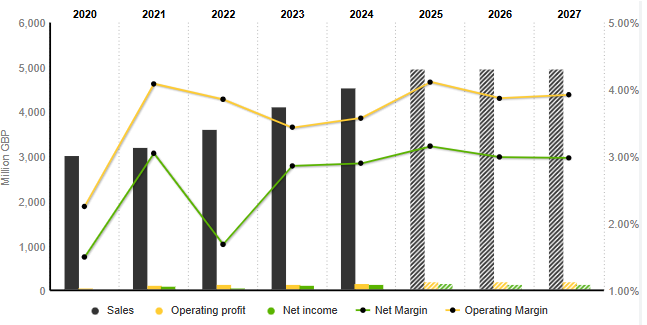
(Source: Morgan Sindall group Plc, 2025)
The above graph indicates a constant increase in Morgan Sindall profits over years which denote the firm’s efficiency in timely predicting risk and reducing unnecessary cost. Further, Firm’s profit and financial position is predicted to increase in the year of 2026 and 2027 indicating leaders’ efficiency in reducing cost and boosting efficiency. However, ineffective leadership develops issue in predicting all uncertainties and does not undertake employee concern which eventually impacts the overall firm’s performance. Earlier manager in Morgan Sindall follows autocracy leadership with aim of taking quick decision and overcoming all risk. However, this leadership reduces workers involved which in long term hamper overall working and success of the organization.
Further, effective leaders focus over enhancing employee skills and competence which ultimately assists towards timely attaining all goal and objectives (Kimbu et al, 2021). Leaders within Morgan Sindall initiate open communication with employees for determining their needs according to which T&D sessions are arranged. Firm establish apprenticeship program in which organization arrange practical and theoretical learning sessions. On the contrary view point, many leaders are unable to arrange T&D session for all employees which eventually develop situation of dissatisfaction. This also hampers employee productivity and thereby creates issue in timely attaining construction goals (Kwiotkowska et al, 2021). Along with this, competent leaders concentrate over managing all resources of organization which eventually reduces the wastage and boosts efficiency. Manager has concentrated over guiding workers in right direction; ensure adequate allocation and utilization of resources which in turn enhance efficiency.
4.1.2. Models and theories of leadership within construction industry
From secondary evaluation, it has ascertained that there are diverse leadership theories and models which used for enhancing efficiency within the construction industry. Situational leadership is one of the most significant models that have been integrated within Morgan Sindall for boosting efficiency and enhancing productivity (Chen, Li and Zhang, 2021). Organization usually modifies its leadership style on the basis of available situation and scenarios. In this line, manager usually utilizes this strategy while managing the team members and employees. However, constant change in leadership style develops the situation of confusion among the team members which eventually impact overall adaptability (Ibrahim et al, 2022).
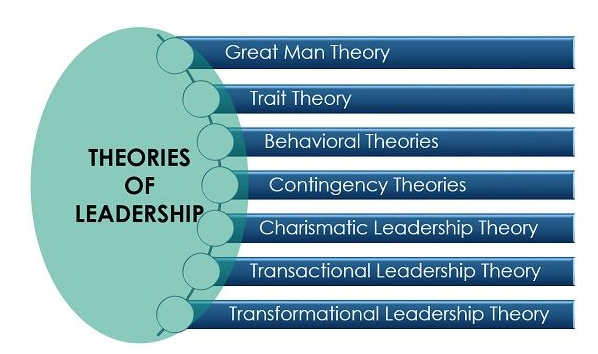
(Source: Theories of leadership, 2025)
Along with this, transformational leadership style has been adopted within Morgan Sindall in which leaders empower, inspire and stimulate subordinate to adjust within the changing environment (Our Leadership Team, 2024). In this regard, 4 C’s model of leadership has been adopted within the firm which fosters clarity, conviction, courage and commitment at workplace. A leader is the one who get involved towards clearly communicating with employees as to discover their purpose, goals and values. Moreover, leaders are committed to fulfil their promises which eventually develop the sense of belongingness among the workforce (Khalid, Sagoo and Benachir, 2021). Nevertheless, employees and leaders are continuously involved towards communicating with each other which develops the situation of burnout that hampers interpersonal relationship. In addition to this, transactional leadership theory has been integrated within Morgan Sindall in which leader’s establish diverse rewards and punishment for managing the workforce. In this line, organization has adopted “My Rewards & Recognition platform” for appreciating employee efforts. In this line, organization provides vouchers and discounts on purchasing from more than 1500 platform (My Rewards & Recognition, 2025). Moreover, violation of organization’s rules and regulations develop diverse negative consequences which range from salary deduction to job termination.
4.1.3. Impact of leadership on the success of the construction project
After evaluating the wide range of already published books and journals, it has been determined that leaders arrange necessary skills development session for employees to reduce mistakes and managing overall quality. In this line, Morgan Sindall has established “Knowledge Quad” which provides employees with an opportunity to manage the construction projects. This session boosts workers efficiency in initiating all tasks and thereby improves overall quality of the project (Knowledge Quad to boost skills, 2024). However, many leaders usually do not consider employee perception and needs while establishing training session which eventually impact on overall satisfaction (Elkhwesky et al, 2022). Further, it hampers worker’s personal growth which reduces productivity and overall project quality. In addition to this, transformational leaders focus over developing an innovative culture at workplace which eventually boosts adaptability.
This leadership style reduces scope of workers resistance which aids organization in integrating AI and automation within construction process. By introducing the latest technology and tools, firm is able to accomplish task with lower wastages and error which ultimately enhance project success (Madi Odeh et al, 2023). Contradictory, employees within Morgan Sindall are highly depended on leaders which reduce their creativity and overall productivity. Such situation develops issue in easily handling all uncertainties and resolving problems and thereby hampering overall quality as well as success of the construction project. Furthermore, effective leaders are capable in managing overall worker retention and turnover which ultimately reduces any type of delay. Manager within Morgan Sindall has created optimum workplace environment by promoting open communication, inclusivity, transparency and integrity which manages the employee’s retention. High retention enhances the worker’s efficiency in undertaking all tasks with the utmost efficiency which ultimately improves overall quality of the construction project.
4.2 Discussion
On the basis of above discussion, it has been identified that Morgan Sindall is capable in timely accomplishing all set goals and objectives. In this, leaders have introduced Core Stream GRC for predicting all the uncertainties & risk (GRC technology success stories, 2025). This aids manager in taking data driven decision which ultimately reduces the scope of errors and mistake (Jia et al, 2023). It is in accordance with secondary data where it has been stated that leader’s lays emphasis over undertaking risk management strategy which supports in managing all the uncertainties & hazards. However, lack of leaders capability in analysing micro and macro environment result in missing out significant risk which eventually hamper project quality.
In addition to this, transformational leadership has been adopted by Morgan Sindall’s leaders which contribute towards introducing new tools and techniques easily within construction process and thereby boost overall efficiency. In this line, manager has introduced BIM, AI powered tool and VR in construction which enhances overall efficiency and aids in providing high quality services to the customers (Digital Construction & BIM, 2025). This technology also facilitates towards undertaking the entire repetitive task which eventually reduces the worker’s burden and improves overall quality of the projects (Iqbal et al, 2021). In this line, it has discovered that leaders are involved towards determining the latest trend and development within industry which aids in taking adequate decision. Further, transformational leaders embrace continuous learning by developing required skills and competencies within employees which boost adaptability skills.
Contradictory, leaders does not offer training session according to the needs of each employee which hampers overall adaptability skills. It has found out from above analysis that Manager within Morgan Sindall has laid huge emphasis over worker retention by improving the workplace environment. Firm has encountered a 1.4% increase in the workers retention rate which denotes organization efficiency in managing the employees’ satisfaction (Morgan Sindall Group Plc, 2024). This situation defines effective leadership’s style which reduces the scope of confusion, misunderstanding and conflicts and eventually ensures successful completion of project (Fei et al, 2021). To support this, it has been stated that high employee retention enhances the workers efficiency in initiating all task with fewer error which mitigates the scope of delay. This also reduces organization’s overall cost and expenses related to T&D session which enhances the firm’s overall profitability.
Additionally, it has discovered that situational leadership has also introduced within Morgan Sindall which influences overall productivity & efficiency of workers within organization. In this, manager usually utilized transformational leadership while established T&D session, adapt autocratic style at the time of emergency and utilizes democratic leadership to resolve short term issues and problem (Rehan, Thorpe and Heravi, 2024). These theories aids in handling uncertainties manage employee engagement easily and boost workers’ productivity which eventually enhances overall quality of the construction project. To support these findings, it has discovered from secondary study that situational leadership promote flexibility & adaptability which is crucial within highly dynamic construction environment. Further, this leadership improve communication process which ultimately enhances interpersonal relationships.
This leader offers accurate and regular feedback to employees that elevate worker’s efficiency and mitigate chance of error and mistakes. On the other hand, a leader also lays emphasis over accurate allocation of time, money and other human resources that improves efficiency in accomplishing project. Morgan Sindall’s managers have focused on strategic planning which reduces scope of under and over allocation. In this, manager clearly defines project scope, develop detailed plans and identify required resources based on which allocation is initiated (Zavari and Afshar, 2023). This reduces the scope of improper utilization of resources which in turn reduces the cost and boosts overall efficiency of construction project. It is significant process as optimum resource allocation ensures an accurate availability of all required resources at construction sites which mitigates scope of delays. Further, this allocation reduces change of unnecessary expenses such idle equipment, overstaffing and waste material which improve overall quality of project.
On the other side of coin, it has been discovered that Morgan Sindall utilizes Laissez – faire leadership style at some extent which develop issue in adequate allocation of resources. In this style, leaders are not involved in taking decision which eventually results in inaccurate utilization of resources and thereby hampering overall quality of the project (Kwiotkowska et al, 2021). Besides this, health and safety are crucial requirement at construction sites which impact on success of the project. Effective leaders ensure an adequate and proper alignment with all Health and Safety legislation which ultimately mitigates scope of accidents. Leaders of Morgan Sindall formulate a code of conduct, ensure an availability of all safeguarding equipment and provide proper safety training which decreases scope of accidents.
This situation reduces the number of absenteeism at workplace and thereby ensuring timely and accurate completion of the project (Stiles, Golightly and Ryan, 2021). Further, Morgan Sindall has delegated leaders which aim at transferring power and responsibilities on the basis of subordinates strengths & weaknesses. This aids in reducing overall stress and burden of leaders which assists them to focus over strategic planning. This delegation aids leaders in allocating accurate task to right employees which enhances overall efficiency and quality of services.
CHAPTER 5 EVALUATION
5.1 Introduction
Primary objective of current research is to gain comprehensive information related to impact of leadership on the success of construction project. In this regard, three objectives were formulated which aids in exploring all critical aspect of the research and thereby forming accurate conclusion. This chapter will discuss on critical evaluation of three objectives as to determine whether initial objectives has attainted or not.
5.2 Objective: Leaderships concept & its significance
It is the first objective which aims at discovering all positive and negative impact of leadership within construction industry. From the secondary research, it has identified that leadership has long lasting impact on overall success and working of the construction industry. Adequate leaders promote open communication, foster inclusivity; manage employee engagement and motivation which eventually impact on project success (Bristol-Alagbariya, Ayanponle and Ogedengbe, 2024). Further, Construction industry includes large number of inherent risk which could be managed with optimum leaders. Leaders ensure a proper alignment with all Health & safety regulation at construction sites which reduces accidents’ and enhance overall efficiency (Luo et al, 2022). However, it has also determined that ineffective leadership generally develop situation of conflicts, increase scope of confusion, impact on worker motivation and develop hostile workplace environment which impact on overall organizational success.
5.3 Objective: Models and theories of Leadership
This objective aid in gaining significant information related to diverse leadership theories and models that are implemented within construction industry. This information assists in understanding positive and negative impact of various leadership styles based on which the most accurate style and strategies are suggested. In this line, transformational, situational and democratic are three most significant theories which foster innovation, aids in overcoming diverse obstacles and also promote employee autonomy (Rodriguez-Clare and Dingel, 2021). On the other hand, it has discovered from secondary study that autocratic and micromanagement are the two most ineffective leadership style which hampers on overall working of the construction industry. This objective offers in-depth information related to leadership style and theories which eventually aids in forming an accurate conclusion and recommendation.
5.4 Objective: Interrelationship between leadership & success of project
The above mentioned objectives were highly significant for establishing adequate link between two crucial variables that are leadership style & project success. Moreover, secondary data assists in exploring the viewpoint of various authors and experts related to topic which eventually aids in attaining research objective. It has been identified that effective leaders establishes accurate T&D session and thereby enhances the worker’s adaptability and cognitive skills, promotes innovation, and manages all risk and uncertainties which in turn improves quality of services (Ghorbani, 2023). Further, it also indicates leader’s ability to retain workers for the longer time and managing their safety which eventually reduces the scope of delay. Nevertheless, it has been discovered that ineffective leadership usually ignores the worker’s concern, health & safety needs and did not provide required support and guidance which hampers overall quality of project (Ahmad et al, 2022). In this way, all three objectives together aids in exploring all critical information related to research topic which ultimately aids in attaining establish goals.
5.5 Conclusion
To conclude chapter, it has discovered that all research objectives were optimum which aids in discovering all crucial information related to topic. Further, knowledge related to leadership’s significance and theories aids in broadening understanding related to the diverse aspects in which employee could be managed. Moreover, this aids in establishing an adequate link between leadership and project success and thereby attaining primary objective. However, in the upcoming time factors influencing quality of construction project should be included for gaining holistic knowledge. In addition to this, primary study should be initiated in future which assists in accumulating original and highly reliable information related to the topic.
CHAPTER 6 RESEARCH IMPACT AND RECOMMENDATION
6.1 Research impact:
The current research is highly impactful as it aids in discovering all positive and negative impact of leadership on overall success and working of the construction industry. This Study guides Morgan Sindall to undertake necessary changes in the leadership style which manages employee productivity and enhance overall quality of the research (Shin, Mollah and Choi, 2023). Moreover, it also defines type of leadership models and theories which could be adopted by other construction firm for improving performance. Besides this, current study also acts as the base and reference point on which future research could be initiated.
6.2 Recommendations
After critically analysing impact of leadership on overall success and quality of the construction project, there are various strategies that should be integrated by Morgan Sindall for improving project quality which are as follows;
- Manager within Morgan Sindall should promote open communication at workplace which facilitates towards discovering employee concern and issue (Yap et al, 2022). This communication process aids in offering regular feedback and guidance to workers which enhances their performance and eventually results in boosting overall project efficiency. This skill assists manager in promoting collaboration and cooperation among the workers at construction sites and thereby assists in attaining all goals timely and efficiently (Mahdi and Nassar, 2021). Moreover, leaders should develop negotiation skills which aids in resolving conflict, developing trust which eventually enhances overall performance.
- Moreover, Manager should use transactional leadership style in which firm should establish clear reward and punishment for employee behaviour and actions. This motivates workers to boost productivity which eventually enhances the overall quality (Madi Odeh et al, 2023). In addition to this, there should be public rewards and punishment which will motivate all other workers in effectively attaining all the set goals & objectives.
- In addition to this, leaders should arrange adequate Training session which reduces the scope of errors and mistakes (Benitez, 2022). This also led to lower overall number of accidents which increases employee efficiency and ultimately contributes towards successfully attaining all goals & objectives.
- Leaders within Morgan Sindall should utilize strategic leadership which aids in accurately manage overall working and support in attaining goal and objectives. In this line, manager should clearly establish the long term goals and undertake optimum decision through which set objectives could be timely attained (Bag et al, 2021). This leadership promotes clarity and also offers a clear framework based on which actions are taken.
- Further, Firm’s manager should adopt affiliative leadership which emphasises over developing emotional bond with the team members. This leadership style priorities employee’s feelings & emotions and focuses over developing harmonious workplace environment (Khan and Khan, 2022). It ultimately reduces the scope of conflicts, manages the worker’s motivation and strengthens bonding among team members which eventually enhances the organization’s performance.
CHAPTER 7 CONCLUSION
By summing up this dissertation, it has discovered that leadership style has huge impact on overall quality and success of the construction project. Competent leaders do focus on improving overall efficiency and productivity of worker by arranging necessary T&D session. In this, Leaders of Morgan Sindall fosters open communication which supports manager in exploring growth needs & wants of employee based on which necessary T&D sessions are arranged. Such leaders also aim at discovering skills gaps that should be fulfilled for attaining all the set goals & objectives successfully. Further, organization’s overall environment is highly depended on the type of leadership style used by the manager. Morgan Sindall promotes open communication, fosters inclusivity and recognizes worker effort which aids in developing collaborative environment. This strategy develops sense of attachment among the workforce and enhances their involvement which ultimately boosts project quality.
However, it has discovered that many time leaders do not focus on managing worker accountability & responsibility, lack integrity and empathy and also mitigate worker involvement which eventually influences the overall productivity. Further, it has been depicted that autocratic, transformational, situational, Great Man, behavioural and transactional are various leadership’s theories and models. Manager has utilised situational leaderships which aids in modifying and adjusting managerial tactics according to the available circumstances and situation. In this line, Morgan Sindall utilized transformational leadership while integrating new technology which enhances organization’s efficiency and reduces scope of error and accident. This style enhance employee overall adaptability and reduce resistance which in turn ensure fluent working of organization. Further, this also assists in creating competitive edge by undertaking all available opportunities that attracts large customer and boosts overall profitability.
In this line, firm has introduced VR, BIM software and AI at construction sites which offer real life information related to the project and aids in boosting overall worker’s productivity. However, this leadership style increases worker’s dependency on leaders which reduces their confidence in taking decision at time of uncertainties. This ultimately causes delay in taking accurate actions on timely basis and thereby hampers overall quality of the construction project. Further, effective leaders aids in discovering all risk and uncertainties that could hamper overall quality of the project based on which timely and accurate decision could be taken on timely basis. This facilitates towards avoiding any type of long term issue and obstacles and thereby ensures timely and efficient completion of the project. However, it has determined that construction industry comprises of various inherent risks which are not predicted by the leaders timely and thereby places long term impact on project success. Further, autocratic leaders did not listen to the worker’s concern and issue which create issue in predicting all the major issues due to which timely actions are not initiated. In addition to this, effective leaders are capable in managing the long term workers engagement which eventually manages the worker’s retention rate.
Further, long term retention aids in fluently carrying out the construction process without any interruption which avoid delay and support in completing all project successfully. Besides this, it has discovered that impactful leaders are capable in making optimal allocation of all physical and human resources which mitigates the scope of error and boosts overall efficiency. A leader in Morgan Sindall follows resource allocation strategy in which manager allocates accurate resources at the right time and place. This systematic allocation support employees in undertaking all task with the utmost efficiency which mitigates any type of wastages and over utilization and thereby ensures overall success of project. In addition to this, manager also establishes various rewards and punishments which also motivate the worker to initiate talks with the utmost efficiency. In this line, Morgan Sindall has introduced Reward and recognition portal which offers diverse discount and voucher to the productive workers which eventually enhances efficiency.
REFERENCES
Books and Journals
- Abbasi, S., Abbasi, P., Alvi, H., Murk, T. and Sajjad, R., 2025. The impact of leadership styles on teacher effectiveness: A study in Larkana schools.The Critical Review of Social Sciences Studies,3(1), pp.2799-2809.
- Aga, D.A., Noorderhaven, N. and Vallejo, B., 2016. Transformational leadership and project success: The mediating role of team-building.International journal of project management,34(5), pp.806-818.
- Ahern, S. and Loh, E., 2021. Leadership during the COVID-19 pandemic: building and sustaining trust in times of uncertainty.BMJ leader,5(4).
- Ahmad, M.K., Abdulhamid, A.B., Abd Wahab, S. and Nazir, M.U., 2022. Impact of the project manager's transformational leadership, influenced by mediation of self-leadership and moderation of empowerment, on project success.International Journal of Managing Projects in Business,15(5), pp.842-864.
- Al Rahbi, D., Khalid, K. and Khan, M., 2017. The effects of leadership styles on team motivation.Academy of Strategic Management Journal,16(2), pp.1-14.
- Alkahtani, A.H., 2016. The influence of leadership styles on organizational commitment: The moderating effect of emotional intelligence.Business and Management Studies,2(1), pp.23-34.
- Anwar, K., 2016. The relationship between transformational leadership characteristics and effectiveness: A case study of construction companies in Erbil.International Journal of Science Technology & Management,5(2), pp.250-156.
- Aryanti, I. and Perkasa, D.H., 2024. The Effect of Leadership Compensation and Work Discipline on Employee Performance (Study at PT Panca Putra Solusindo Jakarta).Review: Journal of Multidisciplinary in Social Sciences,1(04), pp.98-108.
- Aydın, B., 2018. The role of organizational culture on leadership styles.MANAS Sosyal Araştırmalar Dergisi,7(1), pp.267-280.
- Bag, S., Gupta, S., Choi, T.M. and Kumar, A., 2021. Roles of innovation leadership on using big data analytics to establish resilient healthcare supply chains to combat the COVID-19 pandemic: A multimethodological study.IEEE Transactions on Engineering Management,71, pp.13213-13226.
- Banmairuroy, W., Kritjaroen, T. and Homsombat, W., 2022. The effect of knowledge-oriented leadership and human resource development on sustainable competitive advantage through organizational innovation's component factors: Evidence from Thailand’s new S-curve industries.Asia Pacific Management Review,27(3), pp.200-209.\
- Benitez, J., Arenas, A., Castillo, A. and Esteves, J., 2022. Impact of digital leadership capability on innovation performance: The role of platform digitization capability.Information & Management,59(2), p.103590.
- Bristol-Alagbariya, B., Ayanponle, O.L. and Ogedengbe, D.E., 2024. Leadership development and talent management in constrained resource settings: A strategic HR perspective.Comprehensive Research and Reviews Journal,2(02), pp.013-022.
- Buba, S.P.G. and Tanko, B.L., 2017. Project leadership and quality performance of construction projects.International Journal of Built Environment and Sustainability,4(2).
- Char, D.S., Abràmoff, M.D. and Feudtner, C., 2020. Identifying ethical considerations for machine learning healthcare applications.The American Journal of Bioethics,20(11), pp.7-17.
- Chen, L., Li, T. and Zhang, T., 2021. Supply chain leadership and firm performance: A meta-analysis.International Journal of Production Economics,235, p.108082.
- de Araujo, L.M., Priadana, S., Paramarta, V. and Sunarsi, D., 2021. Digital leadership in business organizations.International Journal of Educational Administration, Management, and Leadership, pp.45-56.
- Demirkesen, S. and Tezel, A., 2022. Investigating major challenges for industry 4.0 adoption among construction companies.Engineering, Construction and Architectural Management,29(3), pp.1470-1503.
- Ebekozien, A. and Aigbavboa, C., 2021. COVID-19 recovery for the Nigerian construction sites: The role of the fourth industrial revolution technologies.Sustainable Cities and Society,69, p.102803.
- Elkhwesky, Z., Salem, I.E., Ramkissoon, H. and Castañeda-García, J.A., 2022. A systematic and critical review of leadership styles in contemporary hospitality: a roadmap and a call for future research.International Journal of Contemporary Hospitality Management,34(5), pp.1925-1958.
Recently Downloaded Samples by Customers
1. Introduction :The Role of Nursing in Stroke Care and Rehabilitation Take a look at this well-organized and thoroughly...View and Download
Introduction Get free samples written by our Top-Notch subject experts for taking online Assignment...View and Download
Introduction to Analysis of Supermarket Sales Patterns and Customer Behavior In this report, a year's dataset has been analyzed...View and Download
Introduction - Evaluating the Innateness of Aggressive Behavior Aggression mostly refers to a certain behavior that is intended...View and Download
Introduction to Global Business Environment Assignment The local town in London is currently experiencing significant...View and Download
Part A: Introduction Chronic kidney disease (CKD) is the decline in kidneys' ability to filter the metabolic waste products from...View and Download