
The Impact of Screen Time on Sleep: Unveiling the Health and Social Impact Assignment Sample
Read this screen time and sleep assignment sample to explore how digital devices affect sleep patterns, mental health, daily routines and social interactions.

- 1. Introduction
- 1.1 Research Focus & Definitions
- 1.2 Background & Rationale
- 2. Literature Review
- 2.1 Identifying & Evaluating Sources
- 2.2 Problem Statement & Research Justification
- 2.3 Research Questions, Aims & Objectives
- 3. Methodology
- 3.1 Research Design
- 3.2 Study Type
- 3.3 Data Collection
- 3.4 Participant Recruitment & Procedure
- 3.5 Data Analysis
- 3.6 Ethical Considerations
- 4. Evaluation
- 4.1 Benefits to Practice, Knowledge, Policy
- 4.2 Methodological Improvements
- 4.3 Future Research Directions
- Type Assignment
- Downloads537
- Pages16
- Words3947
1. Introduction
1.1 Research Focus & Definitions
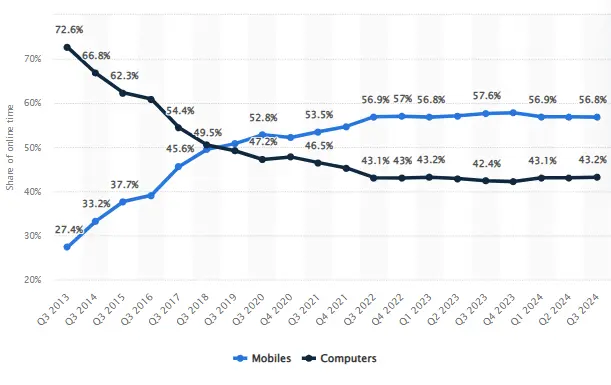
Figure 1: Share of daily internet time global Q3 2013-Q3 2024, by device
(Source: Petrosyan, 2025)
1.1.1. Research Focus
As the culture becomes more interconnected, screen time has increased, raising concerns about sleep disturbances among sleep-challenged individuals of this age. Petrosyan (2025) reported that mobile devices accounted for 57% of total online time for individuals in the third quarter of 2024. Five years earlier, that number was 47%. Overall, the use of desktops and laptops now accounts for approximately 43% of our online time. The increased use of electronic devices highlights the need to investigate the impact of screen time on sleep quality, making the study both timely and significant. The excessive time spent seeing screens in both day and night and the public and clinical need for understanding screen effects on sleep quality, cognitive performance, and well-being.
Struggling with tight deadlines? Assignment Help For Students from Rapid Assignment Help UK delivers well-researched, expertly written papers on time, every time.
1.1.2.Key Definitions
- Screen Time
It signifies the cumulative time people spend using electronic devices with screens—this immersion includes smartphones, tablets, laptops, and televisions. This includes everything from social media to work, entertainment, and communication.
- Sleep Health comprises three interrelated dimensions:
- Duration – the total number of hours slept.
- Quality – encompassing sleep latency, awakenings, and restfulness.
- Consistency – the regularity of sleep patterns over time.
Equipped with these definitions, we can then explore how current screen behaviours during the hours before sleep can interfere with melatonin secretion, circadian timing, and ultimately the restorative processes of sleep.
1.2 Background & Rationale
Sleep problems are linked to the use of screens today, particularly on devices in the time just before sleep. When using such devices before bed, the blue light emitted by the devices reduces the natural production of melatonin. It affects circadian rhythms, leading to poor sleep architecture and delays in the time required to fall asleep. Experimental research by Hale et al. (2018) reported that evening exposure to blue light from TVs, tablets, and phones affected melatonin production, the time it takes to increase sleep-promoting hormones, and promoted alertness in the evening, resulting in poor sleep quality and prolonged wake times. A systematic review highlights that blue-light-filtering interventions can help minimise these effects, but the effectiveness of these interventions depends on the duration or amount of exposure. More individuals than ever reported to be using displays. The world is moving toward increased smartphone usage, with smartphone usage as part of total internet consumption rising to 57% by Q3 2024, up from approximately 47% in 2019 (Petrosyan, 2025). The shift highlights an increased risk of exposure and sleep disruption.
Bedtime screen behaviours—such as scrolling, gaming, and social media—have shown to correlate with falling asleep and staying asleep problems in large adolescent cohorts. A meta-analysis by Janssen et al. (2020) reveals that screen use before sleep is associated with shorter sleep duration, lower sleep efficiency, and increased daytime sleepiness. For preschoolers, increased screen time disturbed sleep and exacerbated attention, behavioural, and emotional problems as well. It is of particular concern among the young, as they are not only more biologically sensitive to evening light but also tend to use more devices at night (Hale et al., 2018).
Miller et al. (2021) show that consequences—abysmal sleep in youth—is correlated with poorer school achievement, greater anxiety and depression, and family dysfunction. Examples of pseudoscientific terms included melatonin, the hormone that regulates circadian timing; circadian rhythm, the body's 24-hour internal clock; insomnia, chronic difficulty initiating or maintaining sleep; and cognitive arousal, mental hyperactivity that disrupts rest (Lin et al., 2023).
Considering that screens are popular and known to affect behaviour, particularly in youth, screen time and sleep need to explored. These findings inform the development of public health recommendations, school policies, and parent guidelines regarding healthy screen and sleep habits.
2. Literature Review
2.1 Identifying & Evaluating Sources
Peer-reviewed journal articles (eg, Sleep Science, Cureus, Sleep Foundations consensus), academic books, and authoritative NGO reports (eg, from the National Sleep Foundation). PubMed, ScienceDirect, PMC, and Google Scholar were the databases used. The main search terms were: screen time, blue light, circadian rhythm, sleep quality, PSQI, adolescent, and interventions.
- Inclusion criteria: Empirical studies from 2018–2024 using quantitative or qualitative methods, age‑specific focus, and validated sleep measures.
- Exclusion criteria: Exclusion of any non-English article, study without sleep outcomes, or self‑report only without validated tools.
2.1.1. Major Themes
- Physiological mechanisms: A variety of studies have demonstrated that exposure to blue light before sleep suppresses melatonin, delays the circadian phase, and reduces sleep time and quality, simply by activating ipRGCs in the retina (Alam et al., 2024). Wahl et al. (2019) showed that blue light delayed circadian rhythms nearly 3 hours when compared to green light.
- Behavioural associations: Various associations exist between nightly screen behaviours, such as social media, gaming, and passive media, resulting in prolonged sleep onset, poorer sleep efficiency, and increased daytime sleepiness (Hale et al., 2018).
- Demographic trends suggest that children and adolescents experience greater melatonin suppression than adults with the same level of light exposure. Over the lifetime, the use of screens before sleep predicts insomnia symptoms in students and older adults (Hjetland et al., 2025).
2.1.2. Critical Comparison of Studies
Advantages are large, representative samples (N = 45,000 Norwegian students) (Hjetland et al., 2025), validated instruments, e.g., the Pittsburgh Sleep Quality Index (PSQI), and a mixed-methods design.
Limitations include dependence on self-reported data for both screen use and sleep metrics, making causality challenging. The majority of studies are cross-sectional, hence measuring associations but not temporality or causality (Merín et al., 2024). Reporting bias and socially desirable responses are significant. Additionally, device settings (such as brightness filters) are inconsistent. Results from a randomised study found no difference in sleep outcomes when participants used Apple's Thursday night.
2.1.3. Identified Gaps
- Long-term effects: Minimal follow-up or longitudinal research considers whether earlier habits of screen time lead to long-term behavioural issues or changes to sleep.
- Intervention success: There is mixed evidence about the effectiveness of screen limits, blue light filters and app-based digital hygiene interventions. The evidence is mixed; some studies (e.g., Night Shift) have shown no measurable improvement in sleep, while other evidence indicates some melatonin recovery with the use of filters or limits.
2.2 Problem Statement & Research Justification
While many questions remain unanswered, there is growing evidence to suggest that screen time before sleep is related to sleep problems, lower sleep efficiency, and increased daytime fatigue. It is also alarming that more than 79% of adolescents exceed the recommended 2 hours of daily screen time, and over 50% of youth worldwide report sleep problems attributed to screen use (Rocka et al., 2022). The implications of these findings are significant as a public health concern.
Healthcare professionals argue that exposure to blue light at night causes cognitive arousal, negatively impacts the circadian rhythm, and reduces melatonin levels, resulting in poor sleep architecture and symptomatology that resembles that of someone with insomnia. Kaur et al. (2022) state that the Digital Displacement Hypothesis posits that computer usage displaces restorative behaviours, such as sleep and exercise.
However, most current research is cross-sectional and self-reported, resulting in a lack of knowledge about lived experiences or solid intervention outcomes. Future research should employ mixed methods to assess specific interventions, such as blue-light filters, screen curfews, and sleep hygiene education. Additionally, future research will evaluate the interactions between individual behaviour, technology use, and biological responses that impact sleep.
It is essential research for parents, educators, and health professionals, as it provides an in-depth understanding of the consequences of screen behaviours on sleep health. This knowledge can inform the development of parental strategies, educational policies, and developmentally appropriate clinical guidelines that promote well-being and foster child development.
2.3 Research Questions, Aims & Objectives
Primary question
How does screen time (especially near bedtime) affect sleep health in different age groups?
Sub‑questions
- What are the lived experiences around bedtime routines and screen habits?
- Do interventions (blue-light filtering, screen-time limits) improve sleep metrics?
Aims
To quantitatively measure the relationship between screen time and sleep quality, with a focus on pre-bedtime usage and its physiological (e.g., melatonin suppression) and behavioural impacts on sleep health.
Objectives
- To quantify large-sample research by quantifying screen usage and sleep variables using well-established measures such as the Pittsburgh Sleep Quality Index (PSQI).
- To conduct semi-structured interviews to gather qualitative information regarding screen usage and its impact on sleep, comparable to mixed methods research within ASD.
- To conduct a pilot behavioural intervention study (e.g., blue-light filters or screen cures) with a small experimental group to evaluate feasibility, acceptability, and preliminary efficacy, comparing against the SleepWise app and REST-O.
3. Methodology
3.1 Research Design
The current study will employ a mixed-methods convergent design, combining a correlational survey and sleep log, qualitative interviews, and short experimental pilot components to examine the effects of screen time on sleep from multiple levels of analysis. Quantitatively structured surveys will assess screen usage patterns and sleep data using validated instruments (e.g., PSQI, sleep diaries). Qualitative, semi-structured interviews will explore the lived experience, motivation, and perceived barriers or facilitators regarding screen behaviours and bedtime routines. Finally, a small pilot study will conducted to test the preliminary efficacy of two groups: blue-light filters and screen curfews versus no intervention.
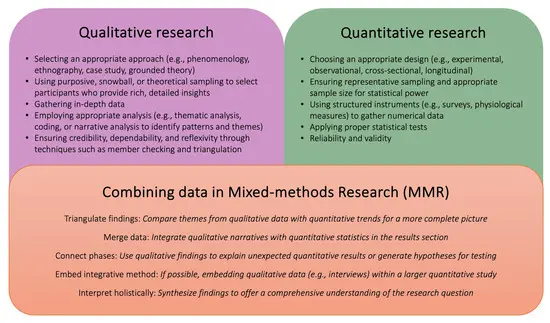
Figure 2: Triangulation Approach
(Source: Rana & Chimoriya, 2025)
The study's validity strengthened by the triangulationapproach described here, which combines both quantitative and qualitative methodologies, providing a more holistic and multidimensional understanding of the phenomenon (Rana & Chimoriya, 2025). Quantitative instruments will reveal trends or relationships that can be generalised, while interviews add depth and context (which considered a best practice of mixed-methods in health research). Using the pilot intervention allows for some exploratory testing, consistent with the guidelines for feasibility studies that use mixed methods. This design provides breadth through a comprehensive quantitative survey and depth through rich qualitative data collection, enabling the exploration of preliminary causal pathways in the pilot study. Overall, this union provides a more thorough assessment of the physiological and behavioural effects of screen time on sleep by addressing both explanatory and practical aims.
|
✅ Strengths |
⚠️ Limitations |
|
Breadth of quantitative data – Surveys and sleep logs enable identification of patterns across a large sample, supporting generalisability with validated tools (e.g., PSQI) |
Surface-level insight – Self-report surveys can introduce biases (e.g., recall, social desirability) and may overlook context. |
|
Depth of qualitative interviews – Offers nuanced, “lived experience" insights enhancing facet understanding. |
Limited causality inference – Cross-sectional and interview data cannot establish temporal or causal links. |
|
Triangulation for validity – Combining methods bolsters trustworthiness and helps cross-validate findings. |
Integration challenges – Merging quantitative and qualitative data requires careful methodological planning and theoretical alignment. |
|
Pilot experimental intervention – Enables preliminary testing of behavioural strategies and feasibility meta-inferences. |
Small pilot scale – A limited sample size may constrain statistical power, external validity, and generalizability. |
Table 1: Strengths and Limitations of mixed-methods research design
(Source: Author)
3.2 Study Type
- Cross‑sectional survey
- Qualitative thematic interviews
- Controlled pilot intervention
This research incorporates three designs: (i) a cross-sectional survey, measuring prevalence and associations between screen time and sleep quality in participants at a single time point; (ii) qualitative thematic interviews, providing rich descriptive data about experiential patterns and context for themes identified and (iii) a controlled pilot intervention, assessing feasibility and preliminary efficacy of a screen-time reduction strategy. This design follows the research questions — surveys to map out relationships, interviews to explain behaviours, and the pilot to evaluate intervention feasibility.
3.3 Data Collection
Quantitative
An online survey will examine the daily screen-time records of approximately 200 respondents, as well as standardised sleep data collected via the Pittsburgh Sleep Quality Index (PSQI) and a seven-day sleep diary, to ensure standardised and consistent reporting of sleep duration, efficiency, and latency. These measures provide reliable and established metrics for conducting correlational analyses of screen-use patterns and their effects on sleep health.
Qualitative
A purposive sample of 20 (spanning adolescents, young adults, and parents) will engage in semi-structured interviews, per established methodology, which allows for open-ended questions, leading to rich discussion, while still maintaining a thematic guide to the discussion. It facilitates discussions around personal motivations, habits, emotional triggers, and perceived benefits and barriers related to screen time and sleep.
Experimental pilot
Participants (N = 40) will randomly assigned to one of two groups: a group that receives blue-light screen filters and a 1-hour pre-bed screen curfew (intervention) or a no-change group (control). This pilot trial design adheres to best practice standards for feasibility studies (Hill et al., 2025) to examine acceptability, adherence, and preliminary effects (on PSQI scores and sleep latency) and to inform larger trials.
As such, these methods complement each other to provide a comprehensive perspective: surveys indicate the prevalence and associated factors in the general population; qualitative interviews offer explanatory context and lived experiences; and pilot tests pragmatic interventions. This sequential exploratory mixed-methods design aligns with research objectives, such as exploring relationships, assessing underlying behaviour, and determining efficacy.
3.4 Participant Recruitment & Procedure
|
Component |
Details |
Justification / Reference |
|
Sampling Method |
Volunteer sampling via schools, universities, community centres—leveraging personal networks and institutional gatekeepers |
Effective for pilot studies with limited resources; suitable for exploratory research |
|
Sample Size |
Survey: ~200 participants Interviews: 20 purposively selected across age groups Experiment: two groups of 15 (intervention and control) |
Feasible sizes for pilot, consistent with mixed-methods and interview best practices |
|
Inclusion/Exclusion Criteria |
Ages 12–60; exclude individuals with diagnosed sleep disorders or shift-work schedules |
Ensures a more representative, non-clinical sample and reduces confounding variables |
|
Recruitment Steps |
● Distribute study info via flyers and email lists in partner institutions ● Confirm eligibility via brief screener ● Obtain informed consent ● Schedule survey, interviews/pilot sessions |
Stepwise, ethical recruitment mirrors recommended best practices |
|
Ethical Approvals & Consent |
● Ethics clearance to be obtained from the university IRB/Research Ethics Board. ● Participants will sign informed consent forms and can withdraw at any time |
Standard ethical protocol ensures participant rights and compliance |
|
Procedure Overview |
● Surveys conducted online ● Interviews via video call or in-person (depending on participant preference) ● Pilot interventions include the implementation of blue-light filters and a screen curfew. |
Flexible modalities maximise participation and protocol adherence. |
Table 2: Participant Recruitment & Procedure
(Source: Author)
3.5 Data Analysis
|
Component |
Methods |
Rationale & References |
|
Quantitative |
● Correlation (Pearson's r) for screen time vs sleep metrics ● Independent t‑tests or ANOVA for group comparisons across age/screen-time categories |
Enables analysis of associations and differences (e.g., sleep latency, PSQI scores) using validated tests (Muthukumarana et al., 2022) |
|
Age & Screen Stratification |
Binning participants by age (12–18, 19–40, 41–60) and screen usage (<2 h, 2–4 h, >4 h) |
Helps identify demographic trends and effect variation across subgroups (Wiciak et al., 2022) |
|
Qualitative |
Thematic analysis via Braun & Clarke’s six-step model applied to interview transcripts using NVivo or manual coding |
Allows in-depth exploration of themes (e.g., motivations, barriers), ensuring systematic, reflexive coding (Naeem et al., 2023) |
|
Pilot Intervention |
Paired t‑tests within groups and/or repeated-measures ANOVA to compare pre‑ and post‑intervention sleep scores (PSQI, latency) |
Tests preliminary efficacy of behavioral strategies; methods align with pilot sleep intervention studies |
|
Linkage to Objectives |
Quantitative methods assess strength/direction (causation vs correlation), thematic analysis explains how/why, pilot evaluates behavior change feasibility. |
This mixed-methods triangulation supports comprehensive insights into relationships, lived experiences, and intervention effects. |
Table 3: Data Analysis

 7 Years | PhD in Public Health
(Source: Author)
3.6 Ethical Considerations
All participants will provide written informed consent (and assent for minors, if applicable, with parental consent) and may opt out at any time without penalty. Answers will be GDPR compliant (i.e., no personal data, only pseudo-anonymous data, and secure storage), anonymous. A sleep advice sheet will provide to participants. Approval will receive from the university's Research Ethics Board, under the Belmont principles, the Declaration of Helsinki, and APA/IRB guidelines.
4. Evaluation
4.1 Benefits to Practice, Knowledge, Policy
Practice
This study will provide educational institutions and healthcare professionals with meaningful evidence to inform the development of evidence-based guidelines on screen time. The guidelines include establishing a “digital hygiene” policy and observing no-screen times before sleep (Adamowicz and Jurczyk, 2023). Educators in the United Kingdom are increasingly adopting these ideas.
Knowledge
The study will clarify behaviour change pathways through qualitative interviews and quantitative data, demonstrating how knowledge, behaviour patterns, and emotional triggers effectively inform screen time and sleep behaviours. These studies enhance understanding of the physiological mechanisms underlying melatonin suppression and cognitive arousal.
Policy
According to the recommendations of the American Academy of Paediatrics, the World Health Organisation, and Sweden's health authority, the data from the pilot study on sleep and blue-light filters will provide empirical evidence for a formal bedtime screen-time limit (Lee et al., 2021). The study's findings will have implications for public policy regarding parenting agreements related to media use, digital curfews, and technology, including the use of technology in future global recommendations for screen time.
4.2 Methodological Improvements
- Larger, longitudinal study
- Objective sleep measures (e.g., actigraphy)
- Broader demography
Future studies could be enhanced by a larger design that spans time, measuring trajectories and possible cause-and-effect relationships over months and years, thereby expanding on research that has found developmental shifts in sleep during adolescence by using repeated measures. The inclusion of objective sleep measures, such as actigraphy (worn for more than 1 week), would provide strong data on total sleep time, sleep latency, and efficiency, which would be more reliable than self-reports. Lastly, sampling a broader demographic in terms of age, cultural backgrounds, and socio-economic strata would not only add more external validity to the findings but also ensure that the findings can be generalised based on a broader group of people with different backgrounds.
4.3 Future Research Directions
- Long-term randomised trials
- Cultural/age group comparisons
- Tech-based solutions: app usage, parental control, school programmes
5. References
- Adamowicz, K., & Jurczyk, M. (2023). Digital hygiene–selected methods and tools for managing time in the virtual space by students and working professionals.
- Akulwar-Tajane, I., Naik, P.H., Parmar, K.K. & Shah, A.V. (2021). Impact of Excessive Screen Time and the Mediating Effect of Physical Exercise on Sleep in Physiotherapy Students During Covid-19. Sumerianz Journal of Medical and Healthcare, 4(3), pp.149-59.
- Alam, M., Abbas, K., Sharf, Y., & Khan, S. (2024). Impacts of blue light exposure from electronic devices on circadian rhythm and sleep disruption in adolescent and young adult students. Chronobiol Med, 6, 10-14. https://doi.org/10.33069/cim.2024.0004
- Alqarni, T.A., Alshamrani, M.A., Alzahrani, A.S., AlRefaie, A.M., Balkhair, O.H. & Alsaegh, S.Z. (2022). Prevalence of screen time use and its relationship with obesity, sleep quality, and parental knowledge of related guidelines: A study on children and adolescents attending Primary Healthcare Centers in the Makkah Region. Journal of Family and Community Medicine, 29(1), pp.24-33.
- Arshad, D., Joyia, U.M., Fatima, S., Khalid, N., Rishi, A.I., Rahim, N.U.A., Bukhari, S.F., Shairwani, G.K. & Salmaan, A. (2021). The adverse impact of excessive smartphone screen-time on sleep quality among young adults: A prospective cohort. Sleep Science, 14(04), pp.337-341.
- Bryman, A. (2012). Social Research Methods. Oxford: Oxford University Press.
- Christensen, P. & James, A. (Eds) (2008) Research with Children:
- Clement-Carbonell, V., Portilla-Tamarit, I., Rubio-Aparicio, M. & Madrid-Valero, J.J. (2021). Sleep quality, mental and physical health: a differential relationship. International journal of environmental research and public health, 18(2), p.460.
- Deng, Y., Cherian, J., Kumari, K., Samad, S., Abbas, J., Sial, M.S., Popp, J. & Oláh, J. (2022). Impact of sleep deprivation on job performance of working mothers: Mediating effect of workplace deviance. International journal of environmental research and public health, 19(7), p.3799.
- Flick, U. (2015). Introducing Research Methodology. London: Sage.
- Fraser, S., Lewis, V., Ding, S., Kellett, M. & Robinson, C. Eds. (2004) Doing Research with Children and Young People, London: Sage/OU.
- Gordon, L. (2019). Real Research (2nd Eds). London: Sage.
- Gupta, V., Bharti, P., Nokhiz, P. & Karnick, H. (2021, August). SumPubMed: Summarization dataset of PubMed scientific articles. In Proceedings of the 59th Annual Meeting of the Association for Computational Linguistics and the 11th International Joint Conference on Natural Language Processing: Student Research Workshop (pp. 292-303).
- Haarika, V., Tumati, K.R. & Ramisetty, U.M. (2024). The Impact of Screen Time on Sleep Patterns in School-Aged Children: A Cross-Sectional Analysis. Cureus, 16(2).
- Hale, L., Kirschen, G. W., LeBourgeois, M. K., Gradisar, M., Garrison, M. M., Montgomery-Downs, H., ... & Buxton, O. M. (2018). Youth screen media habits and sleep: sleep-friendly screen behavior recommendations for clinicians, educators, and parents. Child and adolescent psychiatric clinics of North America, 27(2), 229-245. https://doi.org/10.1016/j.chc.2017.11.014
- Hartstein, L.E., Mathew, G.M., Reichenberger, D.A., Rodriguez, I., Allen, N., Chang, A.M., Chaput, J.P., Christakis, D.A., Garrison, M., Gooley, J.J. & Koos, J.A. (2024). The impact of screen use on sleep health across the lifespan: A National Sleep Foundation consensus statement. Sleep Health.
- Hill, V. M., Ferguson, S. A., Rebar, A. L., Meaklim, H., & Vincent, G. E. (2025). A randomised pilot trial for bedtime procrastination: Examining the efficacy and feasibility of the Reducing Evening Screen Time online intervention (REST-O). Sleep Medicine, 129, 306-315.
- Hjetland, G. J., Skogen, J. C., Hysing, M., Gradisar, M., & Sivertsen, B. (2025). How and when screens are used: comparing different screen activities and sleep in Norwegian university students. Frontiers in Psychiatry, 16, 1548273. https://doi.org/10.3389/fpsyt.2025.1548273
- Jain, V., & Shruti, A. S. (2025). PROSPECTIVE ANALYSIS OF SCREEN TIME AND ITS IMPACT ON SLEEP PATTERNS AMONG SCHOOL-AGE CHILDREN. Int J Acad Med Pharm, 7(1), 1101-1105. DOI: 10.47009/jamp.2025.7.1.104
- Janssen, X., Martin, A., Hughes, A. R., Hill, C. M., Kotronoulas, G., & Hesketh, K. R. (2020). Associations of screen time, sedentary time and physical activity with sleep in under 5s: A systematic review and meta-analysis. Sleep medicine reviews, 49, 101226.https://doi.org/10.1016/j.smrv.2019.101226
- Kaur, N., Gupta, M., Kiran, T., Malhi, P., & Grover, S. (2022). Sleep problems and their associations with digital screen exposure among 2 to 5 years old children in Chandigarh, a North Indian union territory. Journal of Indian Association for Child and Adolescent Mental Health, 18(1), 45-53. http://dx.doi.org/10.1177/09731342221096488
- Lee, T. M., Loh, E. W., Kuo, T. C., Tam, K. W., Lee, H. C., & Wu, D. (2021). Effects of ultraviolet and blue-light filtering on sleep: a meta-analysis of controlled trials and studies on cataract patients. Eye, 35(6), 1629-1636. https://doi.org/10.1038/s41433-020-01132-2
- Lin, C., Chen, I. M., Chuang, H. H., Wang, Z. W., Lin, H. H., & Lin, Y. H. (2023). Examining human-smartphone interaction as a proxy for circadian rhythm in patients with insomnia: cross-sectional study. Journal of Medical Internet Research, 25, e48044. https://doi.org/10.2196/48044
- Merín, L., Toledano-González, A., Fernández-Aguilar, L., Nieto, M., Del Olmo, N., & Latorre, J. M. (2024). Evaluation of the association between excessive screen use, sleep patterns and behavioral and cognitive aspects in preschool population. A systematic review. European Child & Adolescent Psychiatry, 1-18. https://doi.org/10.1007/s00787-024-02430-w
- Miller, M. A., Bates, S., Ji, C., & Cappuccio, F. P. (2021). Systematic review and meta‐analyses of the relationship between short sleep and incidence of obesity and effectiveness of sleep interventions on weight gain in preschool children. Obesity Reviews, 22(2), e13113.https://doi.org/10.1111/obr.13113
- Misra, D.P. & Ravindran, V. (2022). An overview of the functionalities of PubMed. Journal of the Royal College of Physicians of Edinburgh, 52(1), pp.8-9.
- Muthukumarana, C., Jayasinghe, C., Pavithra, T., Nusky, M., Rosan, M., Prasanna, I., ... & Abeysundara, S. (2022). Screen Time and Level of Perceived Stress Among Students of University of Peradeniya During COVID-19 Pandemic. Sri Lankan Journal of Health Sciences, 1(2).
- Naeem, M., Ozuem, W., Howell, K., & Ranfagni, S. (2023). A step-by-step process of thematic analysis to develop a conceptual model in qualitative research. International journal of qualitative methods, 22, 16094069231205789. https://doi.org/10.1177/16094069231205789
- Nakshine, V.S., Thute, P., Khatib, M.N. & Sarkar, B. (2022). Increased screen time as a cause of declining physical, psychological health, and sleep patterns: a literary review. Cureus, 14(10).
- Pacheco, D. & Vyas, N. (2021). How Screen Time May Cause Insomnia in Teens. [online] Sleep Foundation. Available at: https://www.sleepfoundation.org/teens-and-sleep/screen-time-and-insomnia-for-teens.
- Pajo, B. (2017). Introduction to Research Methods: A Hands-On Approach. London: Sage.
- Perspectives and Practices, London: Routledge.
- Petrosyan A. (2025). Share of daily internet time global Q3 2013-Q3 2024, by device. Retrieved from: https://www.statista.com/statistics/1380539/time-spent-online-daily-by-device/
- Rabiei, M., Masoumi, S.J., Haghani, M., Nematolahi, S., Rabiei, R. & Mortazavi, S.M.J. (2024). Do blue light filter applications improve sleep outcomes? A study of smartphone users’ sleep quality in an observational setting. Electromagnetic Biology and Medicine, 43(1-2), pp.107-116.
- Rana, K., & Chimoriya, R. (2025). A guide to a mixed-methods approach to healthcare research. Encyclopedia, 5(2), 51. https://doi.org/10.3390/encyclopedia5020051
- Rocka, A., Jasielska, F., Madras, D., Krawiec, P. & Pac-Kożuchowska, E. (2022). The impact of digital screen time on dietary habits and physical activity in children and adolescents. Nutrients, 14(14), p.2985. https://doi.org/10.3390/nu14142985
- Schutt, R.K. (2018). Understanding the Social World: Research Methods for the 21st Century. London: Sage.
- Silverman, D. (2017). Doing Qualitative Research (5th Eds). London: Sage.
- Wahl, S., Engelhardt, M., Schaupp, P., Lappe, C., & Ivanov, I. V. (2019). The inner clock—Blue light sets the human rhythm. Journal of biophotonics, 12(12), e201900102. DOI: 10.1002/jbio.201900102
- Wiciak, M. T., Shazley, O., & Santhosh, D. (2022). An observational report of screen time use among young adults (ages 18-28 years) during the COVID-19 pandemic and correlations with mental health and wellness: international, online, cross-sectional study. JMIR Formative Research, 6(8), e38370. https://doi.org/10.2196/38370
Recently Downloaded Samples by Customers
Introduction Get free samples written by our Top-Notch subject experts for taking online Assignment...View and Download
Assignment 2 Enhance your academic performance with our customized Assignment Help UK, tailored to meet the highest...View and Download
Introduction to Deep Dive Analysis of Apple's Strategic Plan 0.1 Background In order to evaluate one of the most notable...View and Download
Introduction: Pestle Analysis of H&M Get free samples written by our Top-Notch subject experts for taking...View and Download
Introduction to Digital Marketing and Social Media for a Global Market Digital marketing refers to a practices of marketing and...View and Download
Background Information: Nursing Interventions to Minimize Restraints Restraining is one of the most common interventions to deal...View and Download