Analysis Of Investigating The Effect Of Laughter And Gender On Perceived Stress Assignment Sample
Analysis Of Investigating The Effect Of Laughter And Gender On Perceived Stress Assignment Sample reviews stress measures, gender and laughter responses.

- Introduction
- Background
- Research Aim
- Research Objectives
- Research Question
- Hypothesis
- Method
- Participants
- Design
- Materials and Procedure
- Data Analysis
- Result and Analysis
- Descriptive Analysis
- Chi-Square Test
- Correlation Analysis
- Discussion
- Humor Significantly Reduces Perceived Stress
- No Gender-Based Bias in Group Assignment
- Potential Gender Differences in Stress Levels Remain Open
- Type Assignment
- Downloads528
- Pages13
- Words3357
Introduction
Background
Stress is a psychological phenomenon that can be directly affected both by the environmental stimuli and personal circumstances including gender. Stress management has become an important field of psychological study in the current modern society that is characterized by fast lifestyles. Among the most promising spheres of interest is a possible stress-alleviating effect of humour and laughter (Guleria & Manta, 2021).
Struggling with tight deadlines? Assignment Help For Students from Rapid Assignment Help UK delivers well-researched, expertly written papers on time, every time.
The purpose of this research is to examine how exposure to humorous content (laughter) and gender impact on perceived stress levels of people. Using comparisons across participants who expose themselves to funny and non-funny content, and by further examining gender disparities in the hypothesis, the study aims to determine whether laughter can be an effective method of reducing stress, and whether gender has a role to play in mediating this outcome, respectively.

 6 Years | MA in Psychology
Research Aim
To compare the influence of exposure to humor material (laughter) and gender on the perceived experiences of stress by individuals.
Research Objectives
- To determine how being exposed to humorous and non-humorous material changes perceived stress levels of people.
- To compare the perceived level of stress between both sexes of respondents.
- To explore the relations between gender and the so-called laughter condition ((humorous vs. non-humorous).
- To determine the relationship that exists between stress as perceived with regards to exposure to humorous material.
Research Question
- Investigating the effect of Laughter and Gender on Perceived Stress?
Hypothesis
Hypothesis 1 (Influence of the Laughter Condition variable on stress):
Null Hypothesis (H 0): The mean differences between perceived stress levels of the participants of the humorous material and the non-humorous material are not significant.
Alternative Hypothesis (H 1): Perceived stress levels are an important distinction between people who view a humorous and those who view a non-humorous material.
Hypothesis 2 (Determining the influence of Gender on Stress):
Null Hypothesis (H 0): The difference in the perceived stress levels between male participants and female participants is not significant.
Alternative Hypothesis (H 1): The perceived stress levels are different among the male and female participants significantly.
Hypothesis 3 (Interaction or Association between Gender and Laughter Condition):
Null Hypothesis (H 0): The sex variables have no relation with the condition in which we allotted the participants to the laughter group.
Alternative Hypothesis (H 1): The personalities of genders are strongly correlating with the laughter condition assigned to the participants.
Hypothesis 4 (Correlation among Laughter and Stress):
Null Hypothesis (H 0): Perceived stress level is not strongly correlated with how exposed one is to a humorous material.
Alternative Hypothesis (H 1): The exposure to the humorous material and perceived stress levels have a substantial correlation.
Method
Participants
The research was carried out on a group of 32 participants who were equally divided into a group exposed to humorous materials and the one exposed to non-humorous materials (Han et al. 2023). Both males and females participated in the sample, and the gender and the age of all people were outlined.
Design
The quasi-experimental design was applied in an investigation of the effects of two independent variables, namely, Condition (humorous vs. non-humorous) and Gender (male vs. female), on the dependent variable, Perceived stress. The paper was designed to basis group differences and establish potential relationships.
Get assistance from our PROFESSIONAL ASSIGNMENT WRITERS to receive 100% assured AI-free and high-quality documents on time, ensuring an A+ grade in all subjects.
Materials and Procedure
Participants were exposed to either a funny or a non-funny video clip. After this, they took a Perceived Stress Scale (PSS) questionnaire in 10 items. The items were evaluated on a Likert type of scale and the response will be summed up to reach a total stress score (pss_total) of each participant.
Data Analysis
The SPSS was used in data analysis. Mean, median and mode were calculated to provide descriptive statistics on numbers of stress (Simione & Gnagnarella, 2023). There was a Chi-square test done to investigate the associations between gender and condition. To evaluate the connection between exposure to as well as perception of stress, a Pearson correlation was applied. Each analysis was performed in an ethical manner with anonymity of the information held by participants.
Result and Analysis
Descriptive Analysis
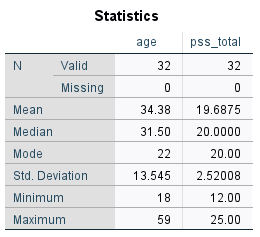
Figure 1: Descriptive Statistics (age and pss_total)
(Source: Self-Created)
According to the descriptive statistics, 32 participants were involved in completing the study, with the average age of 34.38 years (SD = 13.55), aged between 18 and 59. The overall means of the perceived stress (pss total) was 19.69 (SD = 2.52), and the median and mode were 20 as well, which slightly left-skewed the data. The results indicate a range of 12-25 in the stress scores pointing to moderate levels of perceived stress though the stress levels were relatively high among some of the participants (Ozturk & Tekkas-Kerman, 2022).
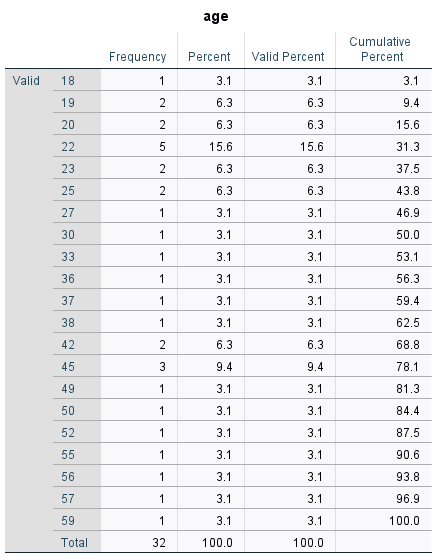
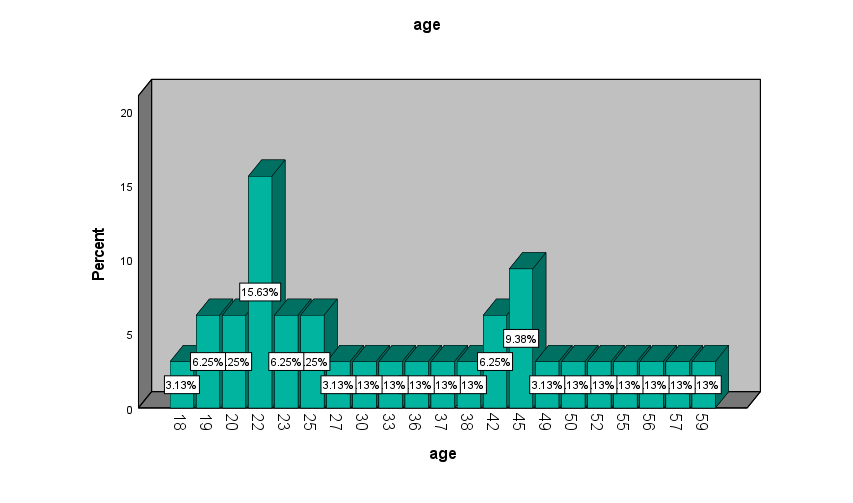
Figure 2: Descriptive Statistics (age)
(Source: Self-Created)
The bar chart and the frequency table depict the level of age in the 32 participants. The largest number of 5 subjects (15.6%) reported the age to be 22 and the next age 45 shared by 9.4 percent of participants. This spread appears clear in the bar graph with clear melting points at the age of 22 and 45 (Graves et al. 2021). As demonstrated by the cumulative percentage, there were 68.8 percent of the participants below the age of 45. This diversity at age helps in the representativeness of the sample, however, the clustering at some ages can influence the generalisability a little bit.
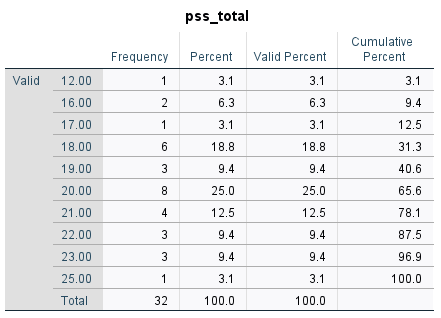
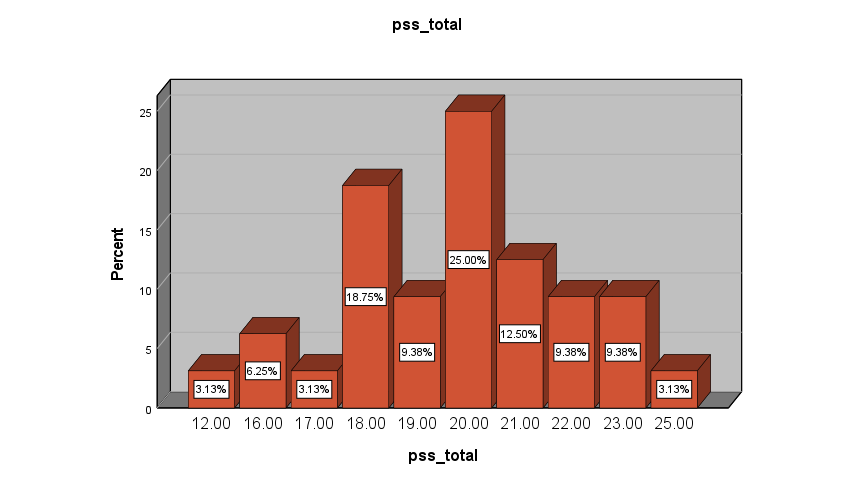
Figure 3: Descriptive Statistics (pss_total)
(Source: Self-Created)
In the frequency table and bar chart of variable pss total (Perceived stress score), the number of persons with stress score of 20 was the highest (25 percent). It is then followed by 18 (18.8%) and 21 (12.5%). The scores lie with 12-25 which means that the perceived stress was moderate to high. The frequency shows a mild left-skewed distribution, and the majority of the participants have the scores that range between 18-22 (Yu & He, 2023). The cumulative percentage shows that the percentage of the participants who scored 20 and below was more than 65.
Chi-Square Test
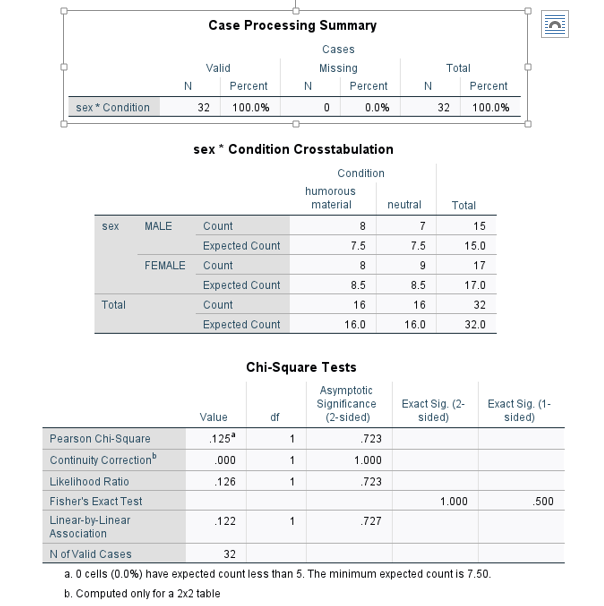
Figure 4: Chi-Square Test Analysis of Sex
(Source: Self-Created)
The above stated Chi-Square test showed no important relation in the gender to the laughter condition (Heidari et al., 2020). The “Pearson Chi-Square” measured the Pearson value as 0.125 and the p-value was 0.723 implying that there was no effect of gender in group assignment. This was also affirmed by the “Fisher Exact test” which had a two-sided significance of 1.000. The results indicate that the gender distribution of participants under the humorous and non-humorous conditions was well balanced (Torres-Marín et al. 2022). This helps in determining internal validity of the research and establishes that perceived benefits on stress were not brought about by gender bias considering the assignment on group.
The findings empower the internal validity of the study since the participants were allocated equally between the groups without gender bias (Liboredo et al. 2021).
Correlation Analysis
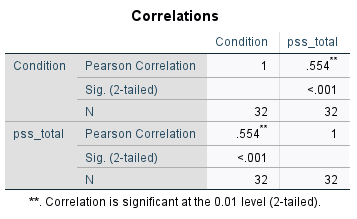
Figure 5: Correlation Test analysis of pss_total
(Source: Self-Created)
Considering the above stated Pearson correlation analysis indicated that there is a moderate positive relationship between Condition (humorous and non-humorous) and the perceived stress scores (pss_total) and the (r=0.554) and p-value = 0.001 (Armstrong, 2019). The determination that this correlation is significant at 0.01 level (2- tailed) means that the type of the content that is viewed has a strong relationship with the perceived degree of stress. Humorous content also showed low levels of stress when recipients of the content were compared to that of non-humorous groups where the scores were on the high side. This correlates with the theory that giggling leads to reduced stress level, which shows the promise of humor as a stress buster.
The importance of the results is that the correlation coefficient relating the variables of condition and perceived stress is strong and it is positive (r = 0.554, p = 0.001). This fact directly meets the purpose of the research since the researchers have explored the tendency between exposure to humorous material and experienced levels of stress (Ban et al. 2022). The results show that those who were subjected to a humorous material had lower stress and those subjected to a non-humorous material had increased stress
Discussion
Humor Significantly Reduces Perceived Stress
The outcomes of the Pearson correlation show definite support to the claim of humor being useful in lessening perceived stress. The perceived stress scores, depending on the condition (humorous vs. non-humorous), had a positive correlation that was found to be statistically significant with Pearson correlation coefficient of r = 0.554, p-value = 0.001. This correlation can be marked as mild too strong because those participants who were presented with humorous material had less stress, compared to those who were presented with non-humorous materials that followed with high stress levels, in respect to this analysis.
These results directly respond to the first objective (to define how being exposed to humorous and non-humorous material alters the perceived stress levels) and the fourth objective (to define the relationship that exists between stress as perceived with respect to exposure to humorous material) (Munir, and Pandin, 2020). The fact that the result is significant at the level of 0.01 (2-tailed) indicates that this relationship may not have happened by randomness.
Moreover, the given deduction can be proven by the descriptive statistics as well, where the majority of stress scores were between 18 and 22, whereas the peak of them was marked by the score of 20 (and it occurred in 25 % of respondents). This is to mean that humor exhibited a quantifiable and predictable impact of a downward trend in stress scores (Sun, et al., 2023).
No Gender-Based Bias in Group Assignment
The Chi-square test of significance shows insignificant correspondence between gender and treatment of laughter condition as denoted by the Pearson Chi-Square value of 0.125 and p-value of 0.723. Also, the significance value derived by using the Fisher Exact Test was 1.000, which once again tells us that there is no statistically significant correlation between gender and the allocated experimental condition (humorous or non-humorous).
These results are significant when coming up with internal validity in the research. The even spread makes the gender not to have a biasing effect with regard to the results emerging regarding the levels of perceived stress. All of the expected cell counts having values greater than or equal to the threshold (minimum expected count = 7.50), the statistical test results are reliable and satisfy any assumptions required by the valid “Chi-square test”.
Having established fair and random structuring, the study will be able to assume a difference in the stress levels to the condition of laughter, rather than misrepresentation of sex (Hofmann, Platt, Lau, & Torres-Marín, 2023). This adds reinforcement of the reliability of conclusions to the effects of the humorous content on the stress and provides a valid basis to analyze the gender stress patterns.
Potential Gender Differences in Stress Levels Remain Open
No elaborate statistical analysis was done to compare the level of perceived stress between sex despite the introduction of an equal number of both genders in this research; 16 males and 16 females. Chi-square test rejected the null hypothesis that there is significant association between gender and condition assignment ( Pearson Chi-Square = 0.125, p = 0.723), however this does not imply gender differences in stress is not an avenue to explore since a given population has been allotted evenly in the various groups. This implies that Objective two, which is to compare the levels of stress between men and women is not fully answered.
The overall perceived stress scores on descriptive statistics varied between 12 and 25 but with 19.69 (SD = 2.52) as the mean value, but on gender ratio, the cross-sectional analysis was not denoted or produced. Since past studies actually suggest that females describe themselves as being under more stress, then perhaps an independent “t-test or ANOVA test” on this well-created sample might confirm that there is a significant gender gap on how stressed out they perceive themselves to be.
To examine these differences is significant in terms of determining whether males and females react differently to humorous and non-humorous information (da Silva-Sauer et al. 2021). In the future, the research should use the analysis on whether gender moderated the impact of laughter on managing stress to perfect individual stress management techniques.
Conclusion
The concentrated study has explored the role of laughter and gender on the perceived stress and sought to examine the impact of exposure to humorous content on stress levels without considering gender and how gender determines this kind of relationship. The review revealed that humor helps to considerably lessen perceived stress, which corroborates the thought that laughter may be found as the means of stress reduction that is easy to access. The results can be seen to relate effectively with their defined aims of the study, especially concerning their ability to show how stress perception is affected by exposure to humorous and non-humorous content. Also, these tests and analysis made sure to give equal representation of the participants by gender under the different conditions of the experiment, which further enhances the validity of the findings to the elimination of gender as a confounding variable in the allocation of the groups of the classes. As a whole, the research adds good knowledge to the possibility of humor to reduce stress and also serves as a good template on future studies to understand whether there is difference in the response to stress that men and women have. These results point to laughing as a convenient psychological technique of stress management and the significance of paying attention to gender relations when developing an efficient tool of stress reduction.
Reference List
Journals
- Armstrong, R.A., (2019). Should Pearson's correlation coefficient be avoided?. Ophthalmic and Physiological Optics, 39(5), pp.316-327. Retrieved from: https://www.researchgate.net/profile/Richard-Armstrong-17/publication/335238505_Should_Pearson's_correlation_coefficient_be_avoided/links/66f515d1b753fa724d488b9c/Should-Pearsons-correlation-coefficient-be-avoided[Retrieved on: 01.07.2025]
- Ban, N., Shannon, H., Wright, C. J., Miller, M. E., Hargis, L. E., Usher, E. L., ... & Wilson, S. A. (2022, January). Identifying common perceived stressors and stress-relief strategies among undergraduate engineering students. In ASEE annual conference exposition. [Retrieve from: https://par.nsf.gov/biblio/10338239] [Retrieve on: 01.07.2025]
- da Silva-Sauer, L., Lima, T. R. G., da Fonsêca, É. K. G., de la Torre-Luque, A., Yu, X., & Fernández-Calvo, B. (2021). Psychological resilience moderates the effect of perceived stress on late-life depression in community-dwelling older adults. Trends in psychology, 29(4), 670-683. Retrieved from:https://link.springer.com/content/pdf/10.1007/s43076-021-00073-3.pdf[Retrieved on: 01.07.2025]
- Graves, B. S., Hall, M. E., Dias-Karch, C., Haischer, M. H., & Apter, C. (2021). Gender differences in perceived stress and coping among college students. PloS one, 16(8), e0255634. [Retrieve from: https://journals.plos.org/plosone/article?id=10.1371/journal.pone.0255634] [Retrieve on: 01.07.2025]
- Guleria, K., & Manta, P. (2021). Effectiveness of laughter therapy on reduction of stress among nursing students. Indian Journal of Forensic Medicine & Toxicology, 15(1), 126-132. [Retrieve from: https://www.academia.edu/download/89807875/12293.pdf] [Retrieve on: 01.07.2025]
- Han, S., Zhang, L., Li, Q., Wang, X., & Lian, S. (2023). The effects of laughter yoga on perceived stress, positive psychological capital, and exercise capacity in lung cancer chemotherapy patients: a pilot randomized trial. Integrative Cancer Therapies, 22, 15347354231218271. [Retrieve from: https://journals.sagepub.com/doi/abs/10.1177/15347354231218271] [Retrieve on: 01.07.2025]
- Heidari, M., Borujeni, M. G., Rezaei, P., Abyaneh, S. K., & Heidari, K. (2020). Effect of laughter therapy on depression and quality of life of the elderly living in nursing homes. The Malaysian journal of medical sciences: MJMS, 27(4), 119.Retrieved from: https://pmc.ncbi.nlm.nih.gov/articles/PMC7444838/pdf/11mjms27042020_oa8.pdf[Retrieved on: 01.07.2025]
- Hofmann, J., Platt, T., Lau, C., & Torres-Marín, J. (2023). Gender differences in humor-related traits, humor appreciation, production, comprehension,(neural) responses, use, and correlates: A systematic review. Current Psychology, 42(19), 16451-16464.Retrieved from:https://www.zora.uzh.ch/id/eprint/189218/1/2_ManuscriptFINAL.pdf[Retrieved on: 01.07.2025]
- Liboredo, J. C., Anastácio, L. R., Ferreira, L. G., Oliveira, L. A., & Della Lucia, C. M. (2021). Quarantine during COVID-19 outbreak: eating behavior, perceived stress, and their independently associated factors in a Brazilian sample. Frontiers in nutrition, 8, 704619. [Retrieve from: https://www.frontiersin.org/articles/10.3389/fnut.2021.704619/full] [Retrieve on: 01.07.2025]
- Munir, M. & Pandin, M.G.R., (2020). New Perspectives to Reduce Stress through Digital Humor. arXiv preprint arXiv:2012.03144.Retrieved from:https://pmc.ncbi.nlm.nih.gov/articles/PMC7045881/pdf/ophrp-11-44.pdf[Retrieved on: 01.07.2025]
- Ozturk, F. O., & Tekkas-Kerman, K. (2022). The effect of online laughter therapy on depression, anxiety, stress, and loneliness among nursing students during the Covid-19 pandemic. Archives of psychiatric nursing, 41, 271-276. [Retrieve from: https://www.sciencedirect.com/science/article/pii/S0883941722001285] [Retrieve on: 01.07.2025]
- Simione, L., & Gnagnarella, C. (2023). Humor coping reduces the positive relationship between avoidance coping strategies and perceived stress: a moderation analysis. Behavioral Sciences, 13(2), 179. [Retrieve from: https://www.mdpi.com/2076-328X/13/2/179] [Retrieve on: 01.07.2025]
- Sun, X., Zhang, J., Wang, Y., Zhang, X., Li, S., Qu, Z. & Zhang, H., (2023). The impact of humor therapy on people suffering from depression or anxiety: An integrative literature review. Brain and Behavior, 13(9), p.e3108.Retrieved from: https://onlinelibrary.wiley.com/doi/pdfdirect/10.1002/brb3.3108[Retrieved on: 01.07.2025]
- Torres-Marín, J., Navarro-Carrillo, G., Eid, M., & Carretero-Dios, H. (2022). Humor styles, perceived threat, funniness of COVID-19 memes, and affective mood in the early stages of COVID-19 lockdown. Journal of Happiness Studies, 23(6), 2541-2561. [Retrieve from: https://link.springer.com/article/10.1007/s10902-022-00500-x] [Retrieve on: 01.07.2025]
- Yu, Y., & He, M. (2023). Perceived stress from interpersonal relations predicts suicidal ideation in Chinese university students: Roles of meaning in life and coping humor. Heliyon, 9(3). [Retrieve from: https://www.cell.com/heliyon/fulltext/S2405-8440(23)01313-0] [Retrieve on: 01.07.2025]
Recently Downloaded Samples by Customers
Introduction Get Free Online Assignment Samples from UK's Best Assignment Help Experts to boost your academic...View and Download
Introduction Get Free Online Assignment Samples from UK's Best Assignment Help Experts to boost your academic...View and Download
Introduction The purpose of this assignment is to evaluate the roles and responsibilities of healthcare workers, regulatory...View and Download
Introduction to Consulting in Practice Assignment Sample Business problems are explicated as those complexities that develop...View and Download
Introduction to Developing Individuals, Teams and Organizations Assignment The HR department is one of the most important...View and Download
Introduction Get free samples written by our Top-Notch subject experts for taking Assignment...View and Download