NURS1301: Principles and Values Of Mental Health Nursing Assignment Sample
Read this NURS1301 Mental Health Nursing assignment sample to explore professional values, ethical responsibilities, therapeutic communication and patient wellbeing.
- 1.0 Introduction
- Background
- Role of the nurses in mental health
- Difference between the "mental health nurse" from the "children or adult nursing"
- Importance of mental health
- Importance of overcoming poor mental health
- Part 1: Values and the principles of "Mental Health Nursing"
- Appropriate selection of the 3-5 principles for examining the steps
- 3 stages of the "Building a therapeutic relationship"
- Importance of some factors in patient care
- The challenges that nurses encounter
- Part 2: Application of the Mental Nursing Model based on the scenario
- Brief overview of the chosen scenario
- Identification of the "mental health model"
- Overview of the chosen model
- Application of the model on this case study
- Alignment of the model with the principles and the values with this given case study
- Guidance of the model for the therapeutic relationship
- Limitations or challenges of the chosen model
- Startegies to overcome certain challenges
- Revisit the purpose and the summaries of the key points
- Type Assignment
- Downloads540
- Pages15
- Words3704
1.0 Introduction
This essay will focus on Mental health, mental health Nursing, principles of mental health nursing, and application of mental health model in relation to a Patient Named Daniel, 26, felling a foremost change in mental health since the division with girlfriend eight months ago Withdrawn, unattended to personal hygiene, in recent times, symptomatic and paranoid, believing his neighbors spy on him.
Struggling with tight deadlines? Assignment Help For Students from Rapid Assignment Help UK delivers well-researched, expertly written papers on time, every time.
Background
Mental health encompasses a variety of experiences and situation that individual feels both mentally and physically. World health organization defines it as ‘’ a state of mental well-being that enables people to cope with the stresses of life, realize their abilities, learn well and work well, and contribute to their community. ‘’ The definition is multifaceted and acknowledges the interplay factors, it goes beyond absence of disease, comprehensive well- being, individual and community, coping with life stresses and productivity and contribution. NHS (2025) reports that 1 in 4 adults experiences at least 1 diagnosable mental health problem every year, this highlights the increasing need for effective mental health support making mental health nursing crucial in addressing the medical, psychological and emotional well-being of individuals, particularly when managing various mental health conditions.

 10 Years | MSc in Nursing
Role of the nurses in mental health
Mental health nursing is essential in assessing, supporting, and providing care for individuals experiencing conditions like depression, anxiety, psychosis, and other psychiatric disorders (Flaubert et al., 2021). Unlike psychiatric nursing, which traditionally focuses on more severe mental health conditions and institutionalized care, mental health nursing encompasses a broader spectrum of care, including preventive, therapeutic, and supportive roles in a variety of settings, such as hospitals, out patientcare, and community programs (Ahad et al. (2023).
Difference between the “mental health nurse” from the “children or adult nursing”
However, “Cutcliffe and Ward 2006 p. 22” opinion differs and claims the difference remains unclear. Mental health nurses help persons with mental health problems by using “therapeutic communication” and models based on psychology. However, “adult and children’s nurses” usually treat conditions and injuries by applying medical treatments and acute care. “Mental health nurses” spend much of their time caring for patients’ emotions, mindset, and actions, giving overall and lasting mental health support usually outside hospital walls.
Importance of mental health
Despite the differences in the approach the primary function remains the same; thus, to keep people and others safe: to express medical treatment (Barker, 2010). The significance of mental health nursing extends beyond caring for a patient’s physical and mental health needs. It also involves offering emotional compassionate, supportive and social support; by incorporating biopsychosocial interventions and addressing the underlying causes of the mental illness which is vital for the patient's recovery.
Importance of overcoming poor mental health
Mental health problems are a major concern for the UK, as each year, it affects about 1 out of 4 adults (NHS, 2025). Because of this problem, individuals suffer from less productivity, experience social isolation, and make greater use of healthcare. Being affected by mental health issues can make it hard for someone to live normally, create negativity, and lower physical health, so nurses in these fields should address such issues early.
Part 1: Values and the principles of “Mental Health Nursing”
Appropriate selection of the 3-5 principles for examining the steps
The “Empathy, compassion, dignity, and respect” have been chosen in this section to be discussed in more detail. To give ethical and genuinely focused care, these principles are very important in tough cases, as Daniel’s was.
Definition of these few terms
Mental health nurses are trained to build therapeutic relationships grounded in trust, empathy, and active listening (Ernstmeyer and Christman, 2022). Through these relationships and qualities, mental health nurses play an instrumental role in helping patients navigate the complexities of their mental health challenges (Ahmedani, 2020).
3 stages of the “Building a therapeutic relationship”
The process of ‘Building a therapeutic relationship’ has three main steps. Peplau established her interpersonal theory by explaining that forming a therapeutic relationship demands three distinct stages: the beginning “Orientation, the second Working stage, and the final part, Termination”. Every step is necessary for giving helpful care that works towards specific goals in mental health settings.
Importance of some factors in patient care
Moreover, Mental Health nurse’s role are key and valuable in ensuring that their interventions are ethical and adhere to human right principles. Autonomy – Patients make their own informed decisions about their healthcare. Beneficence and Non-Maleficence – Healthcare Professionals acting in the patient's best interest, promoting patients’ well-being and providing care that benefits them to sustain life Non-Maleficence - treating illness thus do no harm, Beneficence – Acting in the best interest of patient, and Justice – Treating patient fairly and equally (Beauchamp and Childress, 2019). These core values are essential for understanding the patient's needs and providing care tailored to their unique circumstances.
The challenges that nurses encounter
However “Mental health Nurses” faces the dilemma of implementing these ethical principles leading to patients facing restrictions in the exercise of their fundamental human right bringing to questions the importance of these ethical principles (Winter et al. 2022). However, there are laws in place to help Nurses navigate this complexity and override these ethical principles in the best interest of the patient. Such Laws include the “Mental Capacity Act (2005) and Mental Health Act (2007)”.
Get assistance from our PROFESSIONAL ASSIGNMENT WRITERS to receive 100% assured AI-free and high-quality documents on time, ensuring an A+ grade in all subjects.
The Delema of Autonomy is challenging when patients refuse care because they lack capacity to make informed decision about their care. Nurses must ensure that any action taken care of patient’s best interest and try to involve them as much as possible in decisions about their care and respect their care.
The “Beneficence and Non-Maleficence”
The challenging aspect of this principle in mental Health Nursing involves ensuring interventions are beneficial and will do no harm. This challenging because some treatments do have side effects and involuntary treatment is deemed necessary.
Justice: Patients faces stigma and discrimination due to ill heath especially in Mental health settings. Nurses must ensure patients are treated with fairness and just and advocate for their patients to receive the right resources they need (Bolton and Gillett, 2019).
Part 2: Application of the Mental Nursing Model based on the scenario
Brief overview of the chosen scenario
Diagnostic tools availability is crucial for providing appropriate diagnoses, care and addressing the complexities of mental health disorders. After breaking up, Daniel, 26, has seen a big drop in his mental health (Toney-Butler and Unison-, 2023). He distances himself from society, neglects how clean he is, and becomes more and more suspicious, thinking his neighbors are always watching him. Such behaviors may point to psychosis and show how quickly a holistic “mental health assessment”, treatment, and continuous nursing are required according to the recovery model.
Identification of the “mental health model”
“International Classification of Disease (ICD) 1”1 and “Association's Diagnostic and Statistical Manual of Mental Disorders (DSM)” are 2 well known validity diagnostic tool used in mental health diagnosis.
The “International Classification of Disease (ICD) 11” serves as a tool used globally to provide critical knowledge, the scale, causes and outcome of human disease and death globally through data that is reported and coded with the ICD. This is widely adopted across Europe. Meanwhile, The “American Psychiatric Association's Diagnostic and Statistical Manual of Mental Disorders (DSM)” mainly used by Americans, it is a classification of mental disorders with associated criteria designed to enable reliable diagnoses of the mental disorders. Both systems take a diagnostic approach and base the classification of mental disorders on psychopathology, which takes CenterStage in the clinical evaluation for classification purposes. (Cruwys et al. 2020) However DCM recognises certain disorders while ICD doesn’t eg Schizotypal and Narcissistic Personality Disorder.
Overview of the chosen model
Mental health nursing is grounded in several core principles and values, which guide the professional conduct of nurses, and the care provided to patients (Flaubert et al., 2021). These principles include empathy, compassion, respect, dignity, and person-centred care. Empathy is central to mental health nursing. It involves understanding patient’s situation, perspective and sharing the feelings of the patient. From the patient’s perspective, empathy helps them feel heard and validated, promoting a sense of trust and safety (Winter et al., 2022). Mental health nurses use empathy to connect with their patients in a helpful way, particularly those experiencing mental health crises, similar to Daniel in the case study which may lead to a therapeutic relationship (Saxena and Hanna, 2015). By empathizing with Daniel's feelings of paranoia, withdrawal, and confusion, nurses can build a therapeutic relationship and provide the emotional support needed for his recovery. The values of Respect and Dignity are key values in mental health nursing. Patients have to be treated as individuals with their own unique needs, rights and experiences (Winter et al., 2022). In Daniel’s case, dignity in the treatment of his delusions should be given to him, to allow him to maintain his dignity as he recovers. Treating patient in a dignifying way, protecting patients' privacy and respecting patients' autonomy leads to respecting patient dignity which may lead to therapeutic relationship as it is based on respect for patient autonomy and patient's choices.
There are numerous “evidence-based practice models” used in mental health interventions, many have been proposed as the best way to help patients recover in the field of Mental health Nursing (Raab, 2014). The Biopsychosocial, recovery, the biological Models are few of these models. Mental Health Nurses faces the dilemma of choosing which of the evidence-based model as the most helpful and effective to implement in the recovery of their patients.
The “Biopsychosocial Model” conceptualised by George Engel in 1977 suggest that in understanding a person medical conditions not only medical factors accounts for it but also the psychological and social factors.
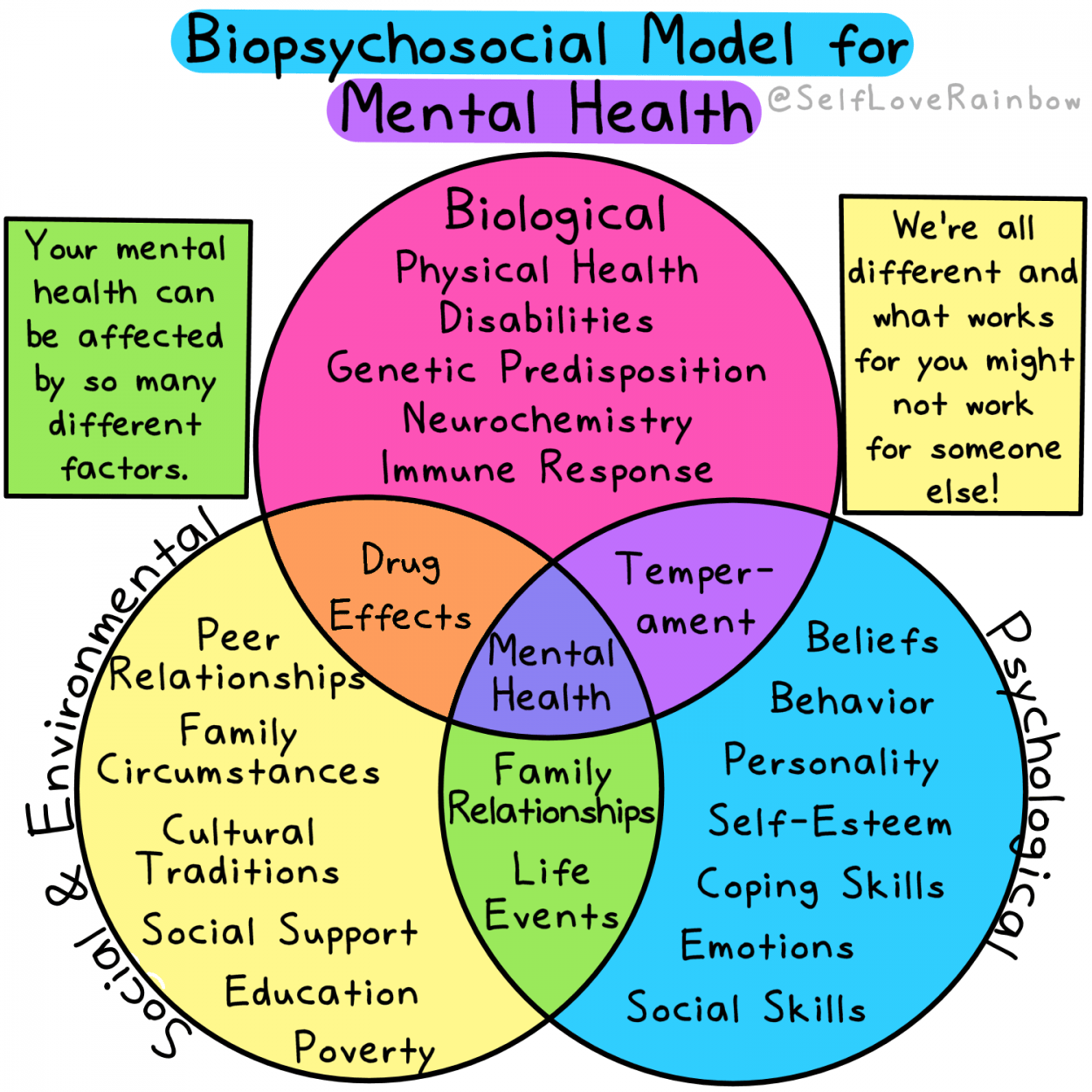
Figure 1: The “Biopsychosocial Model”
(Source: https://www.selfloverainbow.com/the-biopsychosocial-model-for-mental-health/)
A key philosophical framework in mental health nursing, the Recovery Model uses a holistic approach in that it integrates treatment of a patient’s physical, psychological and social aspects all together. At the heart of it is placing the individual at the centre of their care and therefore encourages active participation in the recovery process (Gehl et al. 2023). For patient in similar situation as Daniel, more than a psychological condition is involved in his recovery, this model is particularly effective.
Application of the model on this case study
Biological Intervention for Daniel will include a blood test, checking his nutritional markers making sure he is not malnourished as he is eating from the fridge at night which might not be balance diet and nutritious with family haven’t noticed weight loss. Marker such as Vitamin D would have to be checked as it can impact on your mood when low (Deacon et al. 2013). Organ function markers and Hormones can be checked as it can impact on one’s mental health (Ernstmeyer and Christman, 2022).
“Computed Tomography (CT)” scan of Daniels brain due to possible impact and evidence suggest Rugby players suffer from mental health Illnesses as a result of Impact of the head during play, Base on the outcome of these test Medication can be used (Flaubert et al. 2021).
Alignment of the model with the principles and the values with this given case study
Recovery model also focuses on reintegrating individuals into their social and familiar environments, which are crucial for long-term well-being and promotes empowerment, personal choice, and goal-setting, helping patients regain control over their lives.
This comprehensive approach fosters resilience and supports the broader aspects of a patient's life, leading to more sustainable and meaningful recovery outcomes.
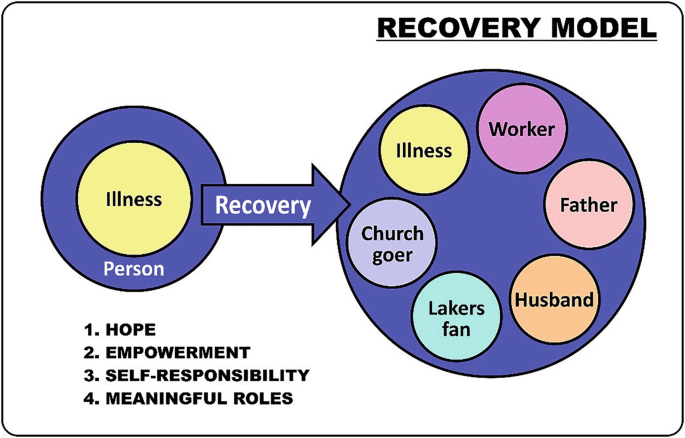
Figure 2: The “recovery model”
Recovery model is one of the most used models in Mental Health Nursing. Recovery model depends on the biopsychosocial model that includes biological, psychological, and social factors of mental health (Bolton et al., 2019). Although this is called the model, it is not even a model (Davlantes et al. 2021) it is a very good consideration of your physical health, and your mental state and your social environment in Daniel’s case this will help him deal with his paranoia and his social withdrawal. Integration of these factors provides a holistic approach in the care model by treating the patient as more than just a symptom, but rather being concerned for the patient’s long-term wellness (Hall-Lande et al. 2007). This highlights the empowerment of patients which means they are not passive as they pursue to get recovery (Lowe, 2023). An approach akin to this achieves helping a person deal with the root causes of mental issues, breakthroughs into personal growth, and helps in general satisfaction of one’s life, thus ensuring a meaningful and sustainable recovery.
Guidance of the model for the therapeutic relationship
Daniel will have to have a safety plan which will include the Crisis phone number relevant to the area he lives. Also Daniel will have to be referred to other services who will work with him on his emotions and how to regulate and also build his resilience. Theses interventions will often look at his underlining cause of his mental health decline to provide a tailored care. Such services include Talking therapy, CBT, DBT and in some cases trust specific in-house design courses to help patients.
Limitations or challenges of the chosen model
Recovery Model is beneficial, but does have several challenges. One big obstacle is establishing trust with patients suspicious or unwilling to submit to care (Freeman, D. and Garety, 2006). This is much harder for patients with paranoia or delusions, such as Daniel, to accept this concept of recovery (Huda, et al. 2019). Engaging these patients is particularly hard for mental health nurses and even more so if they are not engaged or have low motivation (Freeman and Garety, 2006). Patients do not see that treatment is valuable, so this becomes a rather big hurdle for encouraging active participation in care plans. Also, setbacks during recovery are common and can be inconveniencing for patients and healthcare providers alike.
Startegies to overcome certain challenges
However, these obstacles need to be overcome and include patience, good communication and a flexible approach with an individualised approach to care.
Traditionally, mental health is diagnosed and treated using the medical model approach: diagnosed and treated by symptoms. Although this is an essential aspect of managing mental illnesses, in most cases the treatment relies on the physical and biological aspects rather than the full personal experience that a patient goes through (Deacon, 2013). This model is missing several important factors, namely, social relationships, environmental influences, etc. If Daniel’s paranoia and delusions are dealt with by medication, it will address the immediate psychological symptoms (Lowe, 2023). Nevertheless, this approach does not fulfil his need for social isolation as well as his emotional detachment from his family and friends. Medication alone would not suffice to resolve Daniel’s inability to re-establish meaningful relationships or university or rugby (Huda, 2019). Therefore, the medical model is crucial for addressing symptomatology, but it does not address a full, long-term recovery that should be comprehensive, addressing all aspects of a patient’s life, including their social and emotional health.
The “Recovery Model” differs from “traditional models” in that it views Daniel as a whole person rather than his symptoms. The approach emphasized in this model is a people minded approach that is no longer merely about managing the symptoms but rather actively supporting complete wellbeing (Cruwys et al., 2020). Daniel will have to take account not only of his mental health struggles, but of his life in general, his relationships, and his dreams and aspirations. Daniel’s “mental, physical and social health” is best supported by the biopsychosocial framework of the Recovery Model. This is especially useful in treating his paranoia in addressing his social withdrawal.
Daniel as a mental health patient, working with the nurses can help him explore and challenge his delusions in a way, which is trustworthy. With Daniel’s consent his parents can be included in the care process, the nurse may have to support Daniel in re-establishing family connections and improving communication with his support system (Cruwys et al., 2020All these changes indicate that Daniel might be suffering from mood disorder which can be depression or anxiety mixed with psychosis. The fact that he’s isolated, doesn’t have communication, and has distorted perceptions suggests that he has a serious mental health condition (Lowe, 2023). Delusions and social withdrawal are concerning behaviours and underscore an individual’s need for a full mental health assessment (Matsuoka, 2020). It is important to address these symptoms quickly, and to help Daniel to recover and be more well. “Daniel's mental health” nursing would involve an application of the Recovery Model to meet his multifarious needs. The focus of this approach is a biomedical, biopsychosocial understanding of his condition (Lowe, 2023). Daniel’s behaviour as well as his academic performance have changed dramatically with him withdrawing and becoming paranoid (Paulus et al. 2021). These symptoms, along with his progressively deteriorating family relationships and social isolation, must be reviewed in detail. In this case the nurse’s role would be to expand upon the physical, psychological and social dimensions of his condition. This would include finding out the triggers of his paranoia, the state of his emotional wellbeing and assisting with his family in creating an environment that is supporting (Hall-Lande et al., 2007). In understanding the bigger picture of Daniel's life the Recovery Model can give sense to a more targeted plan for recovery intended to last long or for a lifetime.
3.0 Conclusion
In this essay, the principles and values of mental health nursing has been explored, by looking in particular at the way in which the Recovery Model has been applied in Daniel’s case. The element of mental health nursing in healthcare aids Daniel and other individuals suffering from mental health conditions to recover either mentally, holistically, or in a person centered way.
Revisit the purpose and the summaries of the key points
Unlike the traditional models of care that may only address the patient’s symptoms, the Recovery Model combines health of a patient’s mental, physical, and social wellbeing with the treatment culture. The biopsychosocial approach is the basis of the creation of good care strategies aimed at long term recovery and wellness. The “Recovery Model” focused more on whole person treatment as opposed to just treating the symptoms. Where Daniel is concerned, mental health nurses can sit with him, talk with him, listen to him and care for him for the underlying emotional and psychological reasons behind his paranoia, social withdrawal and the way he is in his current state. Involving nurses in Daniel’s recovery process can help him retain a sense of control over his life and a sense of hope and power. The model builds on the therapeutic relationship, which looks like trust, empathy, and respect and, as you might imagine, is difficult to cultivate in a situation where, say, he was something we didn’t want you to do. But applying the “Recovery Model” is not easy as Daniel is a reluctant patient. For someone who has paranoia or delusions, acceptance of recovery can seem a difficult proposition and it is important that mental health nurses take all of this on board and are patient and flexible in their approach. So many barriers must be overcome to encourage active engagement in the treatment plan such as mistrust or denial. Setbacks are also frustrating for both patients and for healthcare provider. However, these challenges are nothing compared to what the Recovery Model’s person-centered approach allows it to encompass – and it is possible to achieve meaningful recovery with its help. The Recovery Model is an important conceptual framework for mental health nursing and therefore gives importance to the concept of unearned suffering. It allows the nurses to give quality care by taking note of the underlying causes of the “mental health problems” apart from the symptoms. According to Daniel’s case, mental health nurses can help patients regain their lives and achieve recovery by creating an environment of trust, flexibility and support.
Reference list
Journals
- Ahad, A., Gonzalez, M. and Junquera, P. (2023). Understanding and addressing mental health stigma across cultures for improving psychiatric care: A narrative review. Cureus, [online] 15(5), pp.1–8. Available at: https://pmc.ncbi.nlm.nih.gov/articles/PMC10220277/.
- Ahmedani, B.K. (2020). Mental Health Stigma: Society, Individuals, and the Profession. Journal of social work values and ethics, [online] 8(2), pp.4–1. Available at: https://pmc.ncbi.nlm.nih.gov/articles/PMC3248273/.
- Bolton, D. and Gillett, G. (2019). The Biopsychosocial Model 40 Years On. [online] www.ncbi.nlm.nih.gov. Palgrave Pivot. Available at: https://www.ncbi.nlm.nih.gov/books/NBK552030/.
- Cruwys, T., Stewart, B., Buckley, L., Gumley, J. and Scholz, B. (2020). The recovery model in chronic mental health: A community-based investigation of social identity processes. Psychiatry Research, 291(113241), p.113241. doi:https://doi.org/10.1016/j.psychres.2020.113241.
- Davlantes, E., Walther, A.N. and Abraham, S.P. (2021). Advantages and Challenges of Developing a Trusting Relationship with Individuals Who Have Schizophrenia. ResearchGate, [online] 19(1), pp.34–47. Available at: https://www.researchgate.net/publication/353856813_Advantages_and_Challenges_of_Developing_a_Trusting_Relationship_with_Individuals_Who_Have_Schizophrenia.
- Deacon, B.J. (2013). The Biomedical Model of Mental Disorder: A Critical Analysis of Its Validity, Utility, and Effects on Psychotherapy Research. [online] Clinical psychology review. Available at: https://pubmed.ncbi.nlm.nih.gov/23664634/.
- Ernstmeyer, K. and Christman, E. (2022). Therapeutic Communication and the Nurse-Client Relationship. [online] www.ncbi.nlm.nih.gov. Chippewa Valley Technical College. Available at: https://www.ncbi.nlm.nih.gov/books/NBK590036/.
- Flaubert, J.L., Menestrel, S.L., Williams, D.R. and Wakefield, M.K. (2021). Supporting the Health and Professional well-being of Nurses. [online] www.ncbi.nlm.nih.gov. National Academies Press. Available at: https://www.ncbi.nlm.nih.gov/books/NBK573902/.
- Freeman, D. and Garety, P. (2006). Helping patients with paranoid and suspicious thoughts: a cognitive–behaviouralapproach. Advances in Psychiatric Treatment, [online] 12(6), pp.404–415. doi:https://doi.org/10.1192/apt.12.6.404.
- Gehl, K., Brassard, A., Dugal, C., Lefebvre, A.-A., Daigneault, I., Francoeur, A. and Lecomte, T. (2023). Attachment and breakup distress: The mediating role of coping strategies. Emerging Adulthood, 12(1). doi:https://doi.org/10.1177/21676968231209232.
- Hall-Lande, J.A., Eisenberg, M.E., Christenson, S.L. and Neumark-Sztainer, D. (2007). Social isolation, psychological health, and protective factors in adolescence. Adolescence, [online] 42(166), pp.265–86. Available at: https://www.researchgate.net/publication/5990460_Social_isolation_psychological_health_and_protective_factors_in_adolescence.
- Huda, A.S. (2019). The Medical Model in Mental Health. [online] Oxford University Press. doi:https://doi.org/10.1093/med/9780198807254.001.0001.
- Lowe, R. (2023). Biopsychosocial Model. [online] Physiopedia. Available at: https://www.physio-pedia.com/Biopsychosocial_Model.
- Matsuoka, S. (2020). Recovery‐oriented nursing care based on cultural sensitivity in community psychiatric nursing. International Journal of Mental Health Nursing, [online] 30(2). doi:https://doi.org/10.1111/inm.12822.
- Paulus, F.W., Ohmann, S., Möhler, E., Plener, P. and Popow, C. (2021). Emotional Dysregulation in Children and Adolescents With Psychiatric Disorders. A Narrative Review. Frontiers in Psychiatry, [online] 12(1). doi:https://doi.org/10.3389/fpsyt.2021.628252.
- Raab, K. (2014). Mindfulness, Self-Compassion, and Empathy among Health Care Professionals: a Review of the Literature. Journal of Health Care Chaplaincy, [online] 20(3), pp.95–108. doi:https://doi.org/10.1080/08854726.2014.913876.
- Saxena, S. and Hanna, F. (2015). Dignity- a fundamental principle of mental health care. Indian Journal of Medical Research, 142(4), p.355. doi:https://doi.org/10.4103/0971-5916.169184.
- Toney-Butler, T. and Unison-Pace, W. (2023). Nursing admission assessment and examination. [online] National Library of Medicine. Available at: https://www.ncbi.nlm.nih.gov/books/NBK493211/.
- Winter, R., Leanage, N., Roberts, N., Norman, R.I. and Howick, J. (2022). Experiences of empathy training in healthcare: A systematic review of qualitative studies. Patient Education and Counseling, [online] 105(10), pp.3017–3037. doi:https://doi.org/10.1016/j.pec.2022.06.015.
Recently Downloaded Samples by Customers
Introduction - BM562 Consultancy in Practice Assignment Sample Consulting refers to the practice of furnishing a third...View and Download
Introduction Get free samples written by our Top-Notch subject experts for taking Assignment Helper services. The...View and Download
Introduction Study skills provide with the tactics that are used by the learners in the process of effective learning. This is...View and Download
Introduction Get free samples written by our Top-Notch subject experts for taking online Assignment Help services. Employment...View and Download
Introduction to The Importance of Financial Management Assignment Financial management involves the process of planning,...View and Download
Introduction - Innovative Technologies Driving Sustainability at The Crystal Sustainable construction has become a vital...View and Download