7CO03 Personal Effectiveness, Ethics and Business Acumen Assignment Sample
This 7CO03 coursework examines ethical leadership, personal effectiveness, business knowledge and approaches to professional growth.

- MAIN BODY
- 1.4 Collaborate company`s boundaries, cultures and other disciplines
- Introduction
- 2.3 Impactful behaviour aligning with company`s vision, values. Strategies and plans
- Introduction
- 3.4 Knowledge and learning to promote organisational success
- Introduction
- 4.4 Utilise and apply evidence-based critical-thinking in your work
- Introduction
- Type Assignment
- Downloads561
- Pages18
- Words4578
MAIN BODY
1.4 Collaborate company`s boundaries, cultures and other disciplines
Introduction
Organisational boundaries implies the scope in which an organisation operates. In addition, culture is defined as shared values and practices of organisation while discipline means compliance with rules, regulations and standards to attain goals in proficient manner. The term collaboration across boundaries refers to a practice of working with individual from different team, departments, areas of expertise as well as culture (Moreno-Cely et al, 2021). It is also concerned with the creating of connections within group to effectively share ideas, knowledge and skills. In context of collaborating organisation cultures, boundaries and disciplines, the organisation embrace several differences in terms of language, working style, background, culture, values, social norms, ethics and so more. It leads to creating difficulty for the employees to effectively adjust in a company`s culture. In context of collaborating within different cultures, organisational boundaries and disciplines, it is important to take required actions.
Struggling with tight deadlines? Assignment Help For Students from Rapid Assignment Help UK delivers well-researched, expertly written papers on time, every time.
According to the STAR approach, the organisation X is merging with an international company namely Y with an aim of expansion of the business. In context of Company X the organisational boundaries includes working within divisional organisational structure while compliance with all company`s policies, rules, regulations and standards. The merger with Company Y results in creating several differences in terms of culture, disciplines, working style, languages and so more. Company X focuses on flexibility while Company Y operates its business with rigidity as a result employees of both the organisation struggles to collaborate and coordinates with each other ultimately make onerous to attain the goals of organisation in efficient as well as effective manner. The culture of Company X work life balance conflicts with the all hands-on deck culture of Company`s Y. Referring to Handy`s cultural model, there are four kinds of culture such as power, task, role and person (Abdala, Morais and Rebelatto, 2021). According to this, organisation X focus on role culture, clearly define role and responsibility of each member and offers a flexible working approach while Organisation Y focus on power culture, decisions are made by top authority. For instance, the employees of organisation X works in flexible manner as a result employee of Y organisation perceived them as disorganised while employee`s Y considered them as rigid. Due to the difference in culture, disciplines and organisational boundaries, it become difficult to build trust between two groups.
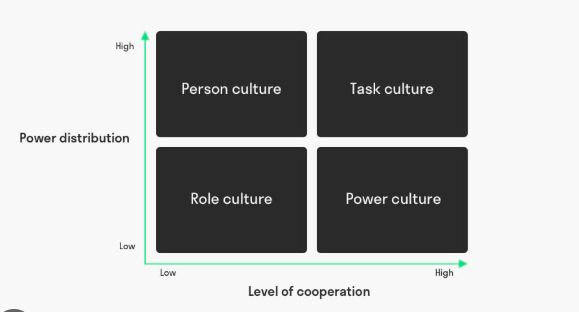
(Source: Handy`s model of organizational culture, 2025)
Referring to task, within a situation of different organisational boundaries, disciplines and cultures with an aim of efficiently collaborated across this aspects and embracing the difference it is important to perform the task of effective leader. The task includes communicating with employees of both companies to effectively collaborate within organisations culture, boundaries and disciplines. The employees of both organisations are aware about the working style of each company and clearly communicate the new style of working that needs to follow by each employee. The action of effective and clear communication minimize the hurdles faced by the employees during working with each other, results in better collaboration to attain the pre-determined goals of organisation (Grover, Tseng and Pu, 2022). For instance, referring to organisational boundaries employees are communicated about the policy of confidentiality where employees are restricted to share sensitive information of company with external people.

 7 Years | MA in Human Resource Management
The first and foremost action to embrace the difference is providing training of diversity within the organisation. The leader conducts a timely training that trained the workforce to effectively understand cultural difference, communication style, ethics as a results helps in effectively collaborate within the different cultures and organisational boundaries. Moreover, the organisation encourage a mechanism of open communication and feedback, it provides freedom of voice to each employees to share their opinion and suggestion, it leads to foster trust and collaboration with the team members which is quite effective to perform in coordinated manner. The opportunity of feedback allows organisation X to embrace the difference as well as taking appropriate actions that is important for the perspective of increasing morale of employees.
Along with this, organisation X also emphasises on using interdisciplinary approaches such as integration of diverse perspectives to effectively tackle dynamic and complex issue within the organisations. The action of using transformational leadership also allows organisation X and its employees to effectively coordinate within organisational culture, boundaries and disciplines. The transformational leader of Company X provides required guidance and direction to the company and its employees to work in collaborative manner. For instance, to establish collaboration among different culture of company X and Y after their merger, leader ensures implementing a mixture of flexible and rigid working structure. It means employees provide with flexibility in work while rigidity in compliance with rules and regulations (Attah et al, 2024). This action helps to make a positive and suitable workplace for diverse kind of employees.
In addition, by taking appropriate action of effective communication, the organisation X able to gain outcome of better coordination as employees able to understand each other perspective in proficient manner as a result it fosters trust. For instance, due to clear and transparent communication the team members able to understand each others`s opinion and ways of thinking while navigating the cultural differences leads to effective coordination as well as collaboration. In addition, the feedback mechanism also results in promoting inclusivity as well as providing feeling of valued and respected among employees which is quite effective for embracing cultural and disciplinary differences (Mejía et al, 2023). When existing employees are aware about opinion and perspective of each other then it results in fostering collaboration. The action of effective leadership generate outcome of decline cultural conflicts within the employees of organisation X and Y after the merger, enable them to understand the effectiveness of both culture ultimately results in effective and efficient collaboration.
Moreover, the action of offering training of diversity provides outcome of creating awareness among team members in regards to different perspective, opinion, language and cultural terms which helps the team members to effectively and efficiently collaborate within a different cultural and organisational boundaries. Hence, the action of open communication, feedback mechanism as well as training of diversity effectively embraces differences and creates a more inclusive workplace with high collaboration across team member’s results in attainment of organisational goals of Company X.
2.3 Impactful behaviour aligning with company`s vision, values. Strategies and plans
Introduction
Impactful behaviour always supports vision, values as well as goals of the organisation. It allows in understanding the purpose for which organisation stands for and accordingly aligns behaviour with the priorities (Maleka, 2023). The vision of Company X is guiding its customers, employees and partners towards bold choices by using digital technology to create a positive future for all. The organisation operates on the values of putting customer first, taking positive actions, professional excellence, and respect for other and bringing innovation with the operations to ensure competitive edge as well as benefits to the overall society. The organisational behaviour is considered as a study on human behaviour. Effective organisational behaviour ensures innovation, better job satisfaction, enhancing employee performance with an aim of accomplishing goals of a business. Organisational behaviour plays an important role in attain organisational vision as well as aligning organisational operations with company`s value and strategies.
For instance, organisation X faces several issues in regards to motivating team members as well as managing conflicts. The organisation has a diverse workforce with different background, culture and working style as a result it makes onerous for organisation X to collaborate efforts of its team members as a result it makes difficulty in bring innovation in organisation practices act as a barrier to attain the organisational goals in crucial manner. Also, the employees of Company X face lack of motivation as a result it acts as a barrier to attain organisational gaols as well as getting competitive edge within the market. Being in the role of HR Case Manager, the one of the task is to managing the issue faced by the employees in term of greater conflicts, lack of motivation as well as coordination within the team members of organisation X. Referring to impactful behaviour HR Case Manager supports employees by solving their issues at organisation in effective and efficient manner.
Get assistance from our PROFESSIONAL ASSIGNMENT WRITERS to receive 100% assured AI-free and high-quality documents on time, ensuring an A+ grade in all subjects.
Referring to STAR approach, in context of action, it is crucial for organisation X to promote open communication and culture of respect within the workplace. The company will use open communication to solve conflicts within the team members, each member provides with the opportunity to clearly and freely voice out their concerns at the workplace, the case manager by actively listening points of both parties focuses on solving the problem (Akpa, Asikhia, and Nneji, 2021). For instance, a conflict arise between the team members due to unequal allotment of the work without consideration of specialist areas. Referring to this, the HR Case Manager of organisation X focuses on using Win-Win approach, it means focuses on solving conflict by considering the requirement and interest of both parties. Accordingly, HR take action of allocating the work to each team members in equal manner based on their skills, qualification and area of expertise, it is beneficial for employees as well as organisation as well. The problem-solving behaviour allows in aligning as well as attaining the organisational goals and value.
Moreover, to overcome the issue of lack of motivation among the team members, the HR Case Manager emphasises on optimizing Hertzberg-two factor motivational model, to encourage the workforce, manager prioritize hygiene factors such as working condition, company policies, job security, intrapersonal relationship and motivation factors including achievements, recognition, growth opportunities (Ibrahim et al, 2023). In reference with the model, HR Case Manager takes action of offering motivation such as reward, monetary increment, commission, bonus as well as praise, appreciation and recognition to giving them employees with feeling of value and respect. In addition, referring to hygiene factor, employees of Organisation X provide with good working condition, training opportunities and so more (Herzberg Motivation Theory, 2025). It leads to significantly enhance morale of the employees as a result it builds a positive behaviour of employees, results in aligning and attaining organisational goals and values. Apart from this, the action of training allows the HR Case Manager of Organisation X to enhance and develop skills, abilities and knowledge of its workforce, it leads to empower the team members to proficiently contribute towards attainment of strategic direction of company. The action effectively aligns company`s goals, value and strategic plan and assist HR Manager to fulfil performance gaps to provide competitive edge to Organisation X in a complex and dynamic business environment.
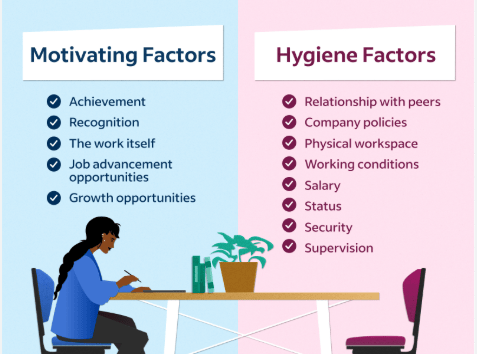
(Source: Herzberg Motivation Theory, 2025)
Moreover referring to the above actions HR manager able to generate positive outcome for the employees as well as organisation. The action of open communication allows HR Case Manager to clearly discuss the concerns, issues as well as problems face by the employees as a result allows in solving the conflicts in rapid as well as timely manner. The open communication enables the organisation to actively listens each employees ultimately provides them with feeling of value and respect leads to foster trust (Berman et al, 2021). It assists in quick conflict resolutions and supporting the team member’s results in effectively align the employees working with goals and objectives of organisation. Moreover, in reference with STAR approach, the motivational behaviour effectively aligned with organisational behaviour goals and visions, it leads to significantly improve employee`s job satisfaction level, engagement, productivity and performance eventually it results in overall success of the organisation. The motivational behaviour results in creating an environment with continuous enhancement, allows in timely adopting of changes within company`s operations, strategies as well as plan. The outcome of action includes better innovation, competitiveness, retention of employees and attracting wide range of talented and skilled employees correspondingly allows the Organisation X to effectively accomplish its organisational goals. Furthermore, the action of training results in developing the workforce, increasing their efficiency to perform the job and empowering them ultimately encourages them to work with their best which is quite essential and crucial for attaining organisational goals and objectives.
3.4 Knowledge and learning to promote organisational success
Introduction
Knowledge and learning plays a vital role in improving skills, abilities of employees as well as promoting organisational success. The term sharing knowledge and learning refers to giving or passing appropriate information, knowledge, insights and competencies to others within the organisations (Gubbins and Dooley, 2021). In reference to this, individual provide colleagues with the training of skilled and expertise areas, share helpful resources as well as discuss the ideas that leads to enhance overall competency of colleagues or team members. A learning culture of organisation allows employees shared knowledge freely allows in contributing overall success of a company as it enables the team to grow collaboratively while adapting changes as well as attaining organisational goals in effective manner.
In context of STAR approach, Organisation X focuses on sharing knowledge and learning with the colleagues to ensure success of the company. Referring to the concept the organisation X makes mandatory for good competency and knowledge employees to share their expertise to other members in context of using digital technologies to provide better digital solutions to customers. The company organize a knowledge sharing session once in a month to foster a learning culture and to ensure personal as well as professional growth of employees.
In context of task aspect of STAR approach, being in the role of HR Case Manager it is important to provide employees with the online forums to share their knowledge with the colleagues. In addition, a training session organizes to conduct a training of leveraging digital technologies while performing the job. In addition, in role of HR Case Manager emphasises given on providing required resources, tools and equipments to trainer so that they can easily share the knowledge to other colleagues.
Referring to action, to effectively share knowledge and learning with the co-workers a mentorship program organize within Organisation X. According to collaborative learning model, team members share knowledge with each other with an aim of organisational success (Supena, Darmuki and Hariyadi, 2021). The collaborative learning model employs a bottom up approach, contains that experience individual provide and share knowledge, hand-on-experience as well as practical knowledge to the less experience and fresher employees. This action significantly acquired to the fresh workforce with the important information and knowledge. Apart from this, to sharing the information and essential knowledge, employees also use presentation it includes passing information to the colleagues by using audio and visual presentation to offer them with the in-depth knowledge.
In addition, due to diversity within the workforce of organisation X, each employee has a different learning needs as well as knowledge acquiring capacity. Accordingly the action of sharing the knowledge with the team member is taken according to the needs and requirements of the team members. For instance, some employees learn via hand on experience as a result On-the-job training method is used to share knowledge and competency whereas some are members are flexible as a result information share with them in any manner. Apart from this, being in role of HR Case Manager, to encourage employees to willingly share knowledge and competency with colleague’s greater focus given on intrinsic motivation as well as building a enjoyable work environment to effectively fill the performance gap (Mahrinasari et al, 2021). Also, employees are publicly acknowledges and appreciates for demonstrating efficient and strong knowledge-sharing practices. Apart from this, only motivating employees to effectively sharing information is not sufficient, it is also significant to design a workspace that directly impacts knowledge flow within organisation X.
In regards to this, the important action requires are setting a comfortable communal areas to motivates informal exchanges, knowledge sharing and establishing quieter collaboration zones within open-plan offices. Along with this, it is crucial for HR Case Manager to provide employees with the required resources, online access with an aim of sharing knowledge as well as learning. It includes action of offering digital intelligence platforms for seamless remote knowledge transfer and multiple knowledge-sharing channels that suits learning preference of diverse employees. Moreover, for effective sharing of knowledge and learning, organisation X optimises 70:20:10 model. According to this, the colleagues get 70% knowledge and skills through on-the-job experience while 20% knowledge get from interacting with trained employees or exchanging information with experience individual where as 10% knowledge acquired from formal training (Amenumey and Badu, 2023). Referring to this model employees of organisation X gets 70% knowledge of using digital technology while performing the job, 20% via exchanging information from experienced colleagues and 10% through attaining formal training within organisation.
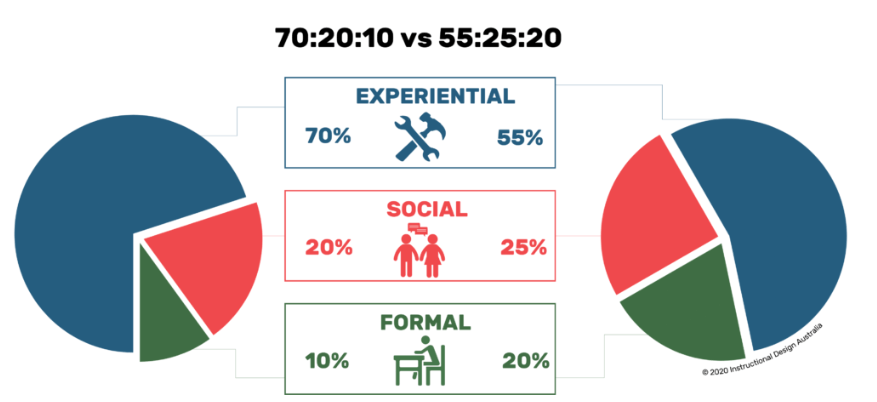
(Source: 70:20:10 model. 2025)
According to the STAR approach the action of sharing knowledge and learning aids in creating a culture of collaboration and continuous development. It allows each member of organisation X with an opportunity to enhance their areas of expertise, skills, competency and knowledge, ultimately increase their productivity and performance results in overall success of the organisation. Moreover, sharing learning and knowledge ensures that each individual efficiently access to the information that requires to perform their job in well manner eventually as a outcome of such action individual have a better decision-making as well as stronger performance. For instance, when knowledge and learning shared by experience individual with the other colleagues of organisation X than it significantly declines duplication of efforts by avoiding mistakes in work, ultimately it results in greater efficiency. In addition, knowledge sharing enables both individual and co-workers to develop great insight as well as better understanding in experts areas correspondingly it results in enhancing productivity and performance of overall workforce, leads to promoting organisational success in effective and efficient manner.
Along with this, the knowledge sharing environment significantly improves decision-making skill of employees as sharing of knowledge acquired the co-workers with diverse perspectives and ideas which help in making informed decision aligning with organisational goals. Also, knowledge sharing brings creativity among the workforce, they become efficient to cope up with the challenges and adopt required changes in organisation, it ultimately results in innovation (Mahdi and Nassar, 2021). The sharing of knowledge also encourages collaborative and team-working nature within colleagues as a result employees feels more satisfied, engaged and productive correspondingly it significantly promotes organisational success. Apart from this, sharing of knowledge and learning saves training cost as well as enables the people to feel more connected and engaged to their work as a result improved overall organisational success.
4.4 Utilise and apply evidence-based critical-thinking in your work
Introduction
Evidence-based critical thinking refers to a practice of making decisions as well as solving problems according to available data, facts, figures instead of opinions and assumptions. In other words, evidence-based practice refers to a structured approach of decision-making that depends on already available evidence from different sources. In simple words, evidence-based practice includes evaluating information, undertaking diverse perspective in consideration and making an appropriate conclusion accordingly (Dombrowski et al, 2022). In organisational context, evidence-based practice improves decision making, allows the organisation to make timely informed decision in regards to adopting change, bringing innovation, ensuring modification in culture, organisational operations and so more. The practice allows the organisation to make effective and better decisions through selecting reliable, trustworthy solutions as well as being less dependent on outdated received wisdom. In context to this, evidence-based critical-thinking benefits the organisation in terms of decline the bias as decision is made according to data rather than personal opinions. It also results in enhancing accountability, transparency and innovation that is quite crucial and appropriate for attaining the goals and objective of the organisation. In addition, being in the role of HR Case Manager, evidence based critical-thinking helps in solving problems, employees concerns as well as making changes in organisational policies with an aim of attracting and retaining skilled and expert employees (Valdes, Sembar and Sadler, 2023). For instance, to solving the issue of overstaff and shortage of staff, HR Case Manager consider evidence-based critical-thinking approach to work. In regards to this, HR optimize right data as well as right information related to employees in structured way to effectively make informed decision associated with hiring of more employees or restraining recruiting for some time, hence EBP help in enhance the likelihood of favourable outcome for the organisation.
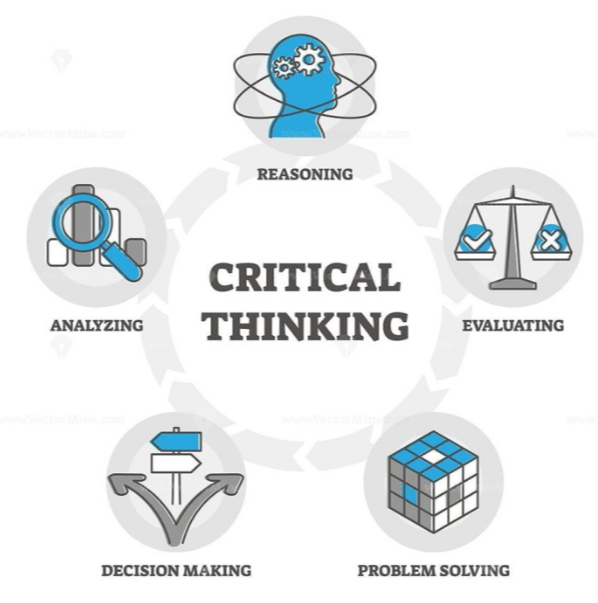
( Source: Critical Thinking, 2025)
In reference with the STAR approach, within organisation X a problem exist in regards to high employee turnover. It becomes difficult for the HR to attract as well as retain talented people within the organisation, it adversely impacts the organisation performance and profitability. The high employee turnover significantly influences organisation competitiveness within a dynamic and complex environment. According to STAR approach, being in the role of HR Case Manager, it is one of the main responsibility to proficiently optimize evidence-based critical-thinking practice to solve the issue of high employee turnover within the organisation X.
In context of overcoming the situation of high employee turnover, the organisation and HR Case Manager applied evidence based critical-thinking by taking systematic actions. The first and foremost action is concern with collecting evidence in form of data, facts and figures from different sources such as performance data, 360 feedback, employee records, exit interviews and so more to effectively understand the reason behind high turnover. In addition, after the collection of data, it is important to critically think on evidences by evaluating the reliability as well as validity of the collected evidence (Raju, 2025). The HR manager can assess the validity by comparing the collected data with actual condition or situation within the organisation X. Afterwards, HR manager applied data analytics techniques to evaluate the collected data as well as drawing a meaningful and informative conclusion. Apart from this, one of the most important roles of evidence-based critical-thinking is making decisions. Accordingly, based on the result of collected data, HR Case Manager makes decisions for improving its working environment as the culture of company is quite toxic with lack of flexibility. It becomes as one of the main reason for voluntary turnover of the employees. Afterwards, making the decisions HR Case Manager evaluates the effectiveness of decisions by identify its impacts in effective and efficient manner.
According to STAR approach, the use of evidence-based critical-thinking generates a positive and favourable outcome. The action of optimizing evidence-based practice results in generating rapid as well as timely decisions to remain competitive within the industry. It helps in decline the likelihood of making wrong decisions results in protecting the company from losses. Use of evidence-based critical thinking allows the HR to optimally use human resource within the organisation, ultimately saves time and cost of the organisation leads to better efficiency as well as proficiency that is crucial for accomplishment of organisational goals and objectives. Moreover, one of the best outcome of applying evidence-based critical-thinking in work is identify the problems within the organisation as well as developing creative solutions by evaluating information and data from multiple sources (Esmaeilzad et al, 2023). In addition, it also results in enhancing efficiency as well as productivity. For instance, use of evidence-based critical-thinking enables HR to ensure timely hiring as well as training to the employees for effectively filling the gap in workforce as well as performance. This allows in streamlined Organisation X operations while improving productivity as well as performance.
Along with this, the use of available data, information from reliable and validate sources within organisation X allows the HR to enhance and develop company`s culture. Referring to scenario, based on different records and employee’s feedback, organisation make changes to build a positive culture where employees feel valued and respected. It leads to effectively solve the problem of high employee turnover rate within organisation X as an outcome of this allows the company to work without any inconvenience leads to attainment of organisational goals and objectives. Hence, evidence-based critical-thinking is beneficial for both organisation and HR profession to effectively perform the work. It leads to build a stronger body of knowledge as a result enhance business efficiency as well as competency (Whiteman, Yaglowski and Stephens, 2021). In addition, the application of evidence-based critical-thinking enable the individual to implements impactful HR strategies in terms of recruitment, performance management, addressing of employee problems, compensation and so more, leads to contribute to the overall success of the company.
REFERENCES
Books and Journals
- Abdala, E.C., Morais, G.G. and Rebelatto, D.N., 2021. Remuneration Strategies related to Charles Handy’s cultural typology: A case study in a small digital market business in pandemic times.Brazilian Journal of Operations & Production Management,18(2), pp.1-13.
- Akpa, V.O., Asikhia, O.U. and Nneji, N.E., 2021. Organisational culture and organisational performance: A review of literature.International Journal of Advances in Engineering and Management,3(1), pp.361-372.
- Amenumey, E.B. and Badu, Y.A., 2023. Leaders’ Experiences of Integrated Leadership Development in Higher Education: Kolb’s Experiential Learning Theory and the 70: 20: 10 Model.International Journal of African Higher Education,10(2), pp.113-137.
- Attah, R.U., Garba, B.M.P., Gil-Ozoudeh, I. and Iwuanyanwu, O., 2024. Cross-functional team dynamics in technology management: a comprehensive review of efficiency and innovation enhancement.Eng Sci Technol J,5(12), pp.3248-65.
- Berman, E.M., Bowman, J.S., West, J.P. and Van Wart, M.R., 2021.Human resource management in public service: Paradoxes, processes, and problems. Cq Press.
- Dombrowski, S.C., J. McGill, R., Farmer, R.L., Kranzler, J.H. and Canivez, G.L., 2022. Beyond the rhetoric of evidence-based assessment: A framework for critical thinking in clinical practice.School Psychology Review,51(6), pp.771-784.
- Esmaeilzad, S., Gavgani, V.Z., Zarei, A. and Familrouhany, S.A.A., 2023. Effect of evidence-based information management and practice training on librarians’ critical thinking: A randomized educational trial.Journal of Librarianship and Information Science,55(4), pp.1044-1054.
- Grover, V., Tseng, S.L. and Pu, W., 2022. A theoretical perspective on organisational culture and digitalization.Information & Management,59(4), p.103639.
- Gubbins, C. and Dooley, L., 2021. Delineating the tacit knowledge‐seeking phase of knowledge sharing: The influence of relational social capital components.Human Resource Development Quarterly,32(3), pp.319-348.
- Ibrahim, I.W., Ghazali, I.M., Syed, S.A., Abdullah, N.H.R., Hamid, M.H.A. and Aisyah, S.H., 2023. Exploring motivation for learning using Hertzberg’s two factor theory.International Journal of Academic Research in Business and Social Sciences,13(3), pp.1065-1083.
- Mahdi, O.R. and Nassar, I.A., 2021. The business model of sustainable competitive advantage through strategic leadership capabilities and knowledge management processes to overcome covid-19 pandemic.Sustainability,13(17), p.9891.
- Mahrinasari, M.S., Hussain, S., Yapanto, L.M., Esquivel-Infantes, S.M., Untari, D.T., Yusriadi, Y. and Diah, A., 2021. The impact of decision-making models and knowledge management practices on performance.Academy of Strategic Management Journal,20, pp.1-13.
- Maleka, S., 2023. The influence of organisational culture on the implementation of strategic plans in a public service organisation.
- Mejía, G.M., Henriksen, D., Xie, Y., García-Topete, A., Malina, R.F. and Jung, K., 2023. From researching to making futures: a design mindset for transdisciplinary collaboration.Interdisciplinary Science Reviews,48(1), pp.77-108.
- Moreno-Cely, A., Cuajera-Nahui, D., Escobar-Vasquez, C.G., Vanwing, T. and Tapia-Ponce, N., 2021. Breaking monologues in collaborative research: Bridging knowledge systems through a listening-based dialogue of wisdom approach.Sustainability Science,16, pp.919-931.
- Raju, P.G., 2025. Pedagogies to Foster Critical Thinking and Reflection: A Case of Teaching Human Resource Management to Law Students. InFostering Teacher Skills and Critical Thinking in Modern Education(pp. 189-220). IGI Global Scientific Publishing.
- Supena, I., Darmuki, A. and Hariyadi, A., 2021. The Influence of 4C (Constructive, Critical, Creativity, Collaborative) Learning Model on Students' Learning Outcomes.International Journal of Instruction,14(3), pp.873-892.
- Valdes, E.G., Sembar, M.C. and Sadler, F., 2023. Onboarding new graduate nurses using assessment-driven personalized learning to improve knowledge, critical thinking, and nurse satisfaction.Journal for Nurses in Professional Development,39(1), pp.18-23.
- Whiteman, K., Yaglowski, J. and Stephens, K., 2021. Critical Thinking Tools for Quality Improvement Projects.Critical Care Nurse,41(2).
- Wood, J.M., Wiesner, R., Morrison, R.R., Factor, A. and McKeown, T., 2024.Organisational behaviour: Core concepts and applications. John Wiley & Sons.
Recently Downloaded Samples by Customers
Plan for own learning requirements relevant to managing staff Get free samples written by our Top-Notch subject experts for...View and Download
Introduction Get free samples written by our Top-Notch subject experts for taking assignment help uk from Rapid...View and Download
Introduction: Employment Law Assignment Labour law confers as those laws that maintain the relationships between workers,...View and Download
Introduction Healthcare rationing upholds the notion of varied debates and concerning components within the health economics. It...View and Download
Introduction and Background Here's an assignment sample that reflects clarity, precision, and academic depth. At Online...View and Download
Introduction Ireland has established its obligation to appreciate human rights with the help of the system of legal and the...View and Download