+44 75754 30035 help@rapidassignmenthelp.co.uk
offer
🎁Special Offer 🎁 Discounts - Up to 50% OFF!
🎁Special Offer 🎁 Discounts - Up to 50% OFF!

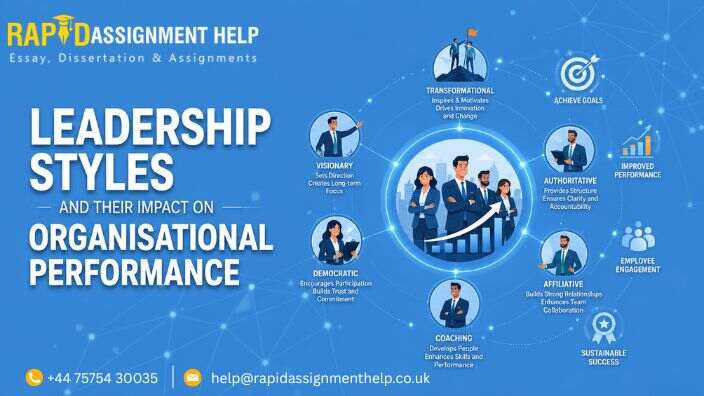
Are you a management student or someone who is looking to improve their managerial skills? The thing here is that it cannot be done without leadership knowledge. That’s what we are used to hearing a lot, but how well we understand this in a true sense. If you can answer this question, completing tasks effectively, whether it is an assignment or managing a team, becomes so effortless.
That’s what this blog is all about. In this specific guide, we’ll unfold one of the core but missing leadership styles. Make sure you read thoroughly without skipping any knowledgeable parts. So let’s get started by learning its meaning.
Different types of people give their opinions on leadership from their perspectives. Some say that it is about having all the answers, and some put pressure on being infallible. Now your perspective will change completely because in management studies, it takes a rotation. In true meaning, leadership is the social and behavioural process of influencing and guiding individuals. It's not about the title, order, or being the most knowledgeable in the room.
It is rallying people, setting up the morale, and navigating the change. As a leader, your job is to:
Establishing the Path: You set the goals and give the direction to achieve the expected mark.
Aligning the Work: Allot the specific tasks and ensure team members understand their roles without being confused.
Taking Responsibility: You remain as the incharge of the project and take responsibility to deliver the committed outcome.
That’s where true leadership revolves around, but here is the shift. You cannot just merge it with management. To know why, let’s explore the next section.
Leadership is a part of management, but it doesn’t mean they both work on the same principles. While management is about systems and processes, leadership focuses on setting a vision and motivating the team to achieve the goal. Here is how they are separate:
|
Aspects |
Leadership |
Management |
|
Focus |
Set the plans for the future and think about what to achieve. |
Managers are executors who focus on implementing plans, creating budgets, and establishing timelines. |
|
Approach |
Leaders work with the people and inspire them to achieve the expected outcome. |
It is more bent to processes, workflows, and procedures. |
|
Authority |
The title is less important than the leader's influence on the team. |
A manager's authority is already set and granted by the organisation. |
|
Strategy |
Leadership makes strategies by keeping the long-term vision. |
More towards the short-term, quarterly goals and focus remain on day-to-day operations. |
|
Team Role |
A leader can be a coach or motivator who empowers the team. |
A manager is a supervisor who ensures the proper workflow and consistency. |
Now you might be clear about the difference between leadership and management. It’s time to dive into different leadership types that can be useful for the assignment work.
Leadership is not a constant thing and works differently according to the situation. That’s what defines its variations, and we are describing it for you. Have a look below to explore one of the major ones:
The name truly defines the complete power a leader holds from the input, allocating the work, and assigning the goals. As the business requires quick decisions, this leadership type allows individuals to take action fast, especially in tough situations.
This type of leader believes in the unity even for making decisions. They respect other employees' decisions and values for achieving the long-term goals. One of the major reasons it differentiates because it provides employees a feeling of being valued.
One of the leadership types is based on trust. In simple terms, the leader empowers other employees with their problems, shares the vision, and provides recognition to energise every single individual. This is what leads to better performance over time.
This leadership is known as an effective way to bring strong output. For this, the leader set clear rules and goals with rewards and punishments. If employees meet the target, they get rewarded, but if they don’t, they get fewer opportunities.
The decisions taken are based on competence, commitment, and the specific task is called situational leadership. Here, a leader plays four crucial duties, including defining the roles, providing direction, sharing decision-making responsibilities, and passing responsibility with minimal guidance.
In this specific type, leadership relies on processes. That’s when every role is defined, and the leader strictly follows the rules, policies, and a clear chain of command. While this provides clarity and consistency, it leaves little room for innovation and creativity.
The process of inspiring the team with energy and transferring their vision, this is called charismatic leadership. The leader sets a path and creates a strong commitment to spark innovation and bold actions. But this is what makes the growth dependable, which is a downside.
When a leader moves beyond the authority and focuses on serving, it comes down to servant leadership. It is effective for the growth trajectory because the leader actively listens to the team members and inspires collaboration. However, it can slow down decision-making in a fast-paced environment.
You have the knowledge about the leadership, but have you ever thought why they are used when management can execute tasks? Your answer is hidden in the next section, so let’s explore it.
Companies run on manpower, and if that gets a direction, results become significant. This is what leadership is all about: improving the company’s performance and leading to a better culture. This is how it does:
A leader is the backbone of the company, and their leadership gives direction. When the employees know what they have to focus on, this eliminates the distraction. As a result, their focused work delivers growth.
Challenges cannot be avoided and are inevitable to level up the execution. For that, confidence is needed, which is fueled by the leader. This way, employees try to conquer the difficulties instead of sticking with them.
Mistakes are common, but how you tackle them is what makes a difference. That unique approach is brought through leadership. It’s not about complaining but giving direction, learning from mistakes and delivering better.
When people feel valued, they do more with efficiency. That’s what a leader does. Whether it is a small or a big achievement, they appreciate the team members that inspires them.
Leadership is like an umbrella where all the important elements of the company stay united to face the challenges. Now, if you are still finding it hard to complete projects, management assignment help is your solution. Let’s cover it in the final section.
Leadership is about taking responsibility rather than just having a title. This is what shapes the company's growth and enabling them to achieve success. As a student, you can also reflect on your work by taking responsibility for the research, bringing uniqueness, and following the standards in the assignment.
Through this blog, we have tried our best to guide you about leadership and management. However, if you still need direction, Rapid Assignment Help UK can be your solution. From management experts, learn how leadership works and deliver the best work that earns your professor's appreciation.
Jonathan Eccleston is a management and leadership writer who explores organizational behavior, team dynamics, and professional development. He is committed to producing accessible content for business students and future leaders.
Get Extra 10% OFF on WhatsApp order!
use discountCopyright 2026 @ Rapid Assignment Help Services