Level 3 in Adult Care Assignment Sample
Read a Level 3 Adult Care assignment example to explore care practices, individual needs, health and safety, safeguarding and effective communication.

- Type Assignment
- Downloads543
- Pages8
- Words2050
Overview
As an adult care worker for young adults with autism and learning difficulties, I provide tailored care to promote independence, confidence, and inclusion. I assist with daily living, communication skills, and emotional well-being, and encourage positive social interaction. The responsibilities include collaboration with families and professionals in creating personalised plans, supporting transition to education, and safeguarding individual rights and dignity (gov.uk, 2025). In a personal capacity, the process involves helping the young adults with autism and learning needs by helping them to set and achieve meaningful goals. The areas where they feel safe, respected, and empowered to thrive (autism.org.uk, 2025). The basic objective followed is about making a difference in the young individual, big or small, in their life journey.
Need support with your coursework? Our Assignment Help For Students connects you with qualified UK experts who craft original, plagiarism-free assignments tailored to your requirements.
In the role of adult care workers treating and taking care of young adults with autism and learning difficulties, the experience is with young adults aged between 16-25. The required support and equal opportunities are provided from the personal side to make them thrive and express themself and provide them with the most fulfilling life (mencap.org.uk, 2025). In the development journey, the especially abled young adults face many barriers in communication, education, and social inclusion. In this respect, the individual role of oneself involves bridging those gaps through tailored care, advocacy, and empowerment (nhs.uk, 2020). In my capacity, I try to include independence, emotional well-being, and community participation by creating a safe, structured environment involving collaboration with families and other professionals.

 7 Years | PhD in Public Health
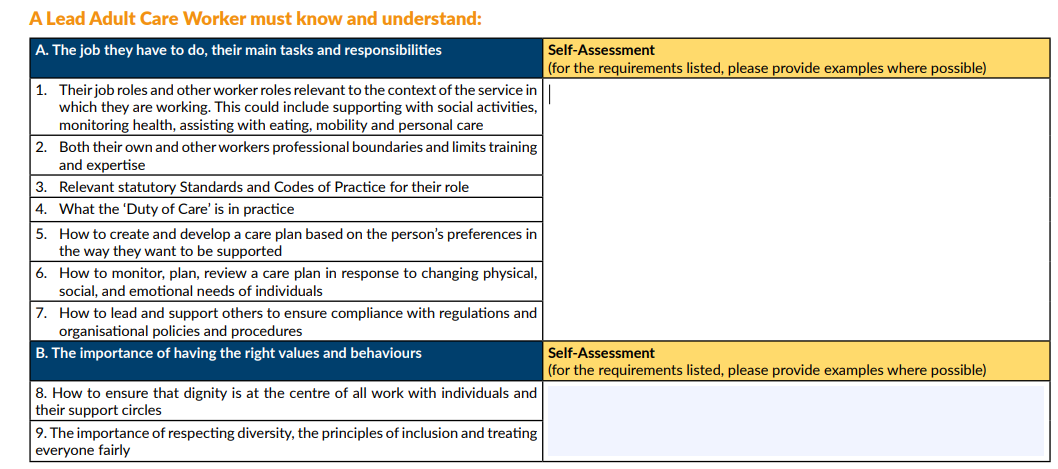
A Lead Adult Care Worker must know and understand:
A.
- The lead worker coordinates and drives the care and coordination process involved in the analysis and ensures the basic support in a holistic manner. Example: I help young adults with autism engage in structured social activities, assisting them with hygiene.
- As a Lead adult care worker, I know my limits and when to assist other workers with limited knowledge or call for more experienced workers (skillsforcare.org.uk, 2023). For example, I know I have limited training in behavioural interventions and request input from a clinical psychologist.
- I have familiarity with the Care Certificate, the Health and Social Care Act 2008, and CQC regulations.
- The duty of care in practice involves the safeguarding of individuals from harm while promoting independence. Example: If I have noticed signs of neglect in a young adult's home setting, I raise an alert following the procedure.
- The person-centred plan is to be undertaken based on the individual's preferences and strengths (scie.org.uk, 2025). For example, a young adult might prefer visual scheduling due to autism; thus, a picture-based routine needs to be integrated.
- The monitoring and evaluation of the plans are to be based on the changing needs of the adult care workers.
- I undertake the role through establishing myself as a role model and the adherence to the policy of adult care.
B.
- Treating people with dignity and respect and valuing their privacy example: I start always by knocking before entering the service user's room and providing choices in the daily routine.
- In this respect, I champion equality regardless of background and ability for example, I adapted communication techniques for non-verbal individuals and include the cultural preference.
C.
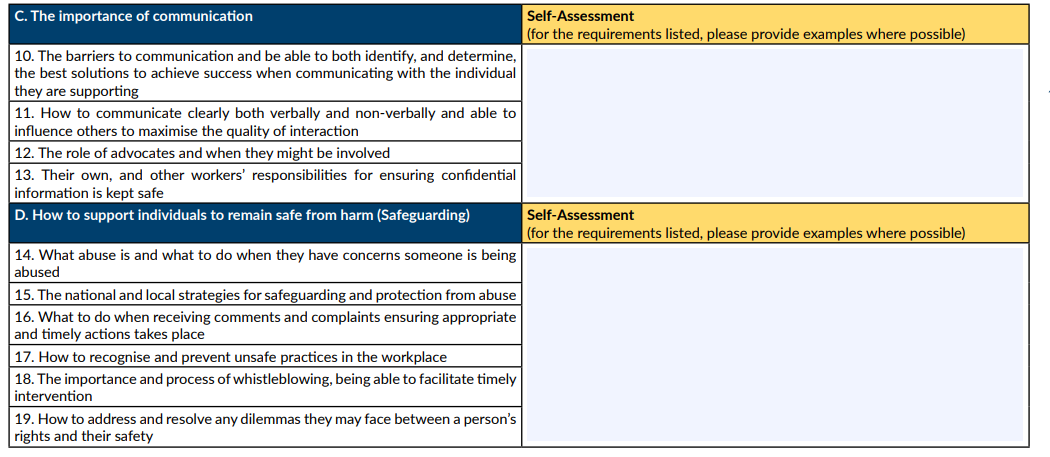
- The communication barriers include sensory sensitivity, nonverbal communication styles, differences in language, and cognitive challenges. For example, an adult with autism has the issue of making eye contact or interpreting tone. In this respect, I use visual aids and simplified language.
- I speak calmly, use various gestures, facial expressions, and maintain open body language. For example, I use Makaton signs and a visual schedule to support understanding.
- To support the individual in expressing their views, especially during career reviews or complaints.
- I ensure that all personal data is stored securely and shared only on a need-to-know basis (gdpr.eu, 2024). The follow of GDPR and organizational policy, and reminding colleagues to avoid sensitive information in public areas.
D.
Get assistance from our PROFESSIONAL ASSIGNMENT WRITERS to receive 100% assured AI-free and high-quality documents on time, ensuring an A+ grade in all subjects.
- The issue of abuse includes physical, emotional, sexual, and the abuse in for of neglect (skillsforcare.org.uk, 2024). In a situation of suspected abuse, I report immediately to my security lead and document the concern factually and confidentially.
- The national safeguarding strategy involves following of Care Act 2014 and working together to safeguard children and especially children (Leishman et al., 2025). In respect of local stakeholders, I attend regular classes, safeguarding adult board protocols.
- I listen emphatically, record the concerns accurately, and escalate them through the correct channels. The timely response helps in maintaining trust and safety.
- In this issue, I observe poor manual handling, neglect, or breaches of dignity. I question and challenge unsafe practices and report them to supervisors.
- Whistleblowing protects individuals and promotes transparency. I follow my organization’s whistleblowing policy and report concerns.
- I respect autonomy while ensuring safety, for example, if the guardians of the especially able young adults want to go along but lack the skill, I work with them and build skills.
E.
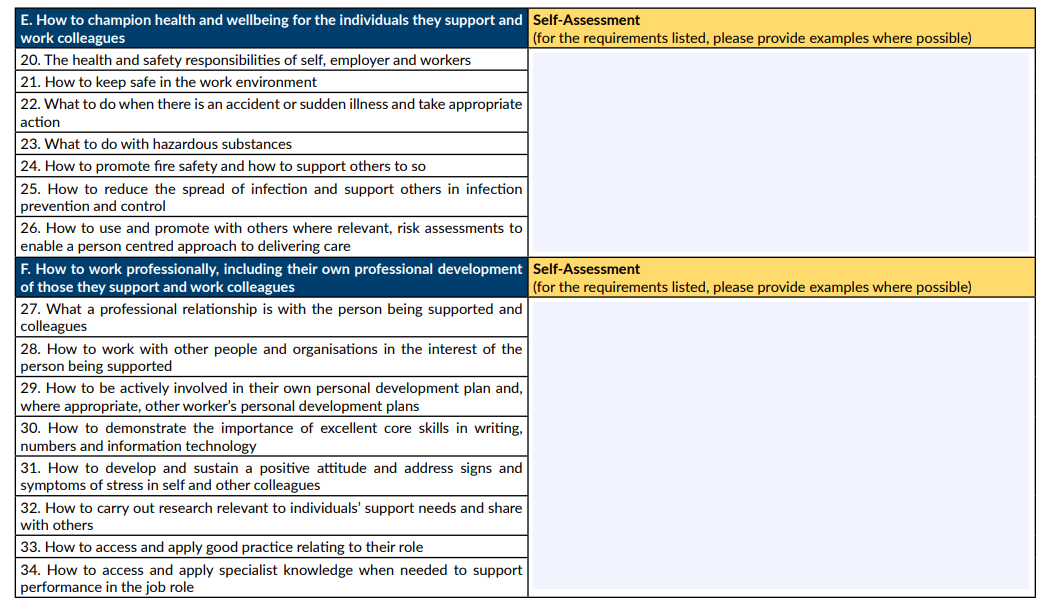
- The organizational policy is through the use of PPE correctly and reporting hazardous issues.
- To keep the environment safe, I maintain the environment clean and follow infection control protocols.
- In the process of responding to accidents or illness, I follow emergency procedures, administer first aid if necessary, and alert senior staff.
- I store and label substance safety through the use of COSHH guidelines and wear appropriate PPE.
- In respect of promoting fire safety in known evacuation routes, check fire extinguishers and participate in drills.
- In respect of preventing and controlling infections, I wash my hands regularly, clean surfaces, and educate others on hygiene.
- Through the factors of risk assessment, I contribute to person-cantered risk assessment and balancing safety with independence.
F.
- In respect of professional relationships, I maintain respectful, supportive boundaries with individuals and colleagues.
- In the process of working with others, I collaborate with families, therapists, and social workers to ensure holistic care.
- In respect of the personal development goals, I set plans and make the necessary changes.
- The core skill in writing, numbers, and use of IT records I noted, manage and medicate logs for meeting the targets through the use of a digital care system.
- With the positive management approach and stress management approach, I stay optimistic, take a break, and talk openly about the stress.
- Researching the support needs, I explore autism strategy, sensory tools, and communication aids.
- Through the application of good practices, I follow SCIE and CQC guidance I attend webinars and use the evidence-based methods.
- Assessing specialists' knowledge, I consult autism specialists who attend training on learning disabilities and use online resources such as Skills for Care.
A. Lead Adult Care Worker must be able to:
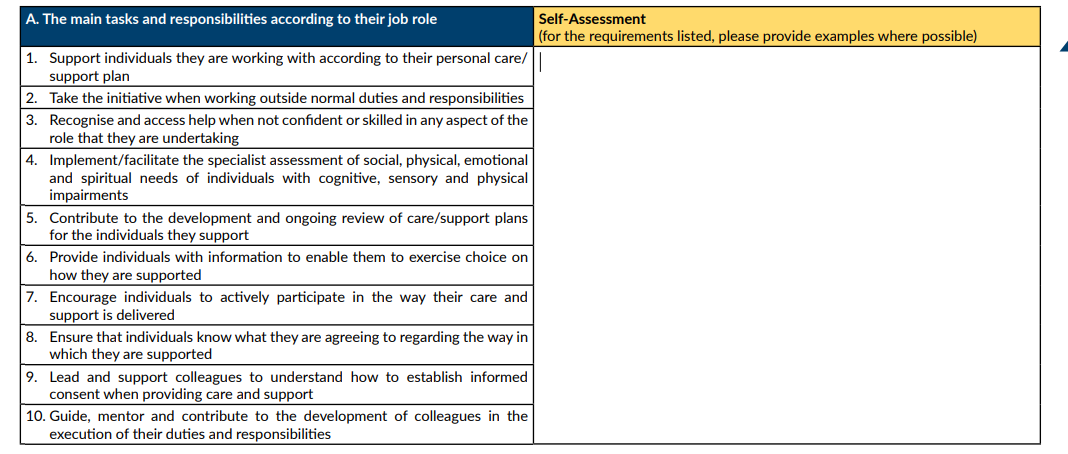
- The process of supporting the individual care workers through providing tips and inputs on the individual care plans based on their strengths and weaknesses.
- As a senior am I will work outside by supporting the junior care workers and helping them in issue of difficulties.
- In the situation when I encountered a complex behavioural challenge, in consulted our behavioural therapist and attended a workshop to improve my skills in de-escalation situations.
- I assist professionals during assessment by providing insight into an individual's daily routine, emotional triggers, and communication preferences.
- I regularly attend review meetings and provide feedback on progress, such as independent living skills or changes in mental well-being.
- I explained available support options using the visual aids and simple language, helping individuals understand how they wanted to be supported.
- I involved individuals in planning their weekly schedules, encouraging them to choose hobbies and learning opportunities.
- I use accessible formats in the form of pictorial guides and simplified texts to explain what support entails and check for understanding consent.
- I mentor new staff on how to gain informed consent respectfully, especially when working with non-verbal individuals through the use of mediums like PECS.
- I support the college by sharing the best practices, offering shadowing opportunities and encouraging reflective practices.
B.
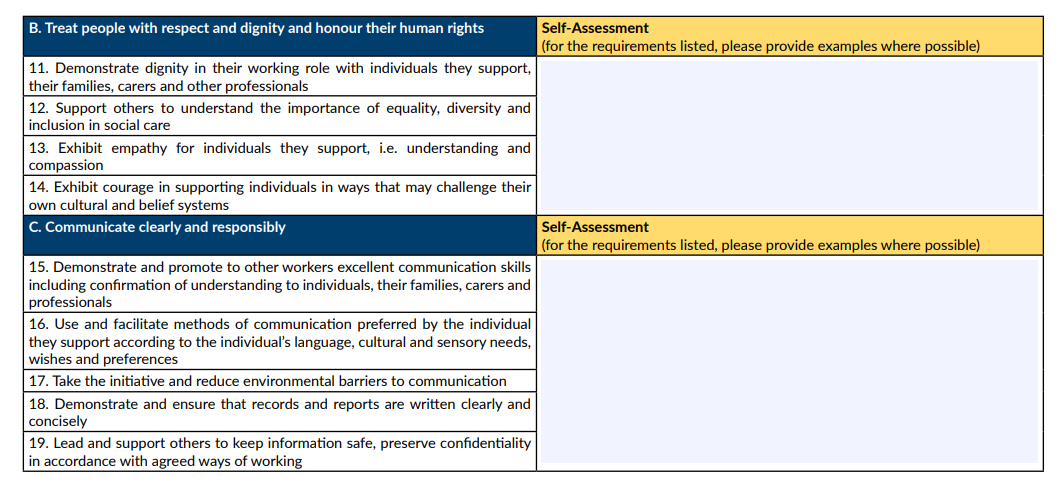
- I have used a dignified approach in treating individual adult specially-abled care recipients, families, and professionals with respect by listening actively to maintain privacy during personal care.
- I support others by modelling inclusive language, challenging discriminatory behaviour and challenging discriminatory behaviour and celebrating the cultural differences.
- The understanding of empathy is highly shown by me regarding the recognition of the motivational cues, and responding sensitively.
- I have supported the young and new adult caregivers by supporting individuals whose cultural practices may differ from my own. I have maintained an open mind and advocated for their rights in situations of challenge to the existing norms.
C.
- I use active listening, paraphrasing, and visual aids to confirm understanding. I have trained my colleagues on the use of Makaton and PECS to improve non-verbal communication.
- I adopted communication styles based on sensory and cultural needs, for example, I used simplified language and visual tools scheduled for autistic young adults.
- I ensure quite well-lit places for communication and remove distractions. I have arranged communal areas to support sensory comfort and accessibility.
- I write a concise and factual report through the use of plain language, and I have been supported by colleagues in the process of documentation.
- I follow the policy of GDPR and organizational policy and ensure the data is shared only when it is important.
D.
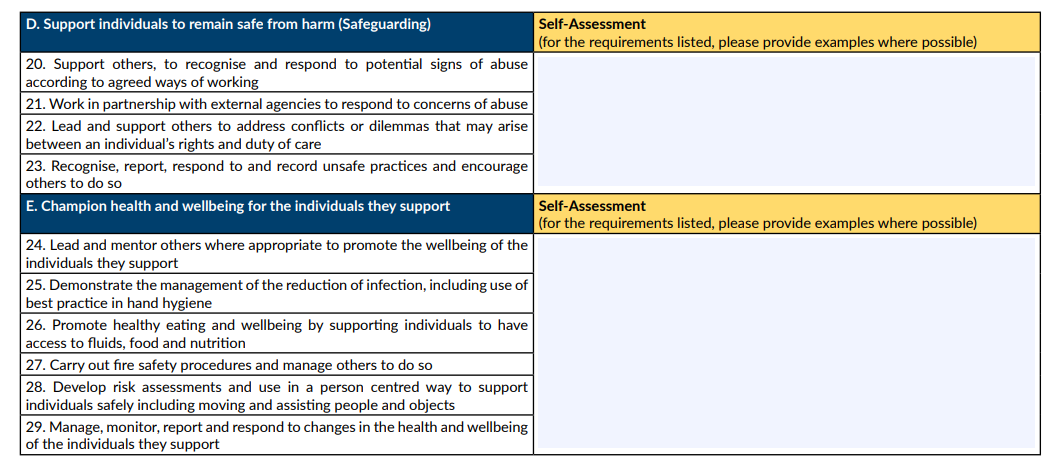
- I will be empathetic in my approach to the people who are impacted through abuse and provide them with remedial measures such as counselling and remedial measures.
- The actions of abuse and violations are generally hidden or not preferred to be recognized, which requires active support and assessment to be recognized.
- External organizations and agencies can effectively identify situations of abuse and their concerns.
- The support of family members is very important to effectively address the patient's health concerns by the care providers.
E.
- The unsafe practice that is maintained by the organizations towards sustainability requires a combined effort to recognize and address.
- Critical patient require active health care to support or improve their health conditions.
- The organizational leader guides individual employees for skill improvement.
- The hygiene and hand sanitization are being effective way of preventing critical diseases like COVID.
- Nutritional food items are mostly preferred and suggested by healthcare providers in critical health conditions.
- Building requires presenting fire safety precautions under any conditions.
- Healthcare diagnosis is one of the effective ways of health risk assessment.
- The health and safety precautions are constantly developed and improved to avoid any potential risky situations.
- The best approaches involve the use of seminars, attending feedback, and participatory measures.
- I maintained a CPD log and completed about 10 hours of development activities annually, including training in autism awareness, safeguarding communication strategies.
- I am actively involved in research, evidence-based practice through using visual schedules and sensory integration techniques, and share the findings during team meetings.
- I mentor new support workers by offering shadowing opportunities, sharing practical tips, and guiding them through care documentation.
- I collaborate effectively with various stakeholders, attending various meetings and contributing to care planning.
- I participate in the process of offering insight for the role of assessing the candidate's value alignment. I also help deliver induction sessions, covering safeguarding and organisational ethos.
personal attributes and behaviours expected of all lead adult care workers carrying out their Roles:
- This involves considering if care practices are truly creating a difference, not just meeting basic needs. For example, observing changes in individual well-being.
- This involves comprehending the individual's preferences, communicating a For example, and actively listening to concerns.
- 3.It means actively taking action to benefit or protect others, even when it is challenging or uncomfortable.
- 4 . Communication skills can be improved by considering the ability to actively listen, build trust.
- Identifying strengths and improvement areas in caregiving tasks and responsibilities.
- Actions taken to understand individual requirements, actively involved in decision-making.
Reference
- autism.org.uk,(2025).Training.Available at:https://www.autism.org.uk/what-we-do/autism-know-how/training (Accessed on: 14/07/2025)
- gdpr.eu,(2024).Data protection and working remotely.Available at:https://gdpr.eu/working-remotely-data-security/ (Accessed on: 14/07/2025)
- gov.uk,(2025).Care for those with learning disabilities or autistic people.Available at:https://www.gov.uk/government/news/care-for-those-with-learning-disabilities-or-autistic-people (Accessed on: 14/07/2025)
- Leishman, E., Meers, J., Halliday, S. and Tomlinson, J., 2025. Person-centred process?: Procedural fairness and Care Act 2014 needs assessments. The British Journal of Social Work, p.bcaf076.
- mencap.org.uk,(2025).Your guide to communicating with people with a learning disability.Available at:https://www.mencap.org.uk/resource/your-guide-communicating-people-learning-disability (Accessed on: 14/07/2025)
- nhs.uk.(2020).Autism.Available at:https://www.england.nhs.uk/learning-disabilities/about/autism/ (Accessed on: 14/07/2025)
- scie.org.uk,(2025).MCA: Care planning, involvement and person-centred care.Available at:https://www.scie.org.uk/mca/practice/care-planning/person-centred-care/ (Accessed on: 14/07/2025)
- skillsforcare.org.uk,(2023).Code of Conduct for Healthcare Support Workers and Adult Social Care Workers in England.Available at:https://www.skillsforcare.org.uk/resources/documents/Support-for-leaders-and-managers/Managing-people/Code-of-conduct/Code-of-Conduct.pdf (Accessed on: 14/07/2025)
- skillsforcare.org.uk,(2024).A Workforce Strategy for Adult Social Care in England.Available at:https://www.skillsforcare.org.uk/Workforce-Strategy/Home.aspx (Accessed on: 14/07/2025)
Recently Downloaded Samples by Customers
Introduction: Leadership and Management in Practice Leadership and management refers to the skills and processes that are...View and Download
Introduction : Mg630 Change And Organizational Development Assignment Get free samples written by our Top-Notch...View and Download
Introduction Get free samples written by our Top-Notch subject experts for taking online Assignment...View and Download
Questions 1: Essay Introduction Struggling with tight deadlines? Rapid Assignment Help is here to rescue you! Get expert...View and Download
Introduction: Detailed Operating Cash Flow Analysis of AstraZeneca Get free samples written by our Top-Notch subject experts for...View and Download
Chapter 1: Introduction 1.1 Research Background It has long been accepted that "leadership" is defined as the ability to...View and Download